HEAL AND CHALLENGE
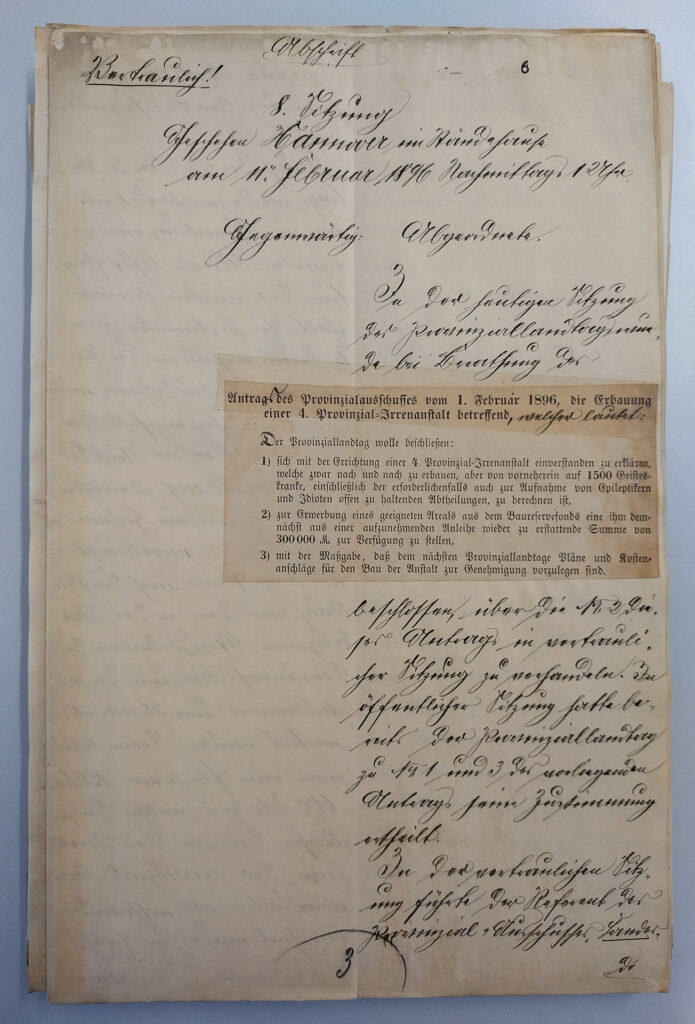
Resolution in the minutes of the 8th session of the Diet of 11 February 1896.
NLA Hannover Hann. 150 Nr. 260.
In 1896, the state parliament decided to establish a fourth institution in the province of Hanover. With 1,500 beds, it was to accommodate almost as many patients as the existing institutions in Göttingen (370), Hildesheim (775) and Osnabrück (482) put together. 300,000 Reichsmarks were made available for the purchase of the site of the future large facility.

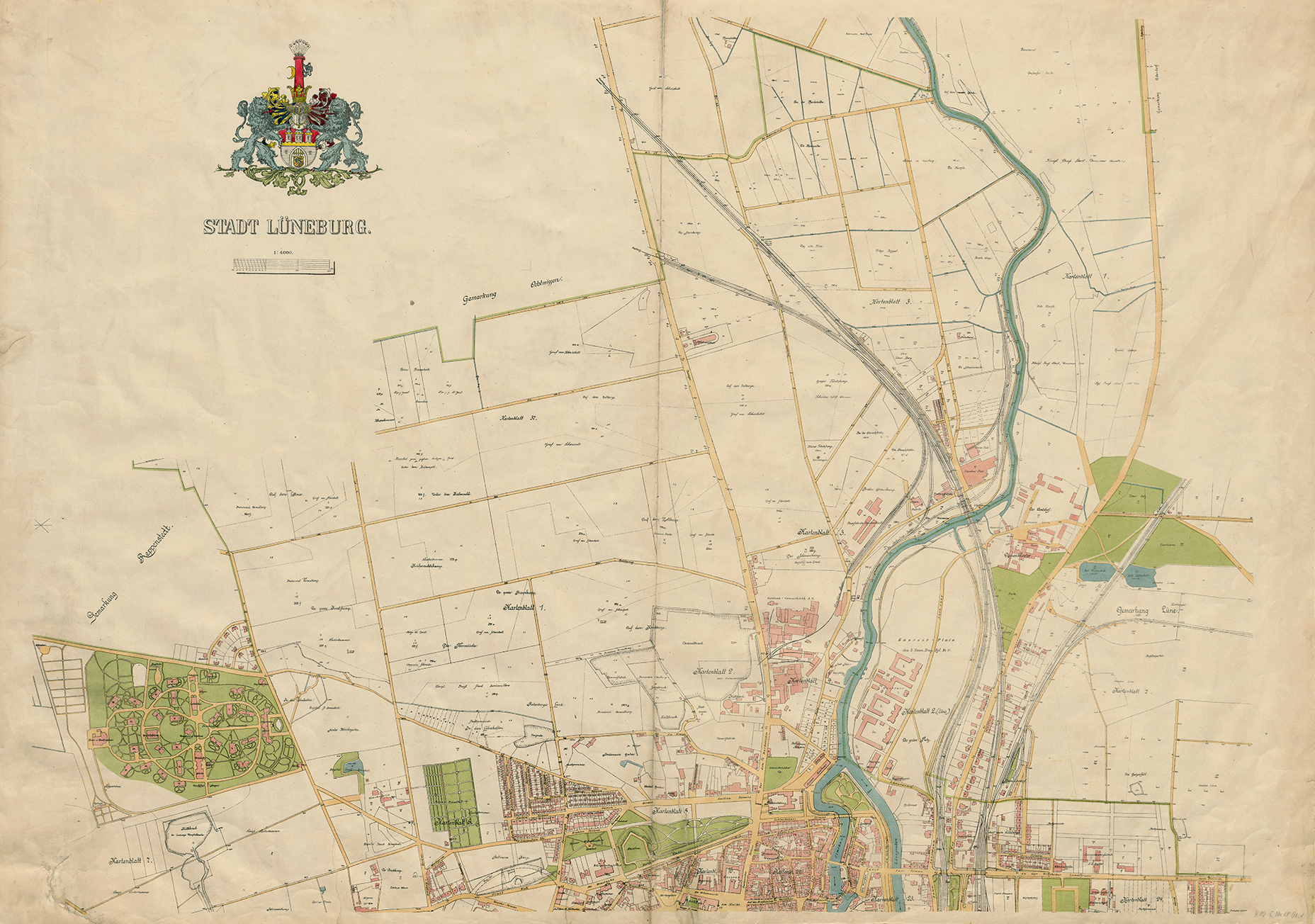
City map showing the location of the institution in Lüneburg, date unknown, before 1900.
StadtALg K 10-C-18-1.
State architect Carl Wolff designed the »institution in Lüneburg« together with government architect Freytag and the future medical director Otto Snell. The institution was planned as the largest green space in the city at the time. It was built between 1898 and 1901. The second construction phase under the direction of architect Franz Krüger followed between 1902 and 1907. The plan illustrates the size of the Lüneburg sanatorium and nursing home. It fundamentally changed the urban space and the economic structure.
The planned layout and high-quality furnishings of the institution in Lüneburg reflected the thinking of the time. A spacious park was laid out, and land and a nursery were included. The employees and their families lived in neighbouring residential buildings (»Wardens‘ housing estate«). There were also company flats for employees in the institution buildings. This created a close-knit community with the inmates.
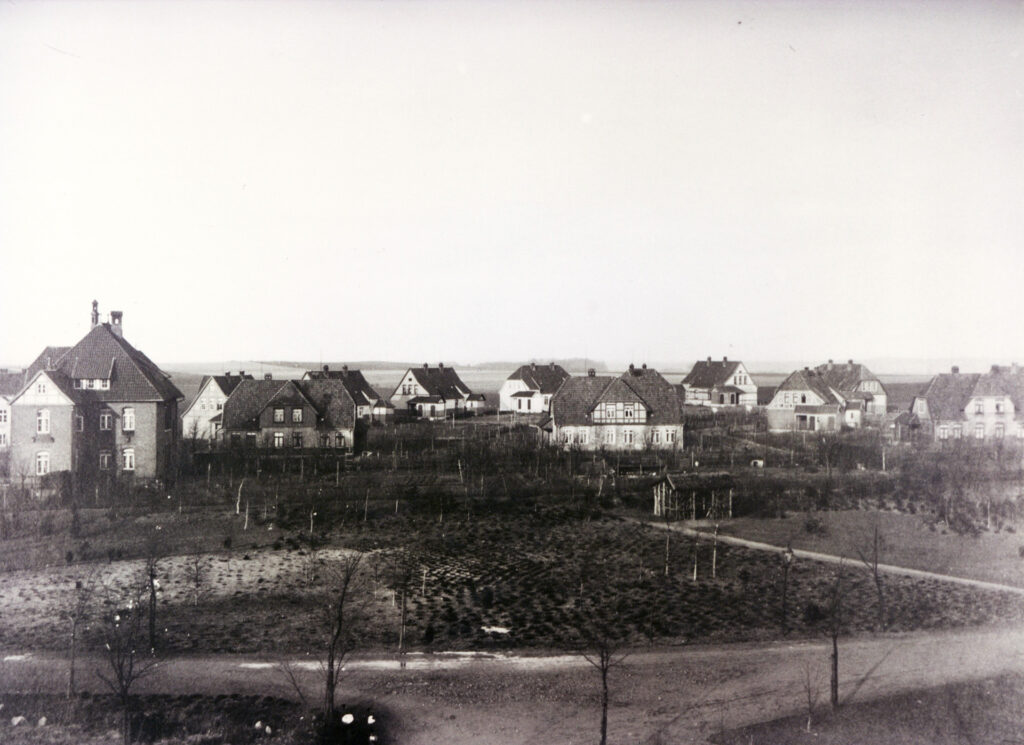
»Wardens‘ housing estate« of the Lüneburg sanatorium and nursing home with a villa for the head warden (left foreground), around 1906.
ArEGL 18.
OTTO SNELL (1859 – 1939)
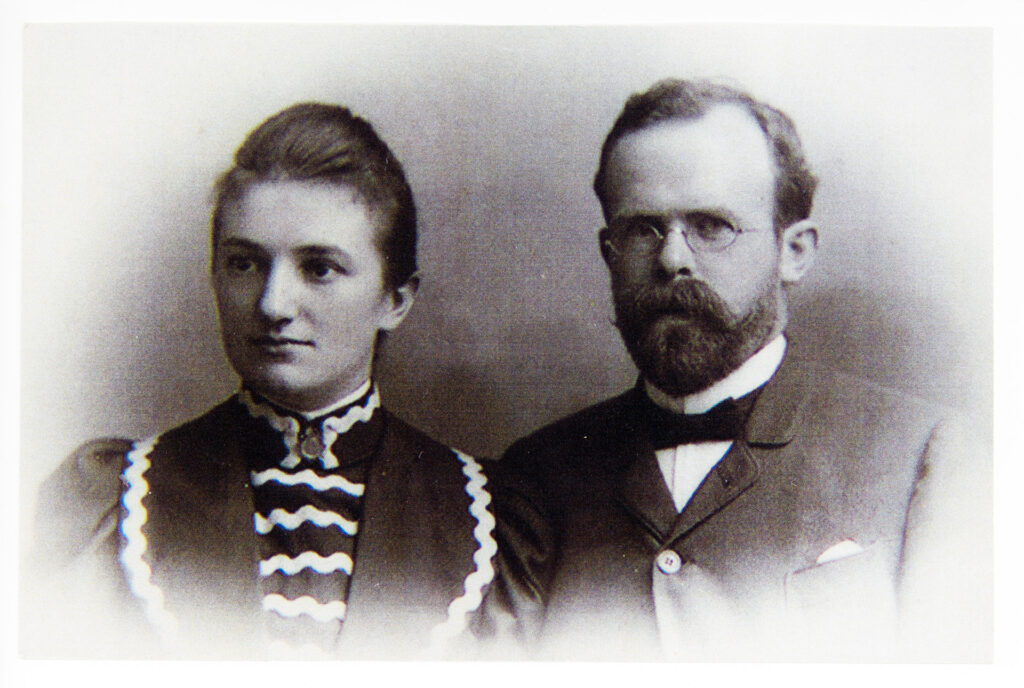
Anna and Otto Snell, around 1890.
ArEGL 18-4.
Otto Snell was an advocate of modern psychiatry and campaigned for the humane treatment and healing of patients.
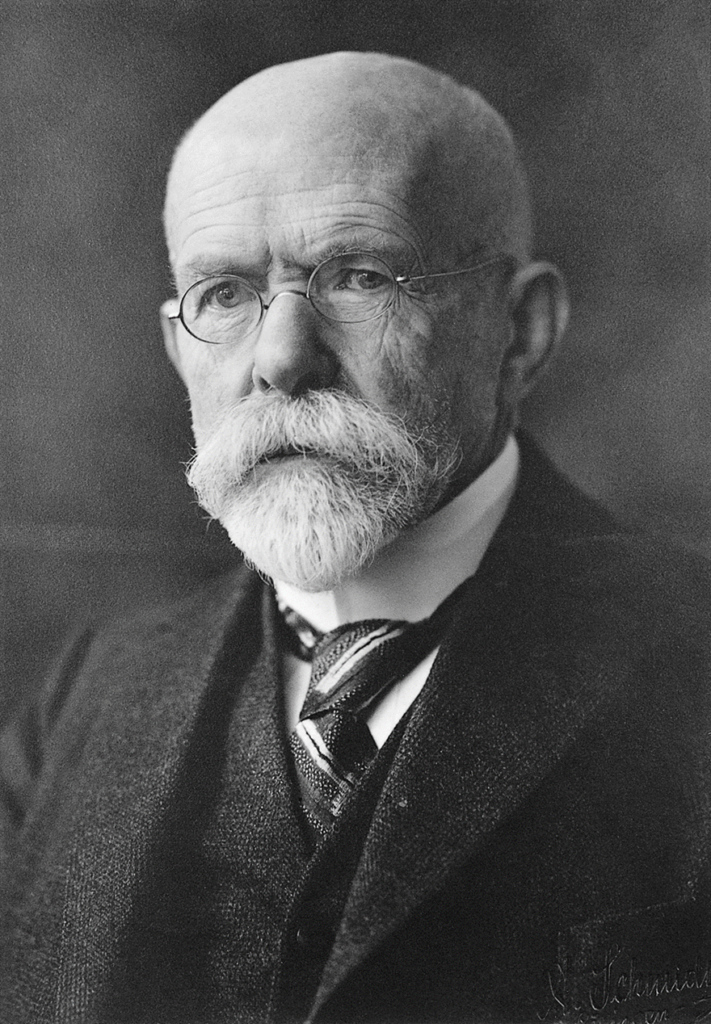
Otto Snell, around 1920.
ArEGL 149.
Otto Snell managed the institution in Lüneburg until 1924.
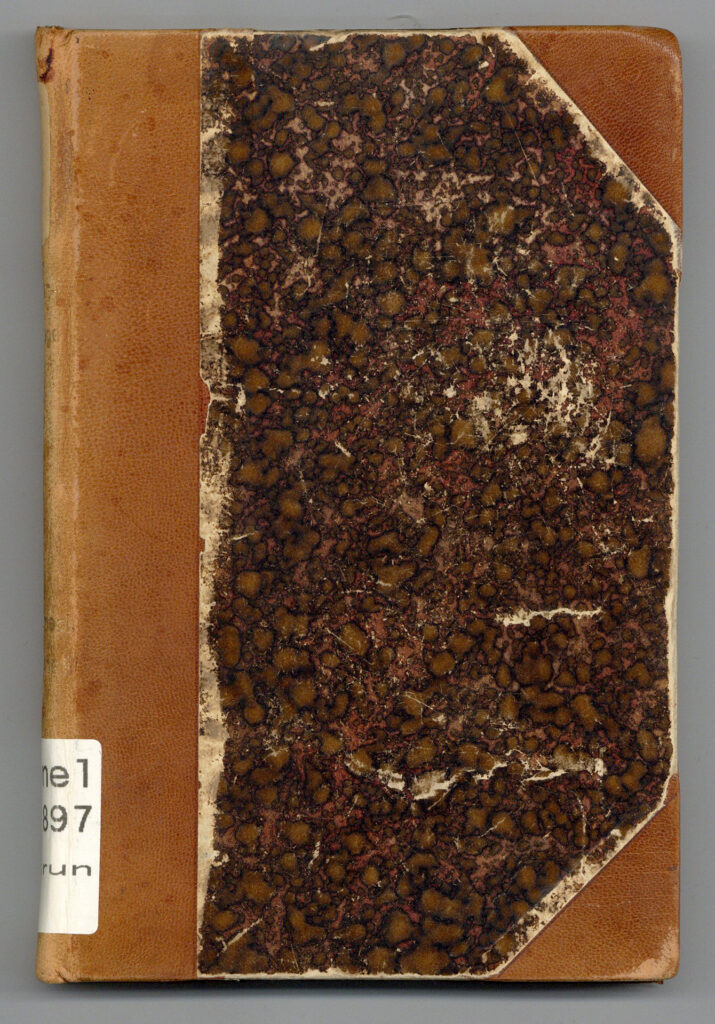
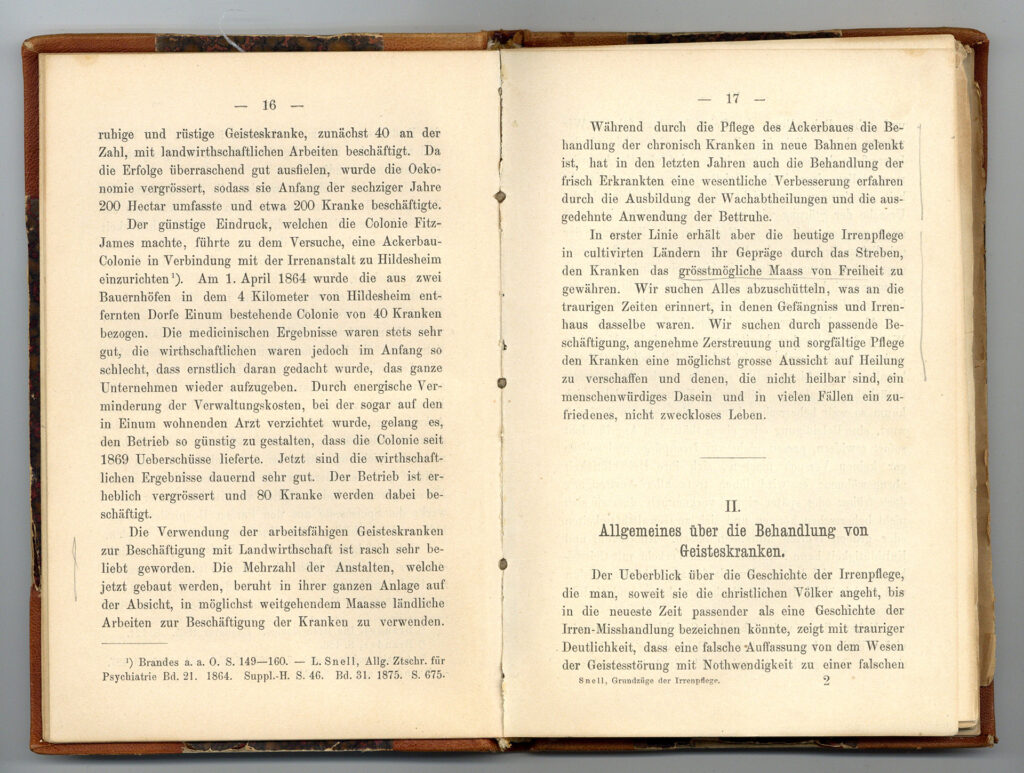
Otto Snell: Fundamentals of the care of the insane for students and doctors. Berlin 1897.
ArEGL 176.
The handbook written by Otto Snell is an expression of his thinking on the care and treatment of mentally ill people and people with disabilities. He implemented much of it in the institution in Lüneburg.
»First and foremost, however, today’s care of the insane in cultivated countries is characterised by the endeavour to grant the sick the greatest possible degree of freedom. We endeavour to shake off everything that reminds us of the sad times when prison and insane asylum were the same thing. Through suitable occupation, pleasant diversion and careful care, we endeavour to give the sick the best possible chance of recovery and those who cannot be cured a dignified existence and, in many cases, a contented, not purposeless life.«
Excerpt from Otto Snell: Grundzüge der Irrenpflege für Studirende und Aerzte. Berlin 1897.
ArEGL 176.
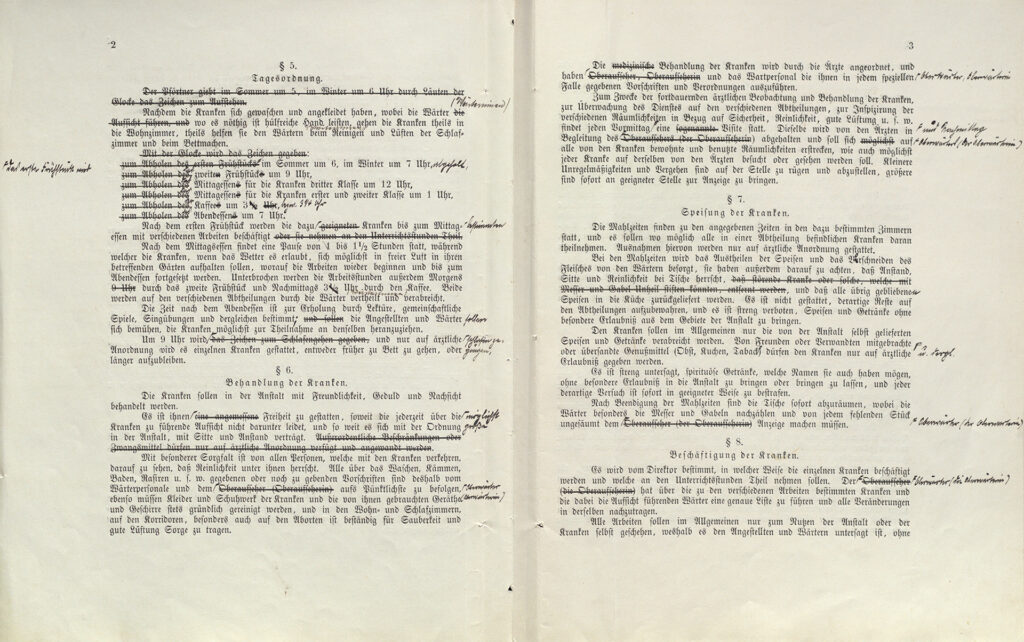
Extract from the provisional house rules, 1.7.1901.
NLA Hannover Hann. 155 Lüneburg Nr. 8.
Otto Snell’s thinking also shaped the rules of everyday life in the institution. He attached great importance to ensuring that inmates enjoyed the greatest possible freedom and had a good life in the institution.
After 1900, the self-image of nursing staff changed. They went from being overseers, who had to guard and regulate the sick, to warders, who looked after the sick.
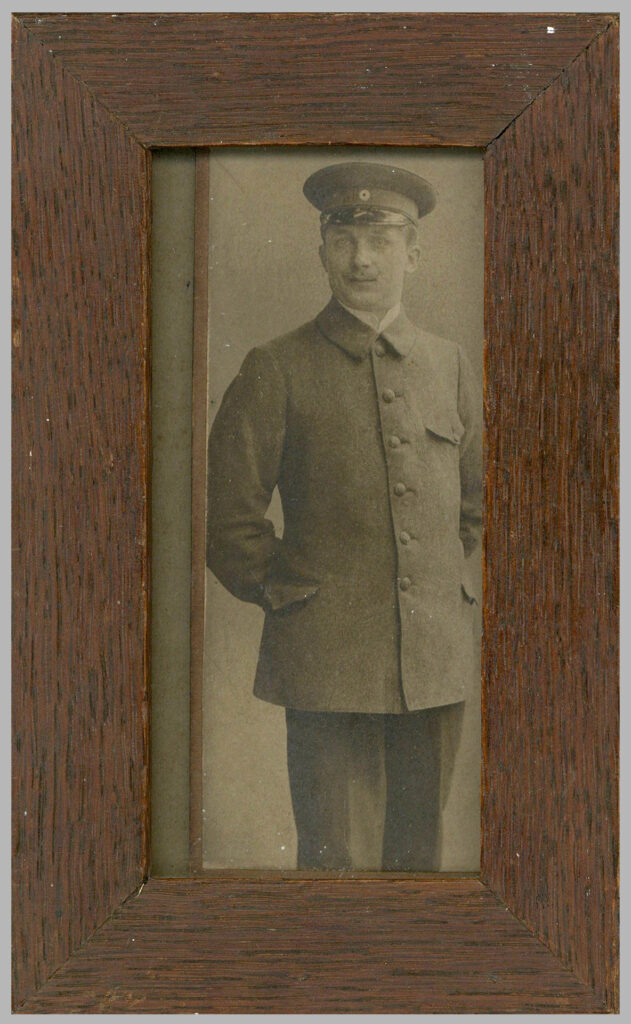
Keeper Ernst Bünger, 1923, provenance Hans-Peter Meier.
ArEGL 102.
The profession of carer was born. Their work was largely characterised by the idea that patients should receive the best possible care and support.
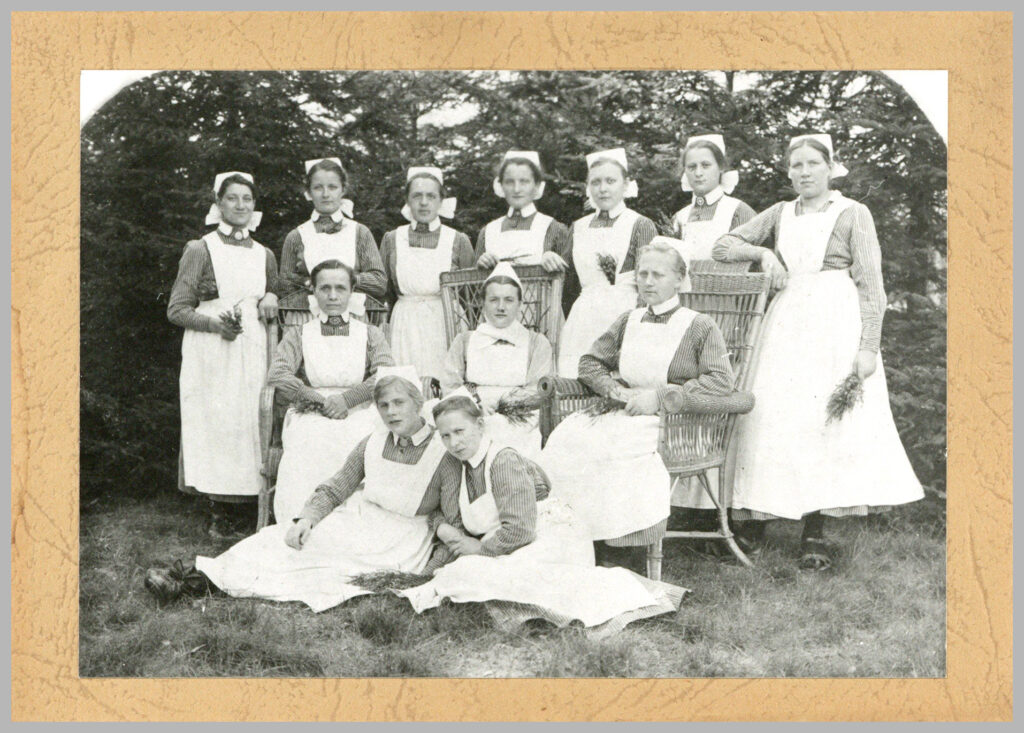
Group photo of the nurses at the institution in Lüneburg with Auguste Bünger, born Thiemann (centre back row).
ArEGL 101.
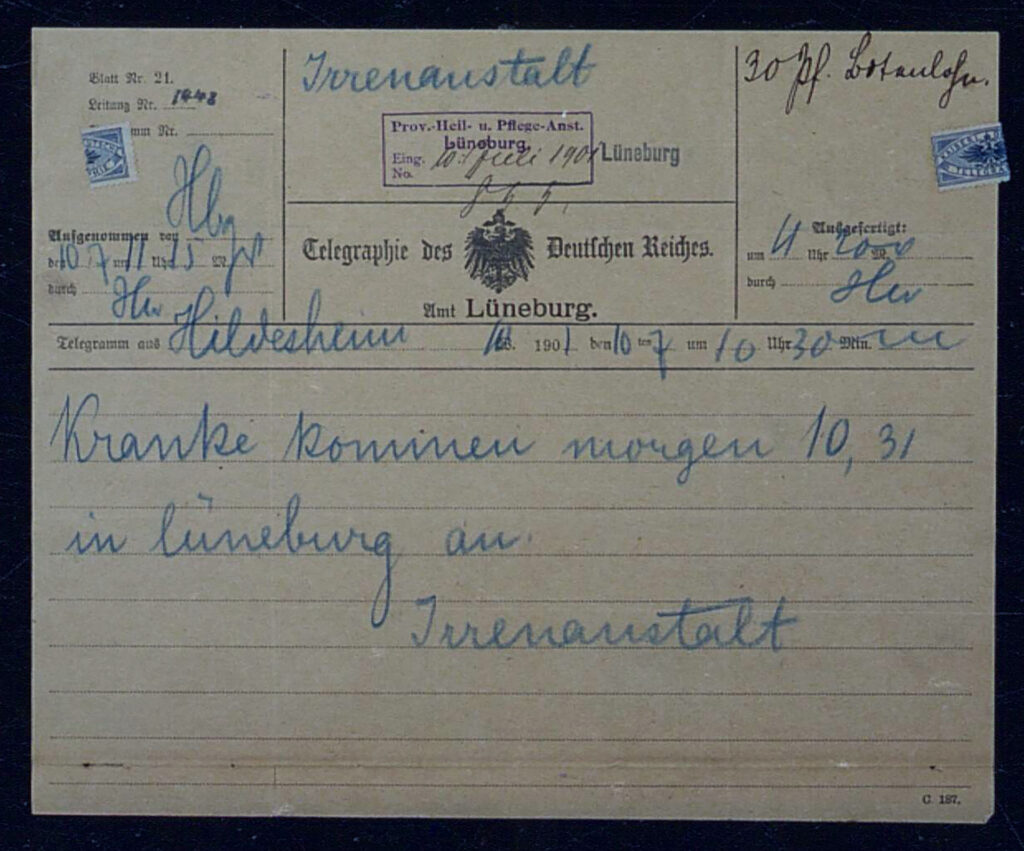
Telegram about the admission of the first patients from 10.7.1901.
ArEGL 206.
The population was sceptical about psychiatry. As a result, many patients and their families were reluctant to be admitted to the institution and many beds remained empty. To relieve the pressure on other institutions, Lüneburg admitted patients from Hildesheim on 11 July 1901. On their arrival, the Lüneburg institution began operations.
The accommodation for the patients was modern. The dormitories were designed for around twelve patients. There was hot running water, flush toilets and central heating. The houses had a scullery, a day room, a visiting room, isolation rooms, a veranda and their own gardens.
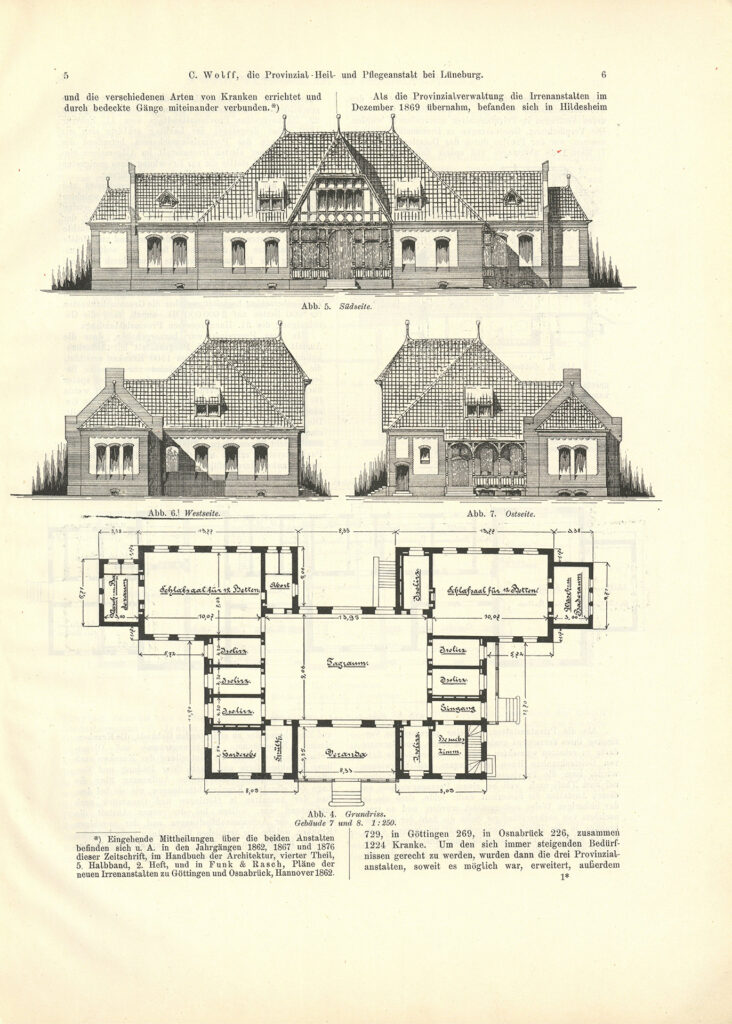
Journal by Carl Wolff: The provincial sanatorium and nursing home near Lüneburg. Special reprint from the Zeitschrift für Architektur und Ingenieurwesen 1901 and 1902. columns 5 to 6.
ArEGL 97.
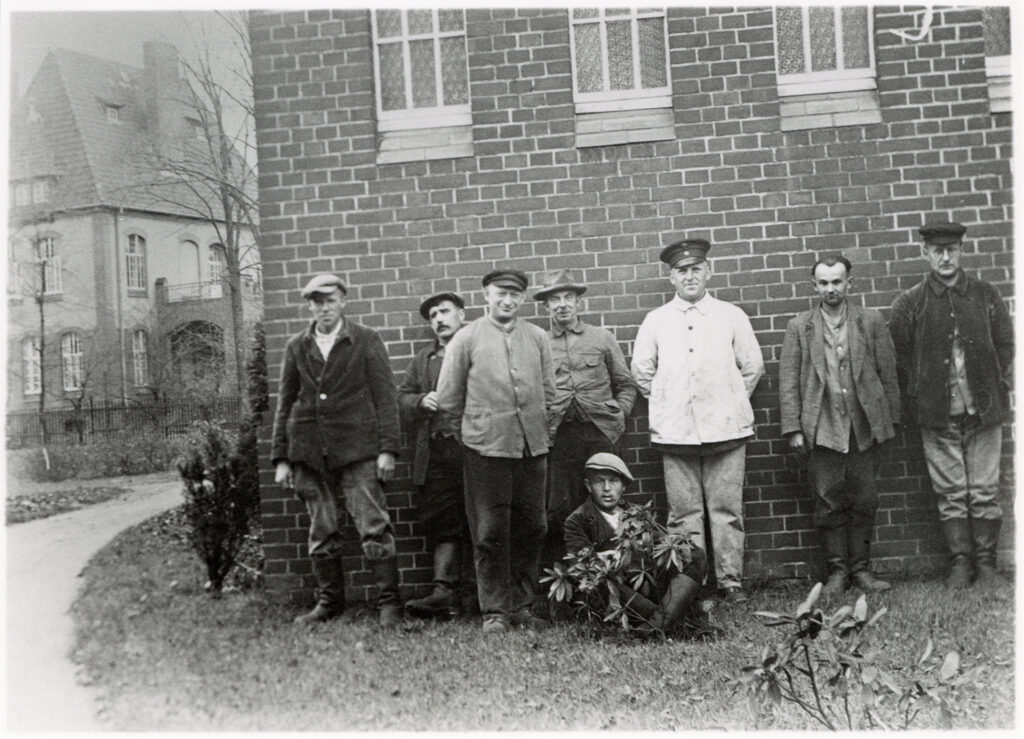
Photo of the »Field column« in front of the infirmary pavilion on the Wienebüttel estate, around 1930, provenance: carer Ludwig Cohrs.
ArEGL 125.
The institution in Lüneburg operated six agricultural estates as »outposts«. The patients lived there together with their carers in pavilions. The »work therapy« consisted of field and forestry work as well as livestock farming. Only those patients who did not require extensive medical care and were physically fit were admitted to the outposts. After the Second World War, the outposts were gradually closed until 1981.
For female patients, »labour therapy« in the peeling kitchen, in the laundry and in the households of senior employees was an option. They also helped with the harvest in the fields. The focus was on a useful leisure activity and a contribution to value creation. In reality, however, the work was often monotonous and tedious. If sick people refused »therapy«, this usually led to a derogatory judgement of the course of the illness.
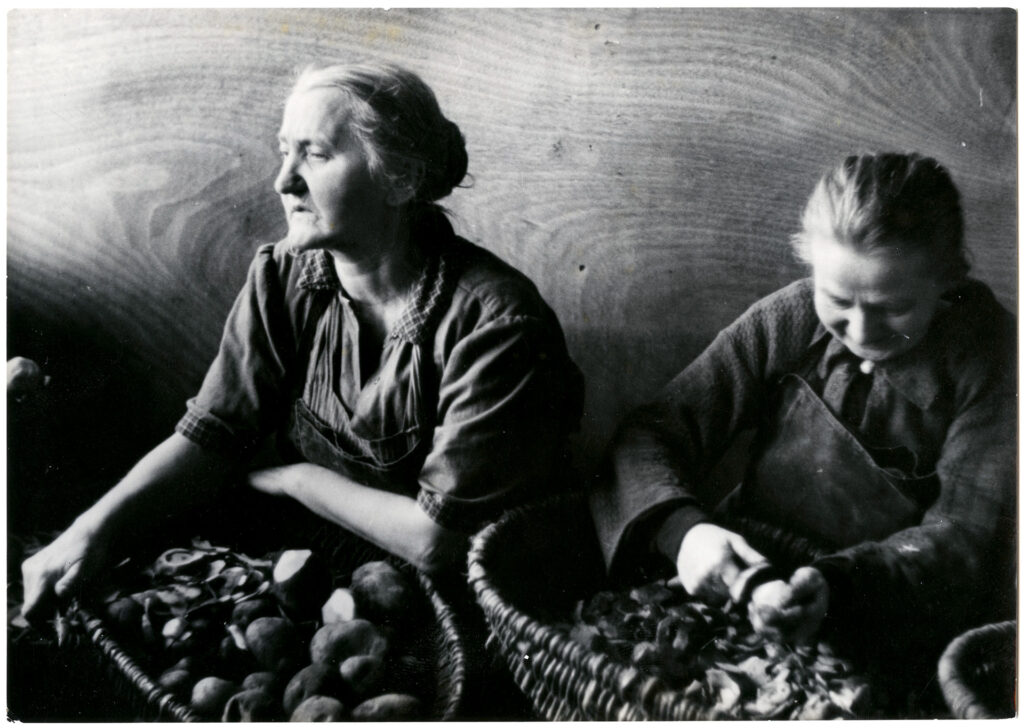
Sick people in »work therapy« in the peeling kitchen, around 1950.
ArEGL 158-3.
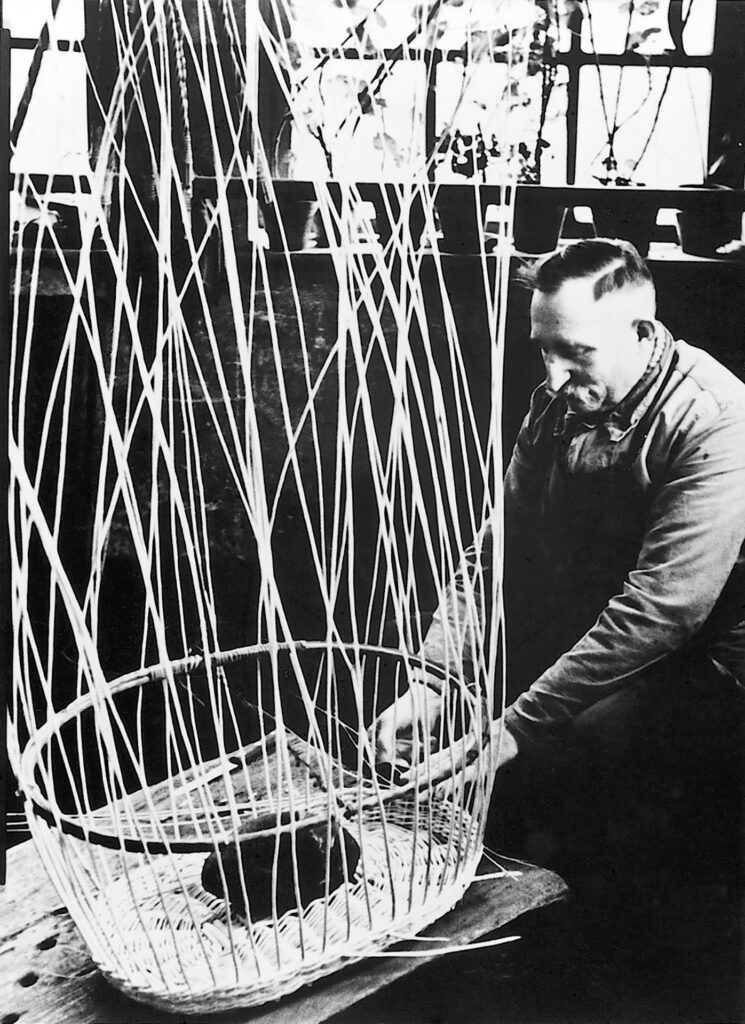
Photograph of a sick person during »labour therapy« in the basket workshop, before 1945.
ArEGL 125.
Males who were ill were deployed in the »outposts« and in the »garden column«, in the maintenance of the fish ponds or in various craft workshops. From 1940 to 1945, there was a silkworm farm for parachute production. The labour was unpaid. From time to time, »labour therapy« was used as an escape route. The workshops enabled young people with disabilities to try out their skills.
Over 1,000 different perennials were grown and sold in the nursery of the institution. The »gardening team« helped with the cultivation and care of the splendid grounds. The garden was an expression of the appreciation of the patients. Sufferers still support the nursery today.
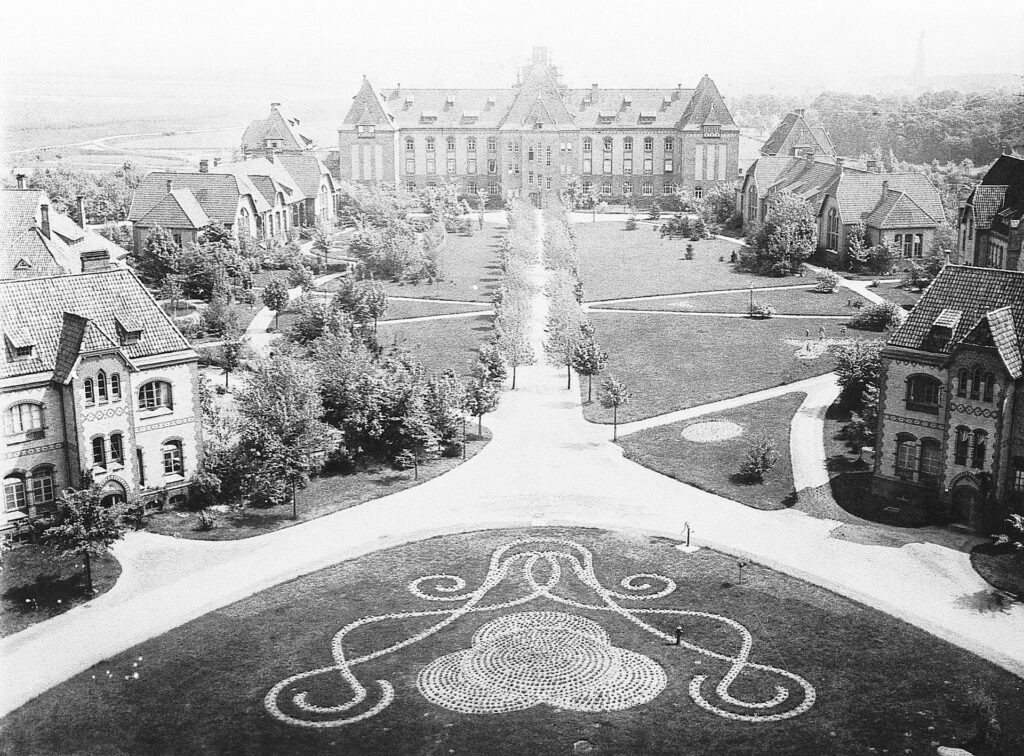
View from the water tower to the administration building house 29, before 1914.
ArEGL.
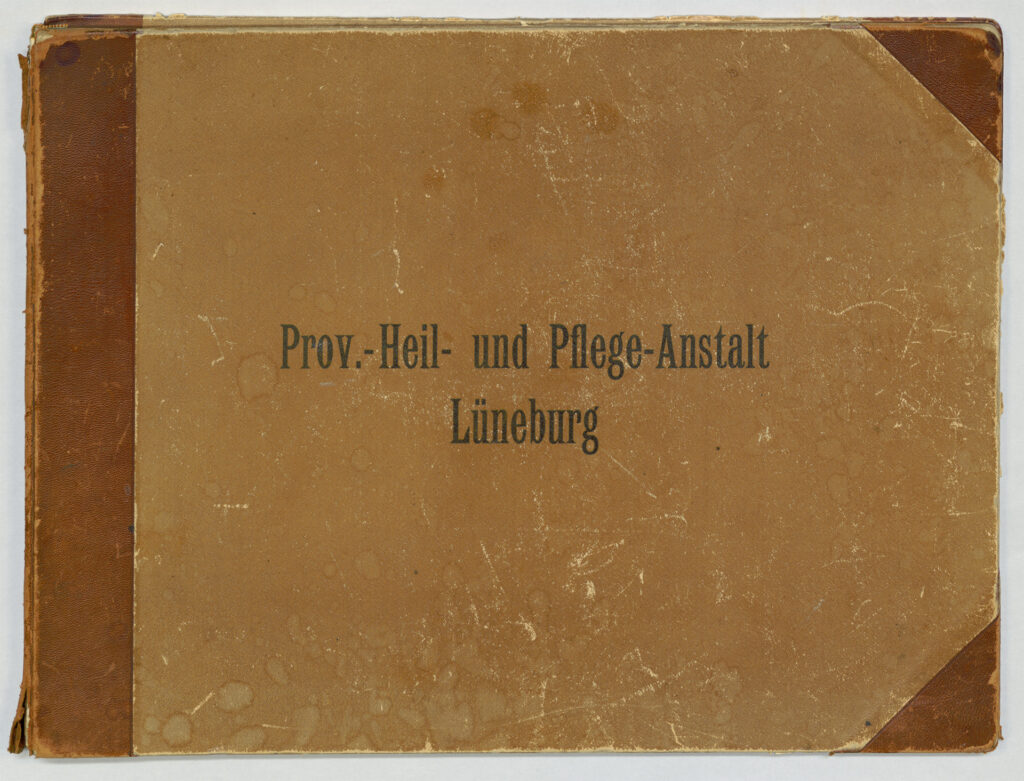
Photo album of the provincial institution in Lüneburg, 1906.
ArEGL 1.
The photo album of the institution in Lüneburg contains many photos. They show the interior and exterior of the buildings. There are also photos of patients and employees in »work therapy« and during leisure activities. The images illustrate the treatment of patients and people with disabilities around 1900, which was characterised by an appreciative approach.
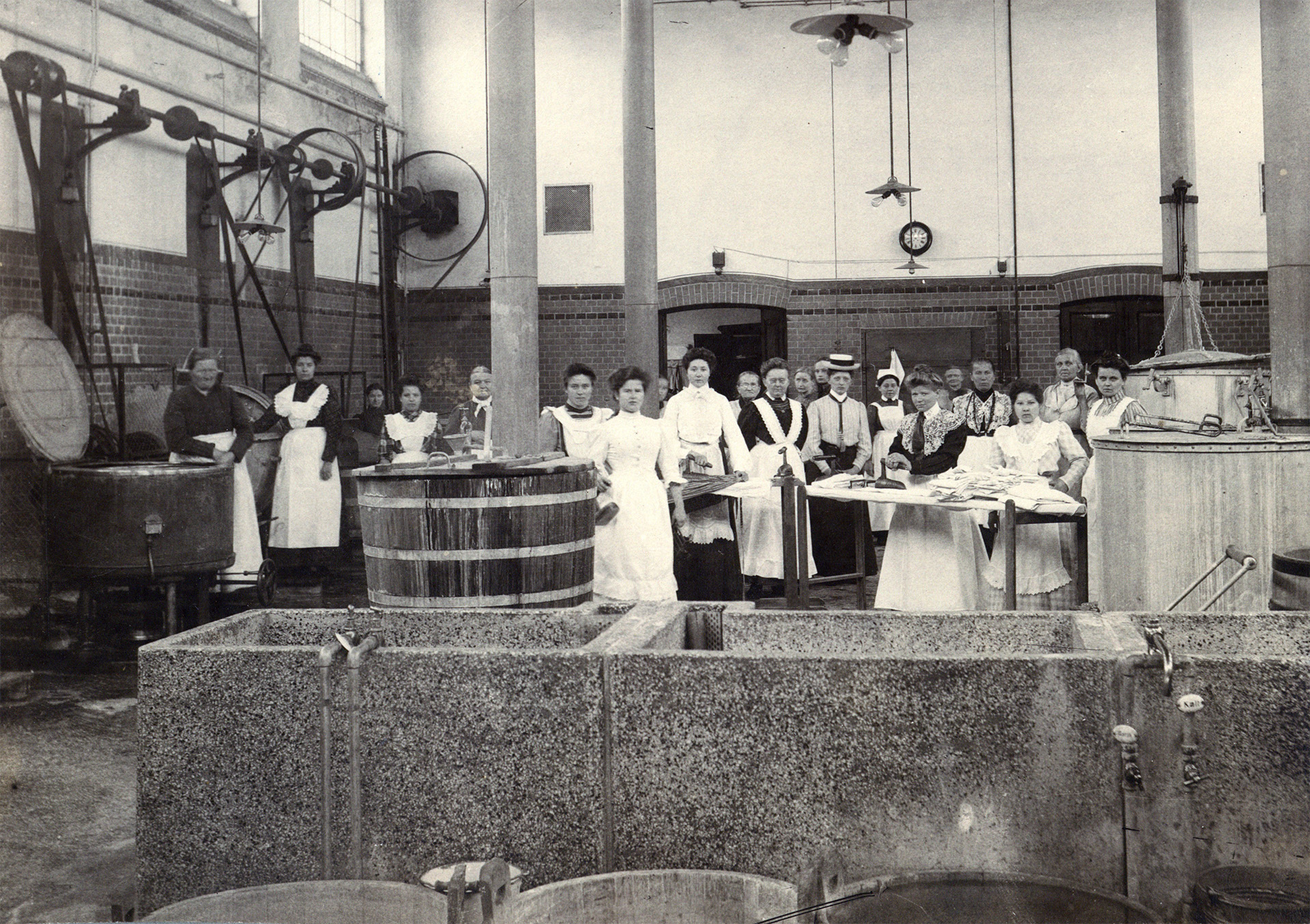
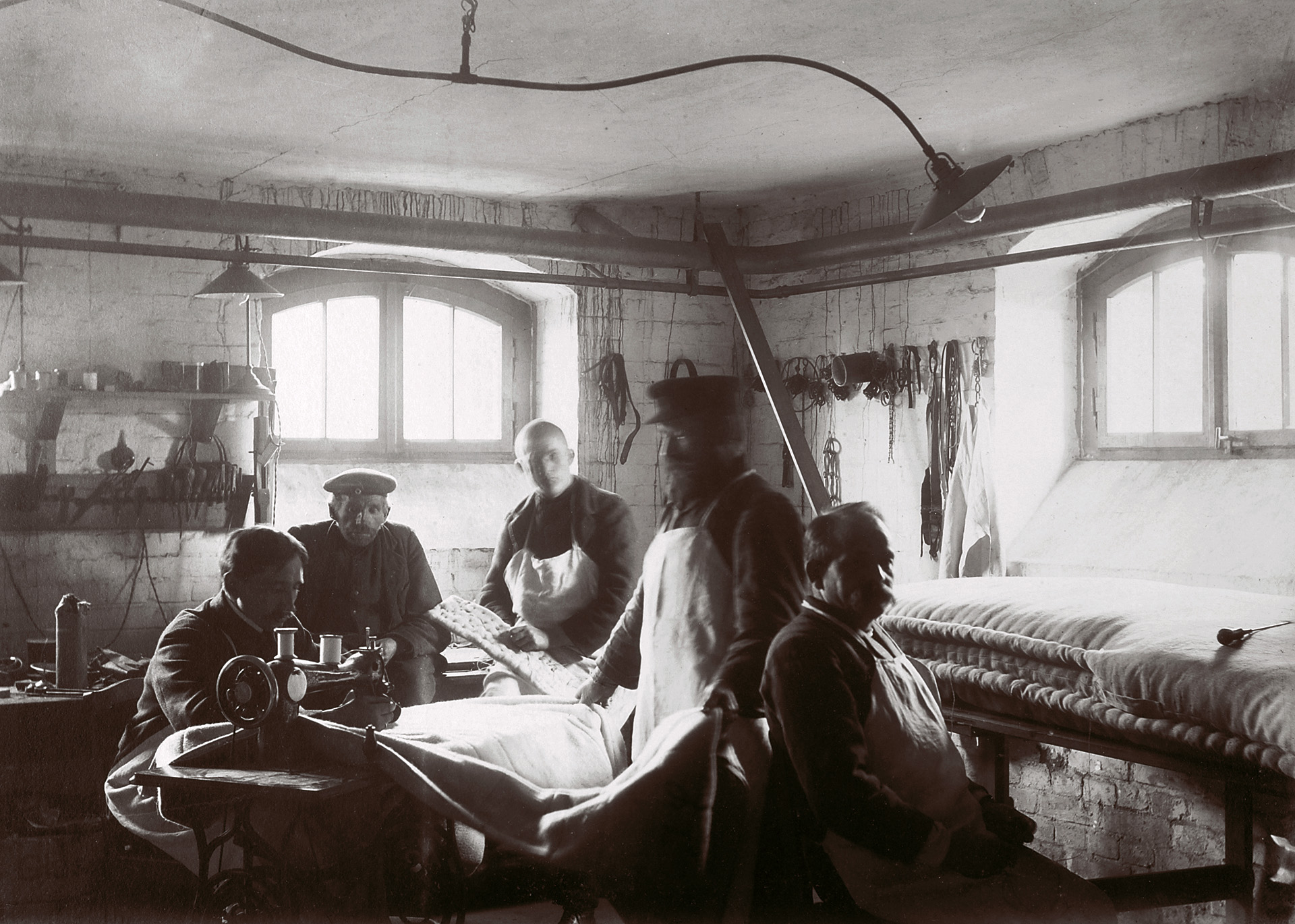
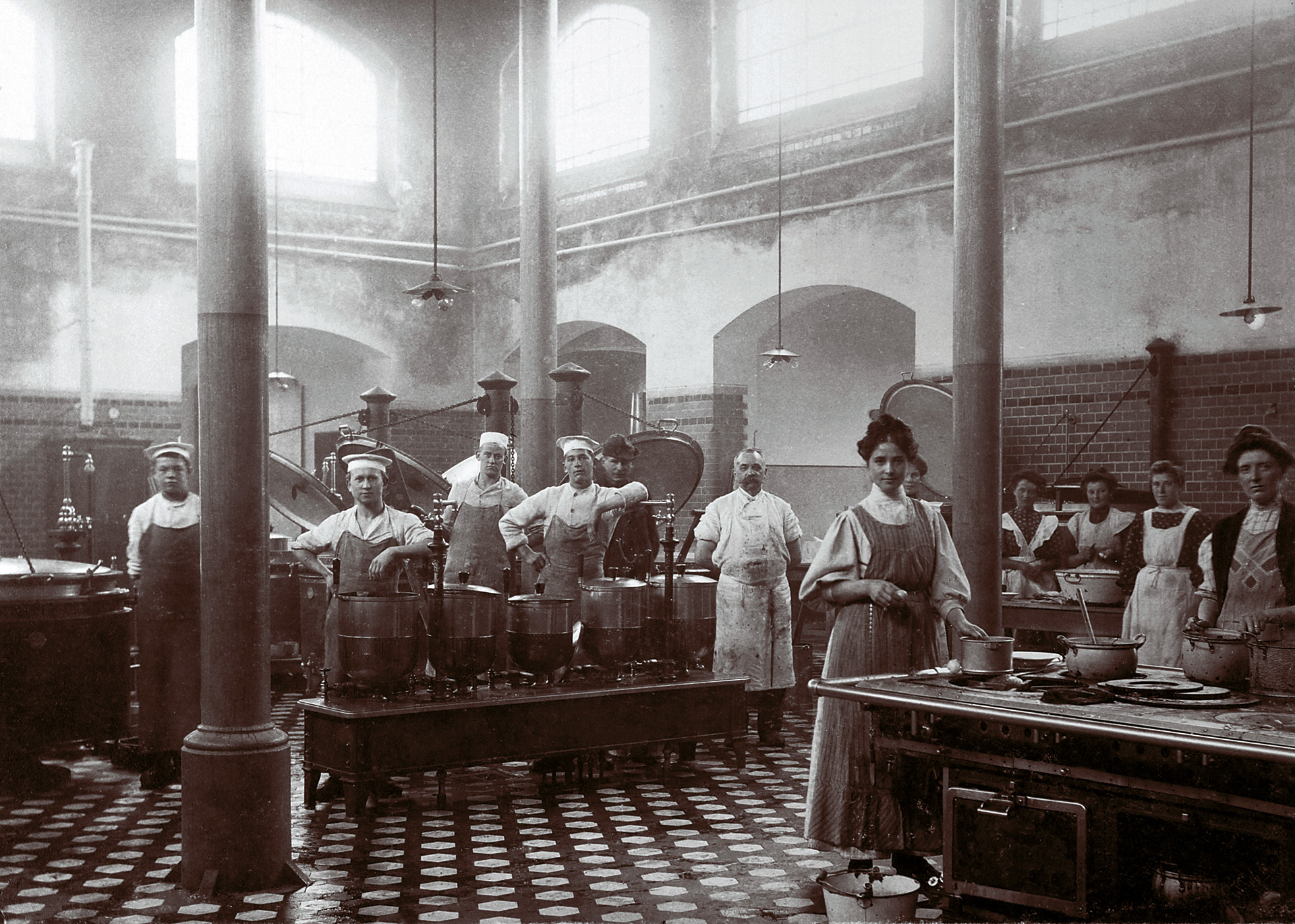
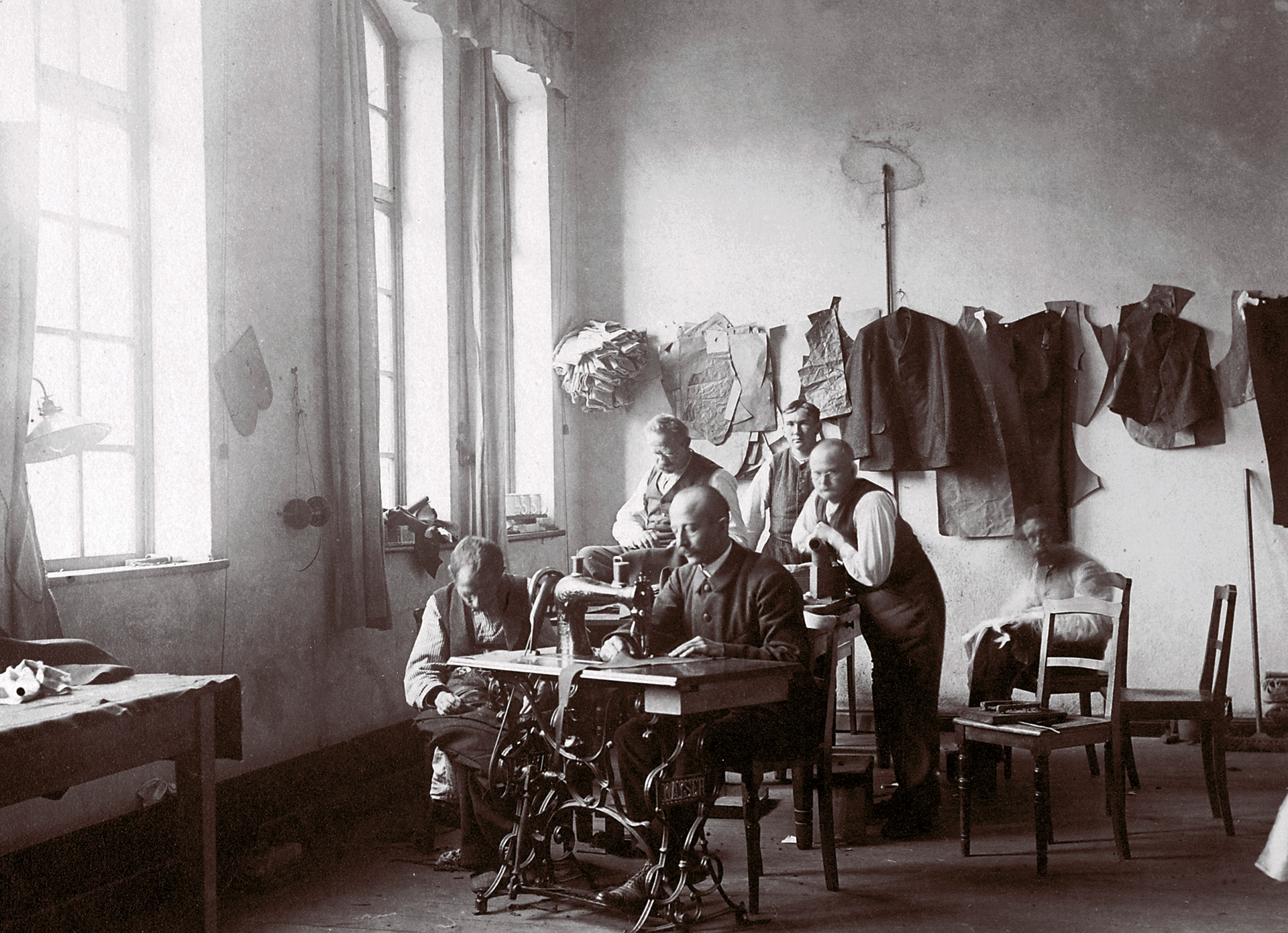
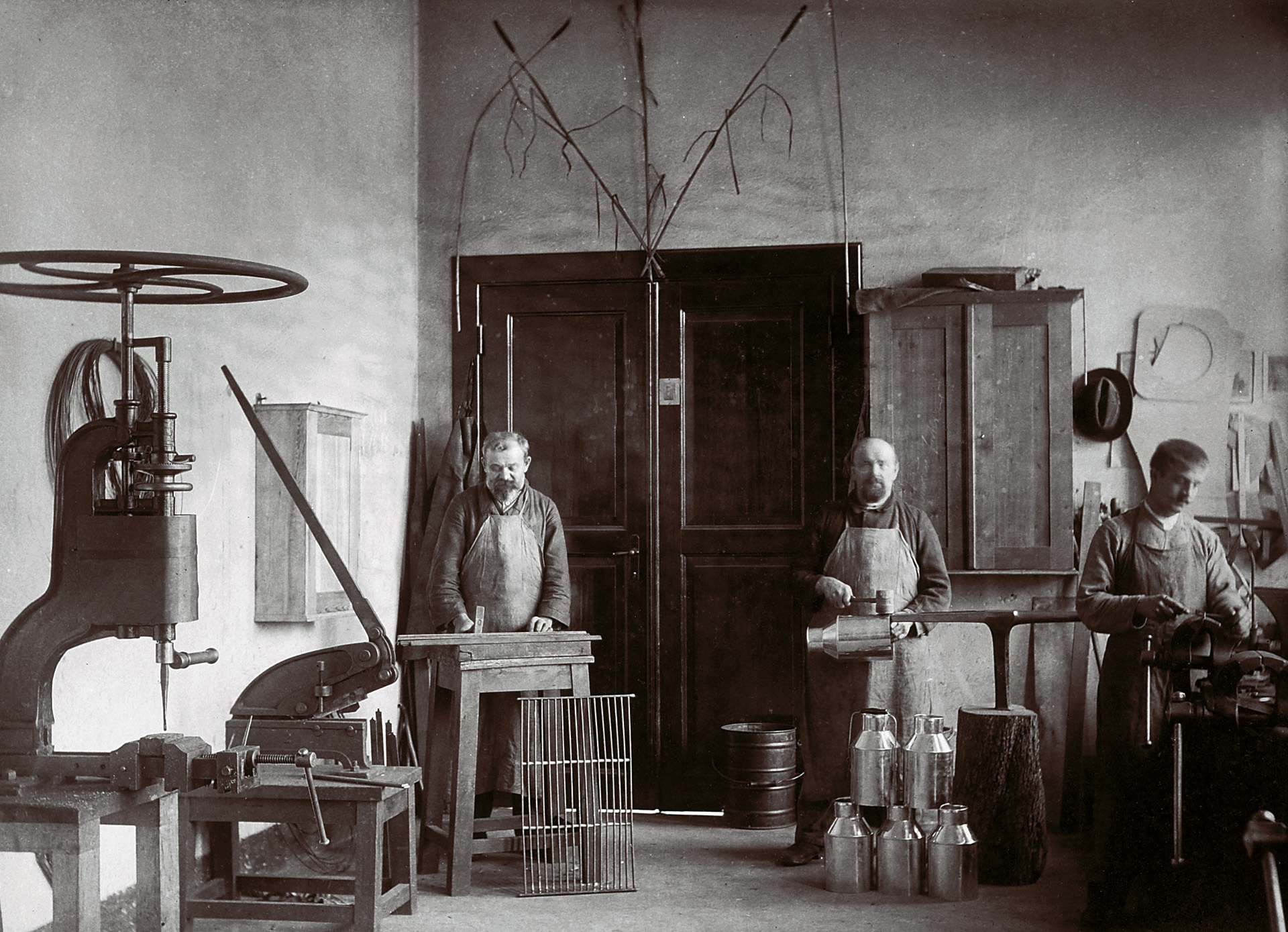
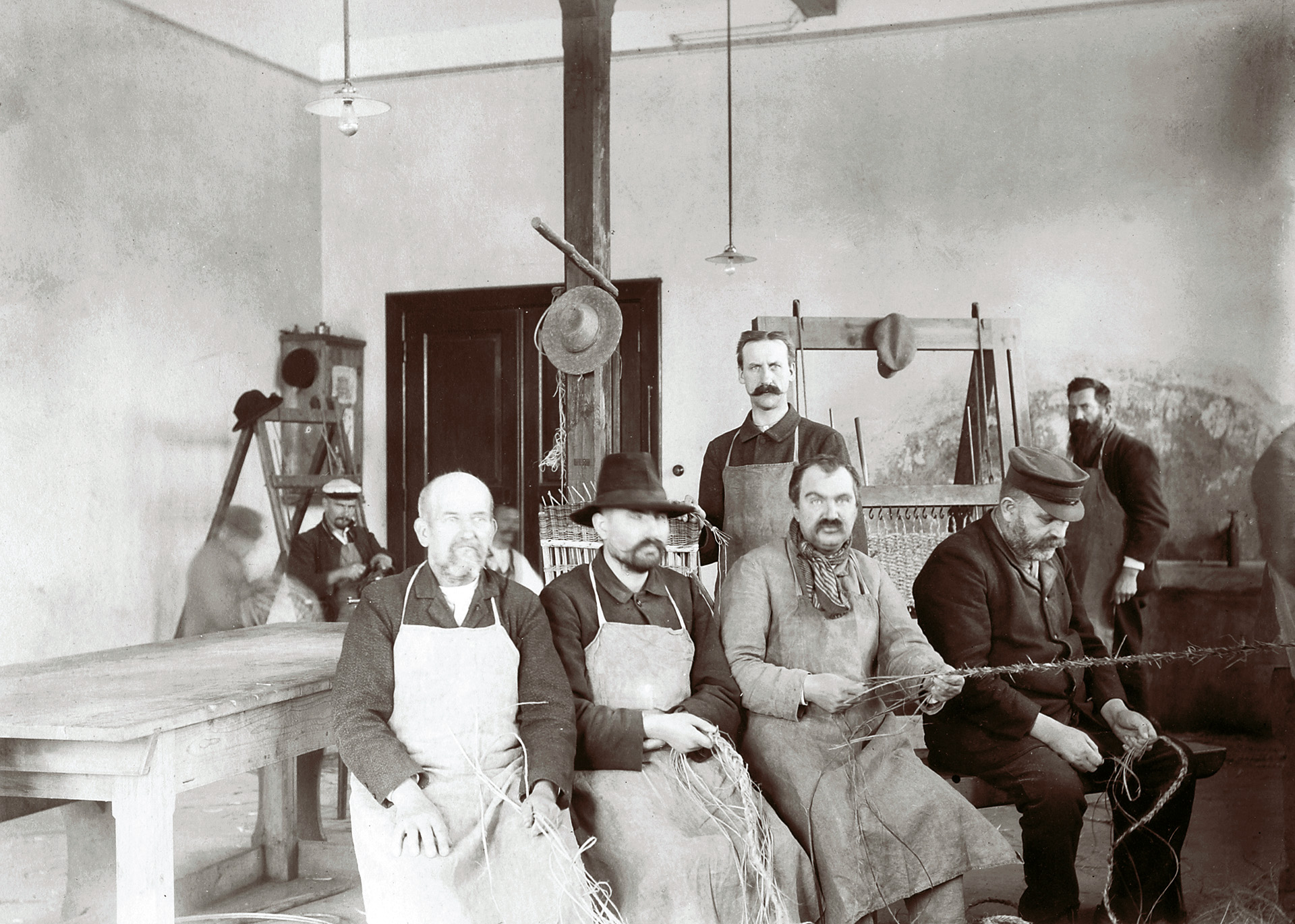
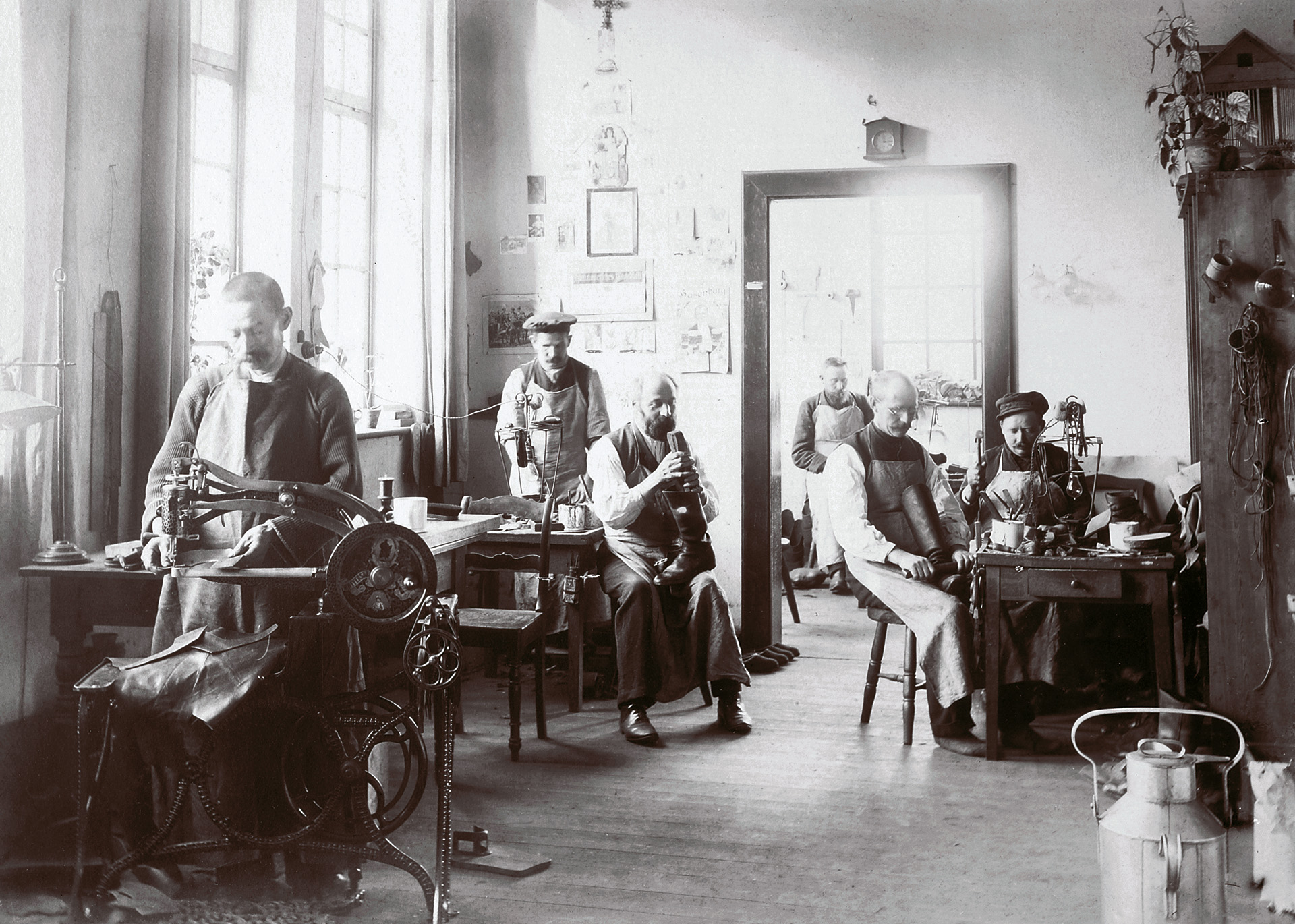
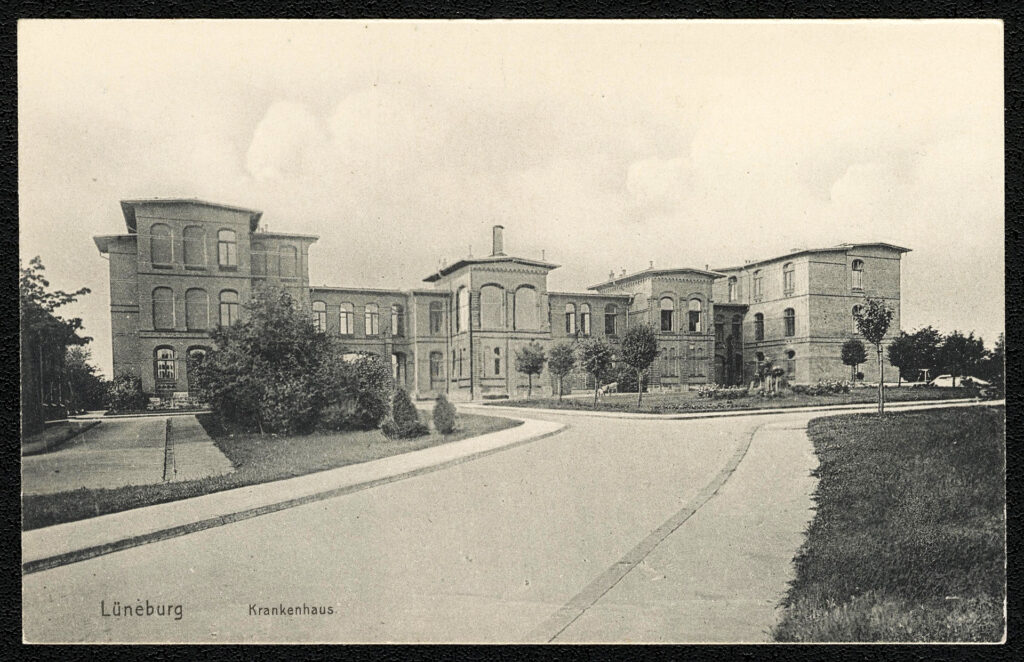
Postcard of the Lüneburg Municipal Hospital, around 1900.
StadtALg, BS, Druck-8134.
The municipal hospital was opened in 1900. It replaced the previous facilities Am Wandrahm and Am Klostergang. From then on, only physically ill patients were treated in the hospital.
The Lüneburg spa gardens were used for local recreation from 1907. Respiratory diseases could be treated with the help of the graduation tower (1910). The Kurhaus was also used for cultural events. Otto Sachse, the director of the salt works, was the inspiration behind the park. Architect Franz Krüger constructed the buildings while at the same time supervising the second construction phase of the sanatorium and nursing home.
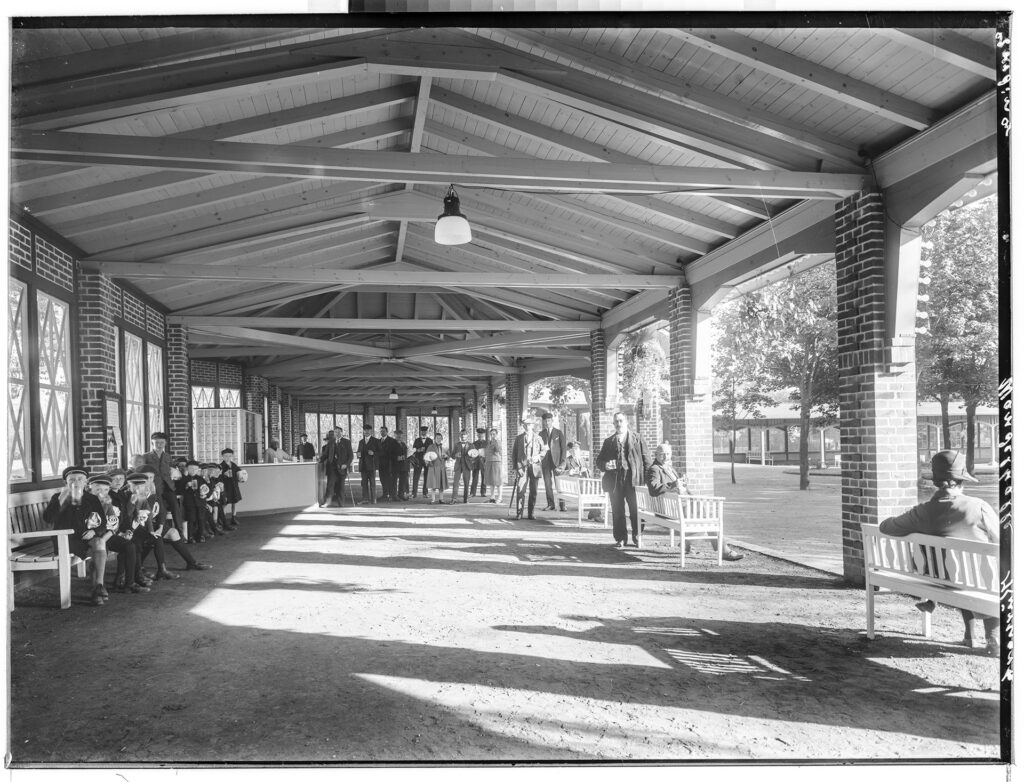
Walkway in the Lüneburg spa gardens, around 1907.
StadtALg BS, Glas-40669.
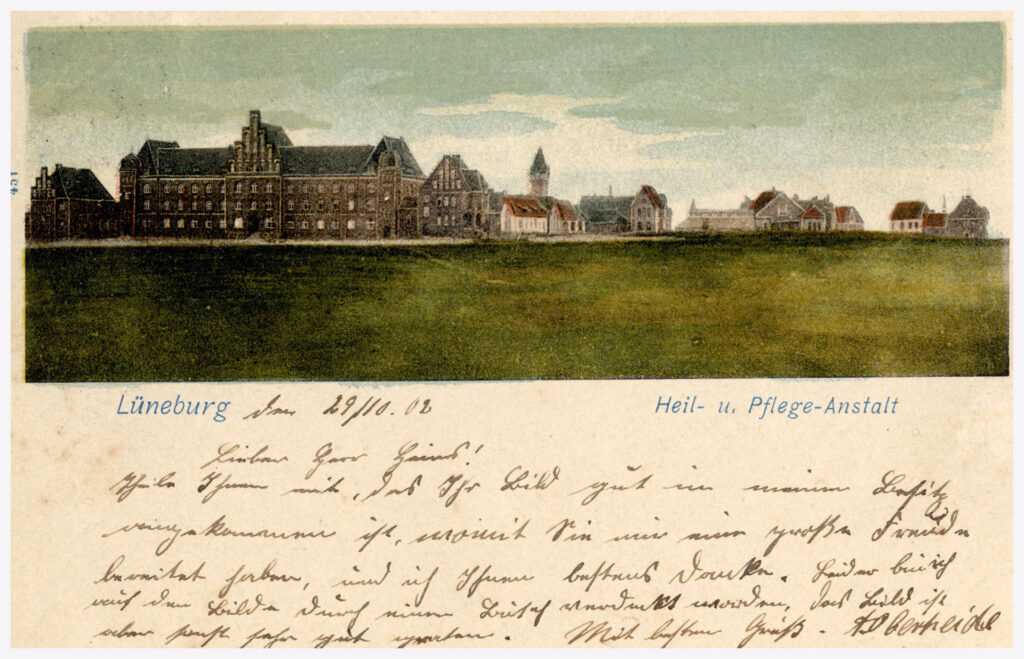
Postcard by A. Oberheide, hand-coloured, dated 29.10.1902.
ArEGL 223-1 | Private collection Rüdiger Schulz.
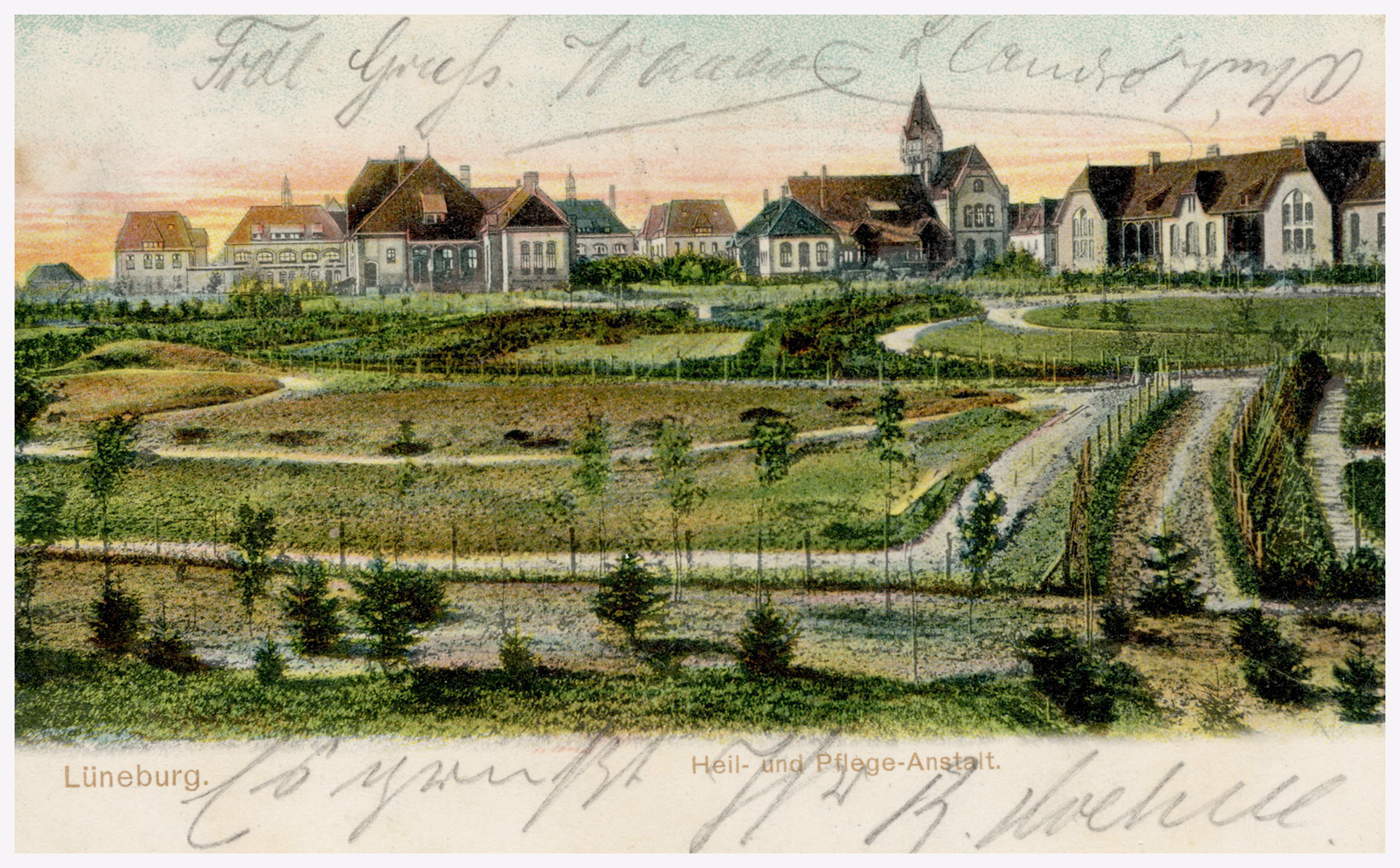
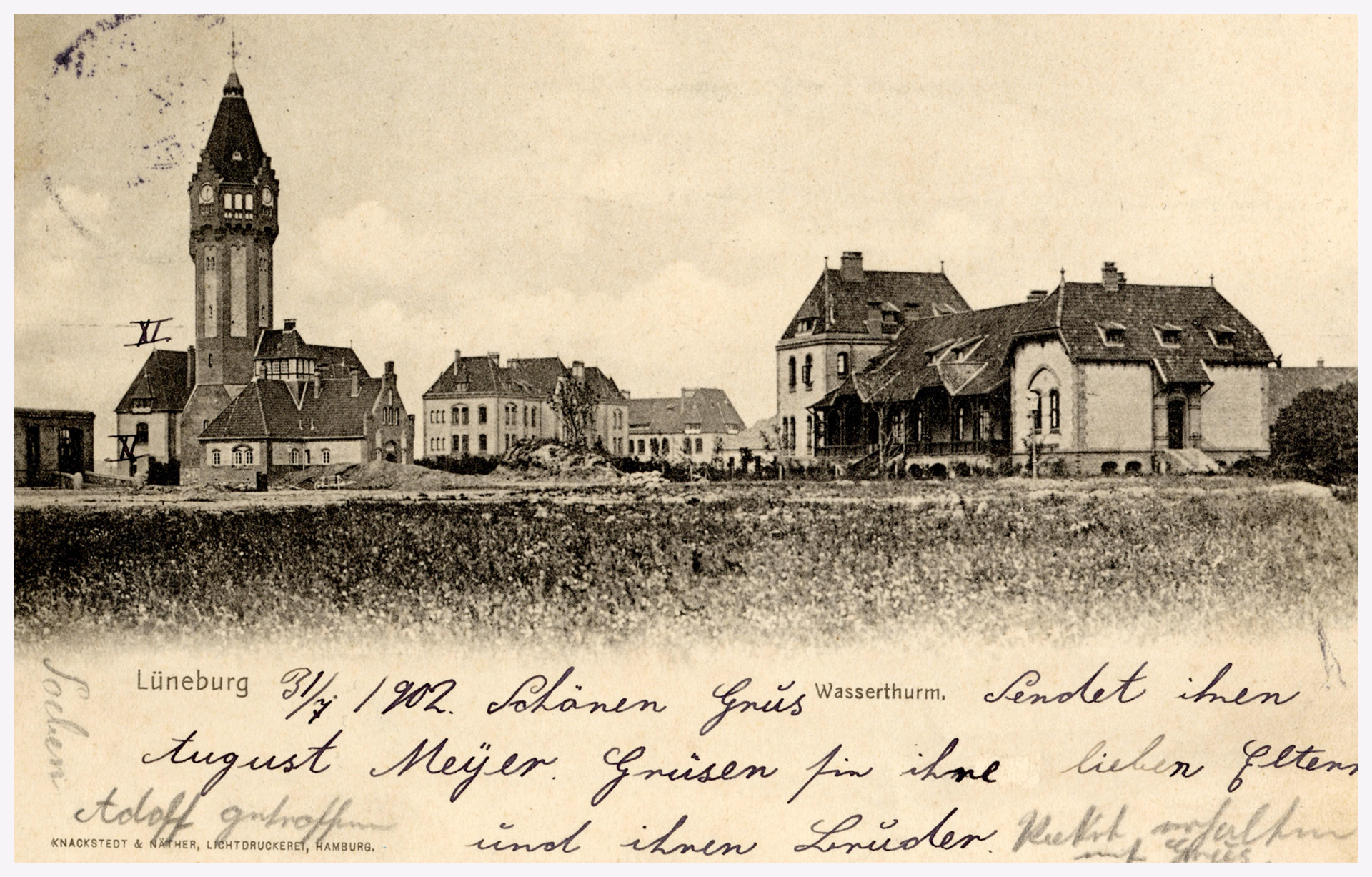
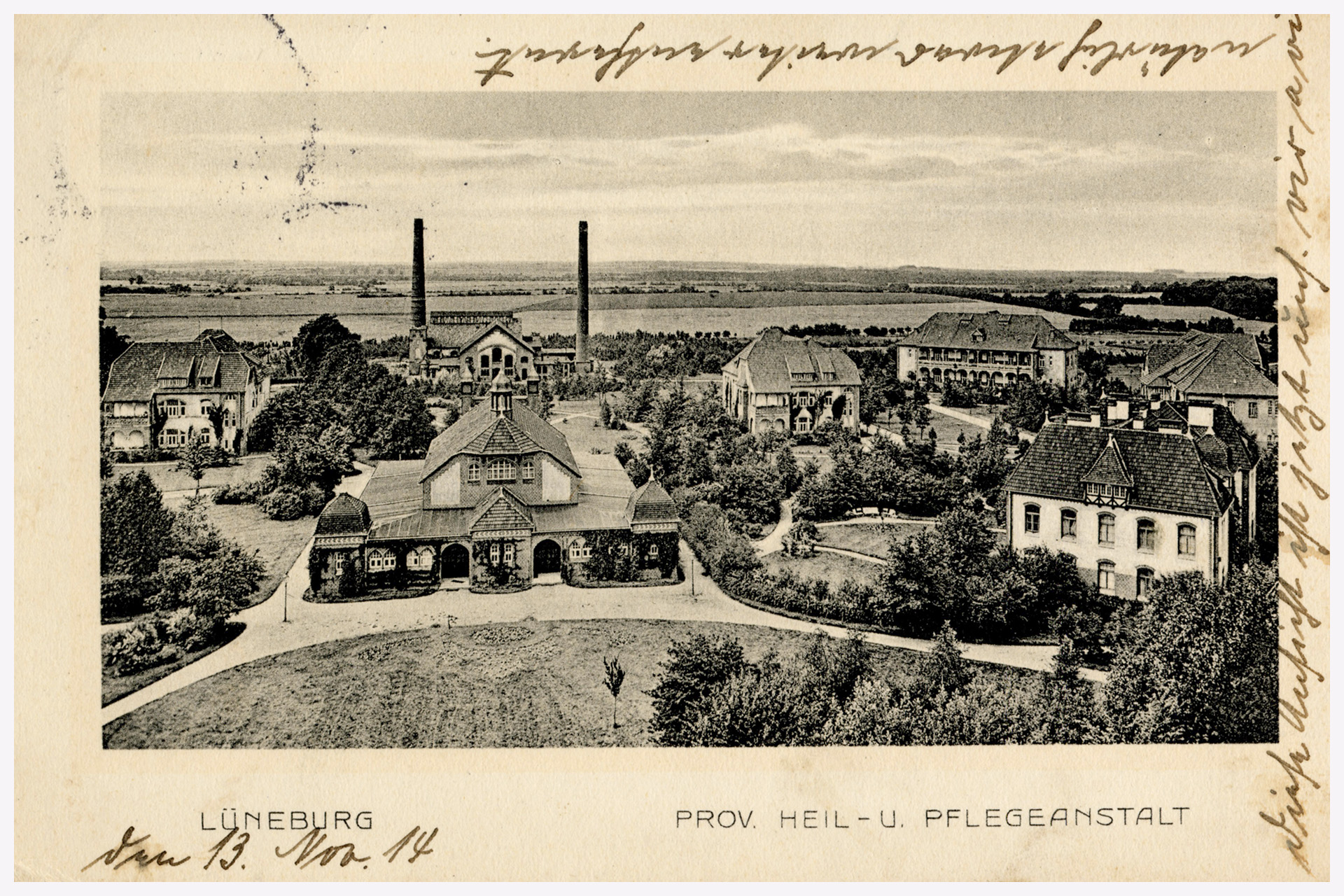
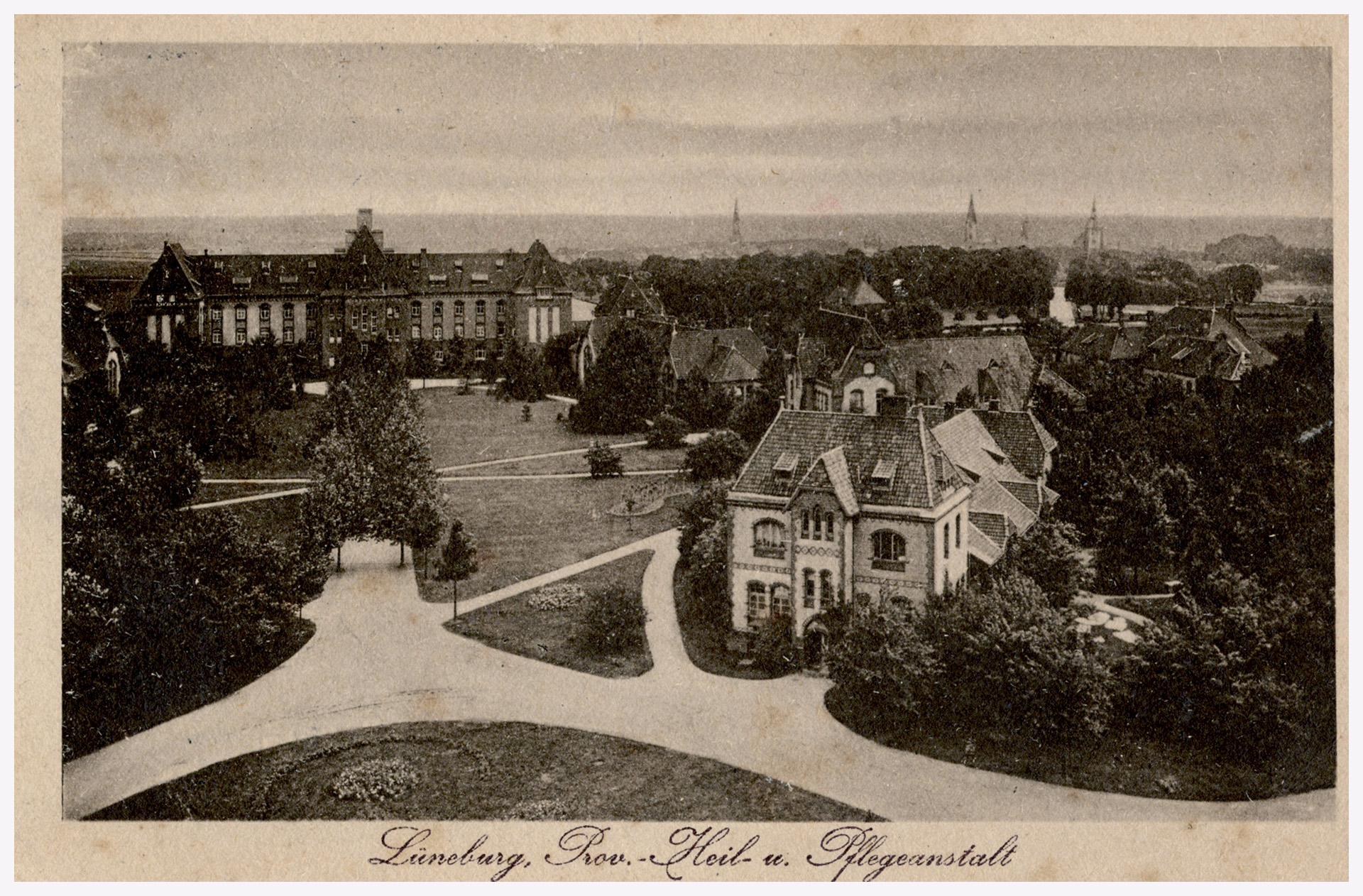
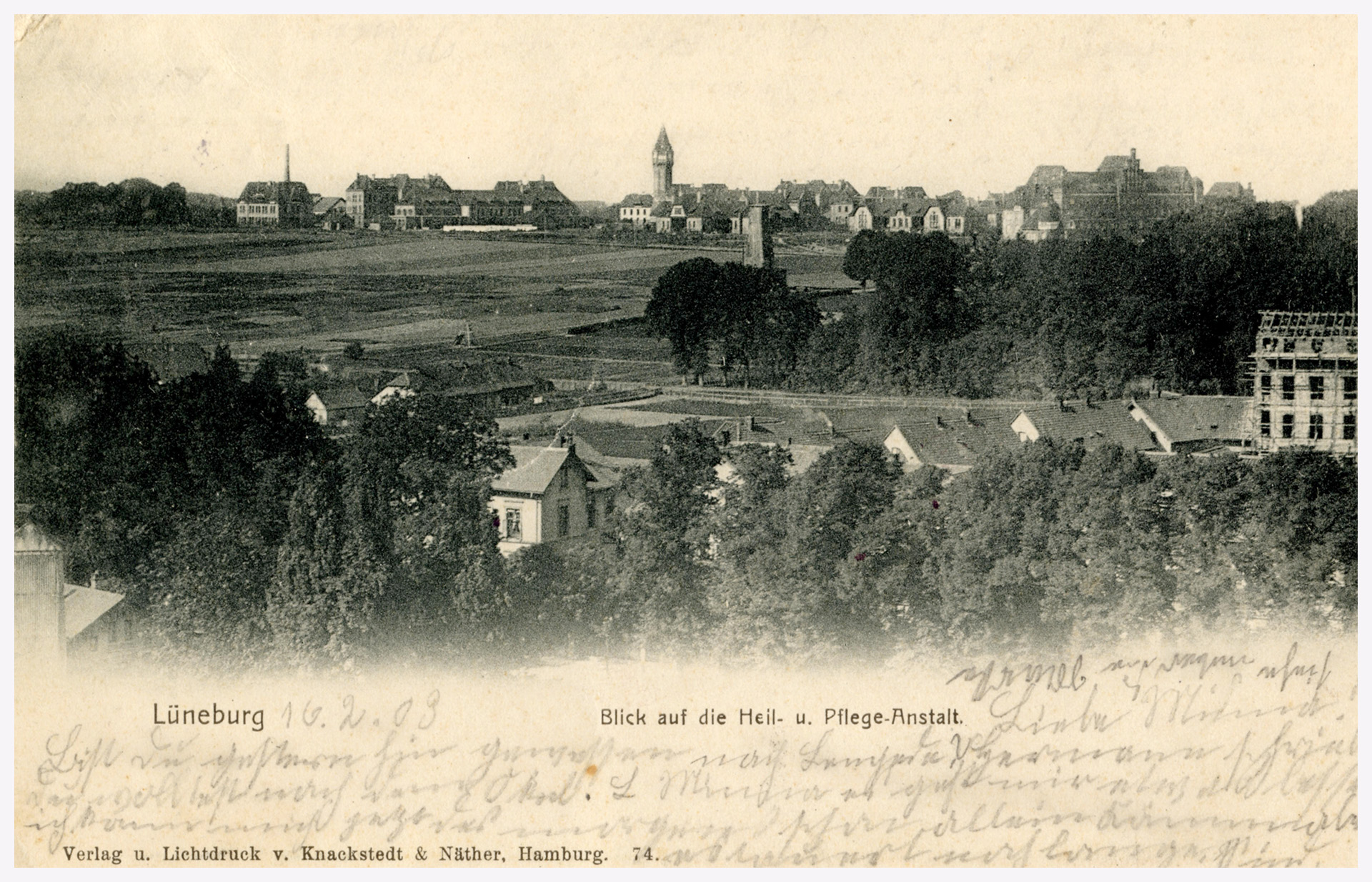
Postcards that were distributed for mail from patients to their homes or friends show how natural and unquestionable the treatment of a mental illness in a institution was.
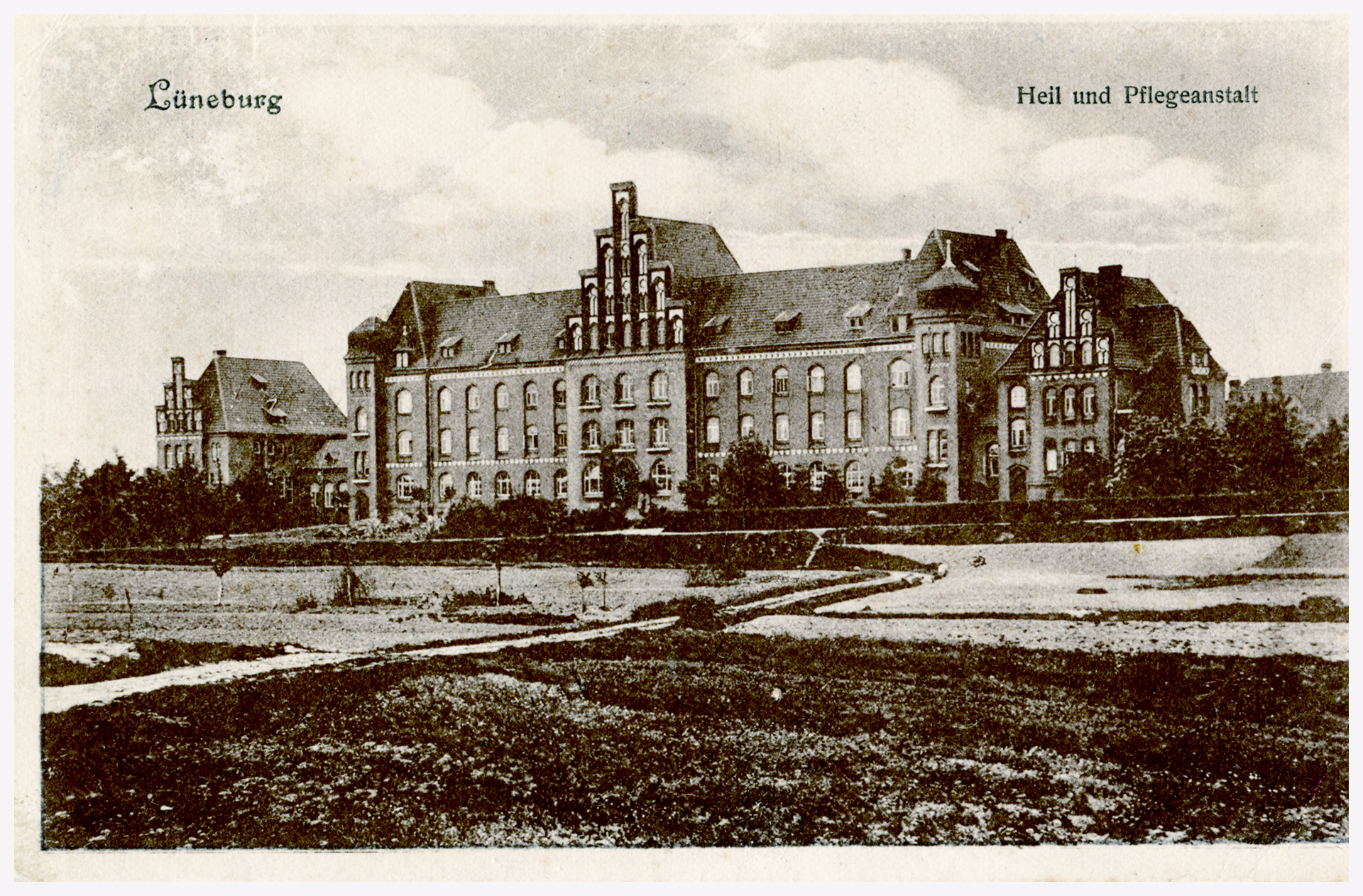
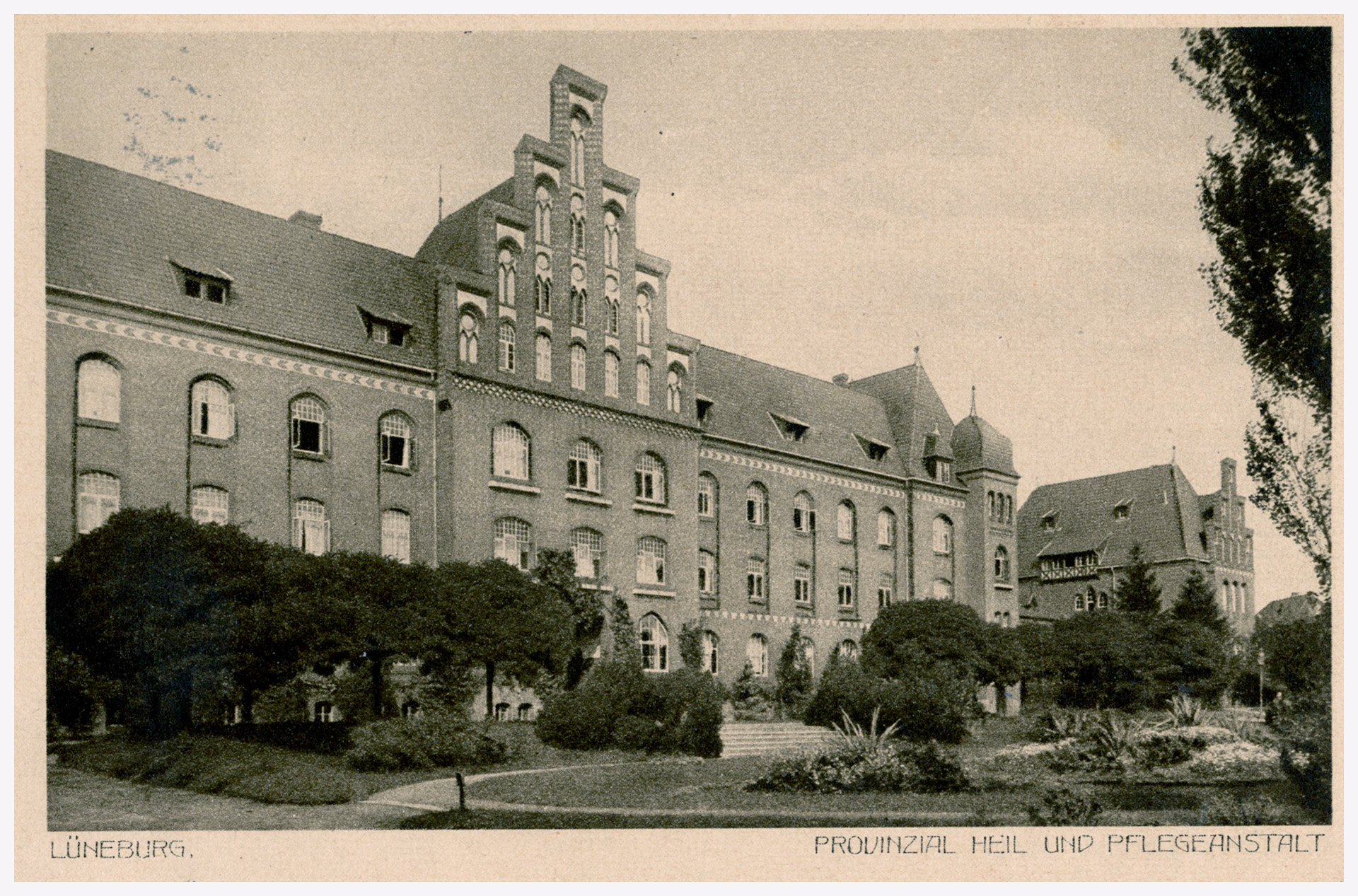
From the 1930s onwards, carers no longer saw themselves as warders, but developed a self-image as healthcare professionals.
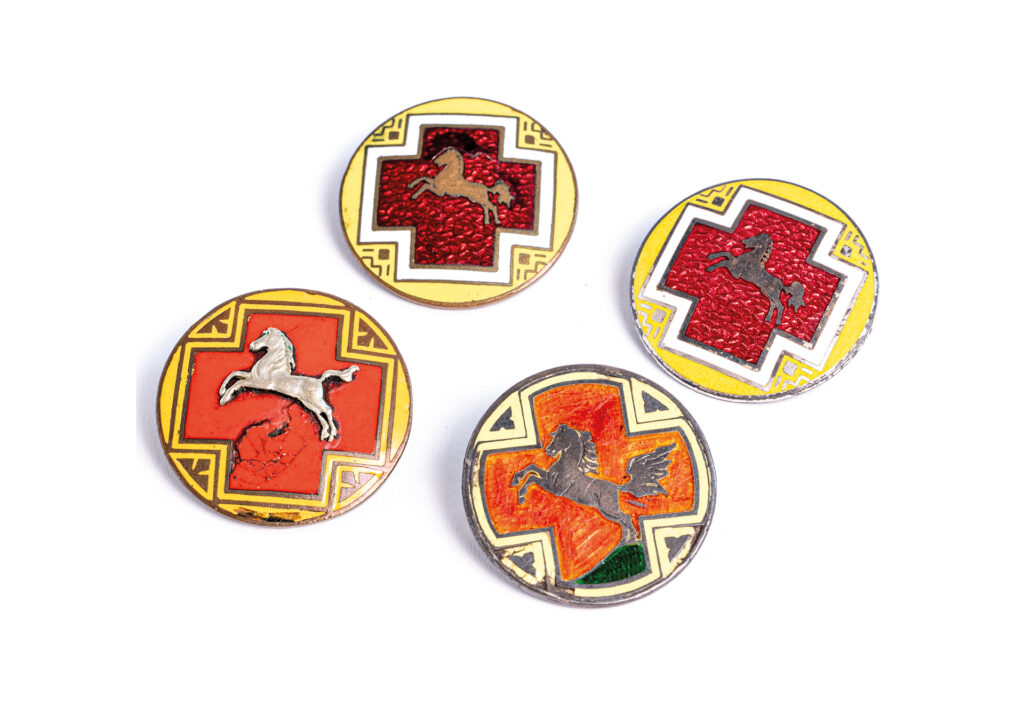
Four brooches of the nurses of the institution in Lüneburg and the Lower Saxony State Hospital, date unknown.
ArEGL 5.
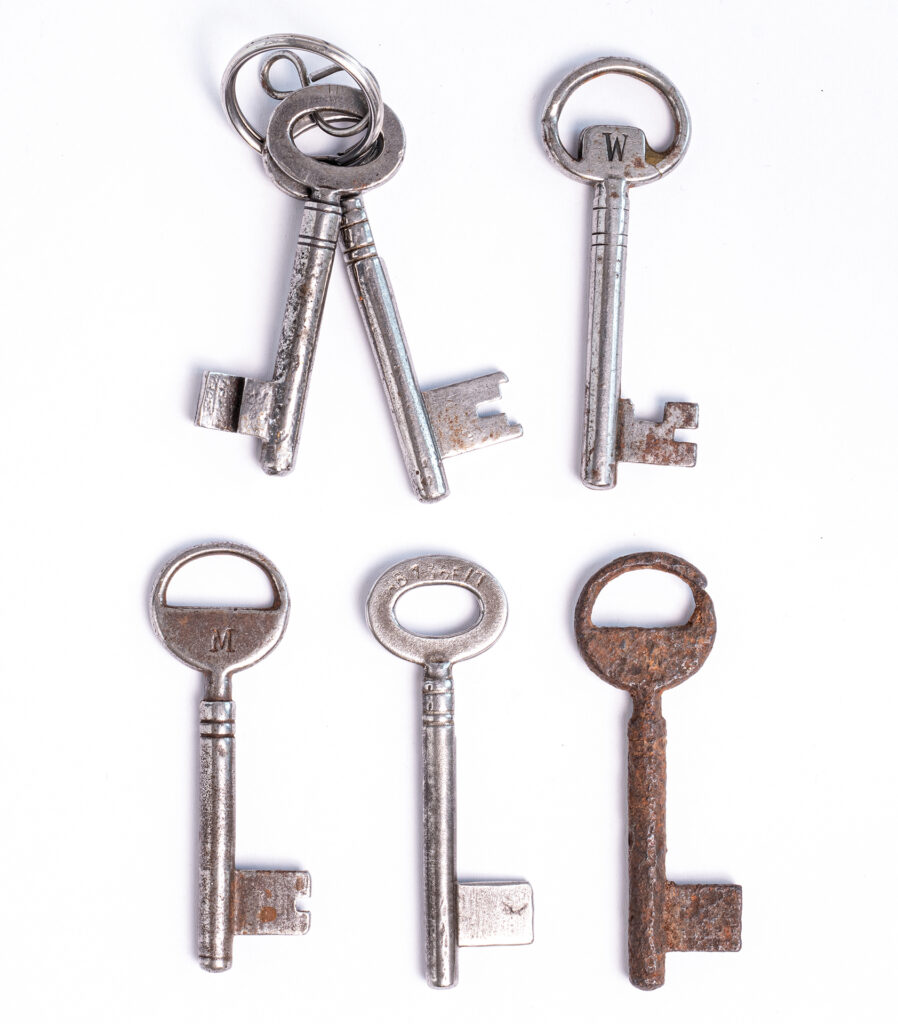
Six keys to wards of the institution in Lüneburg, 1901.
ArEGL 6.
The accommodation of patients was not always voluntary. Not all patients enjoyed freedom of movement. The carers also had the task of preventing escapes.
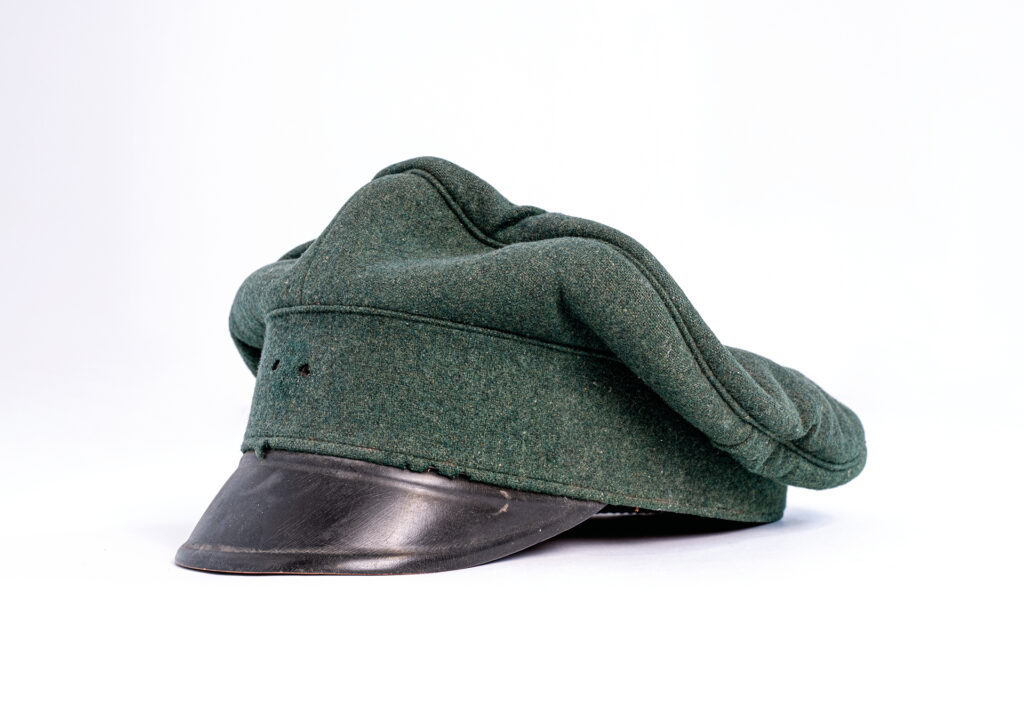
Warder’s cap by Ludwig Cohrs, date unknown.
ArEGL 4.
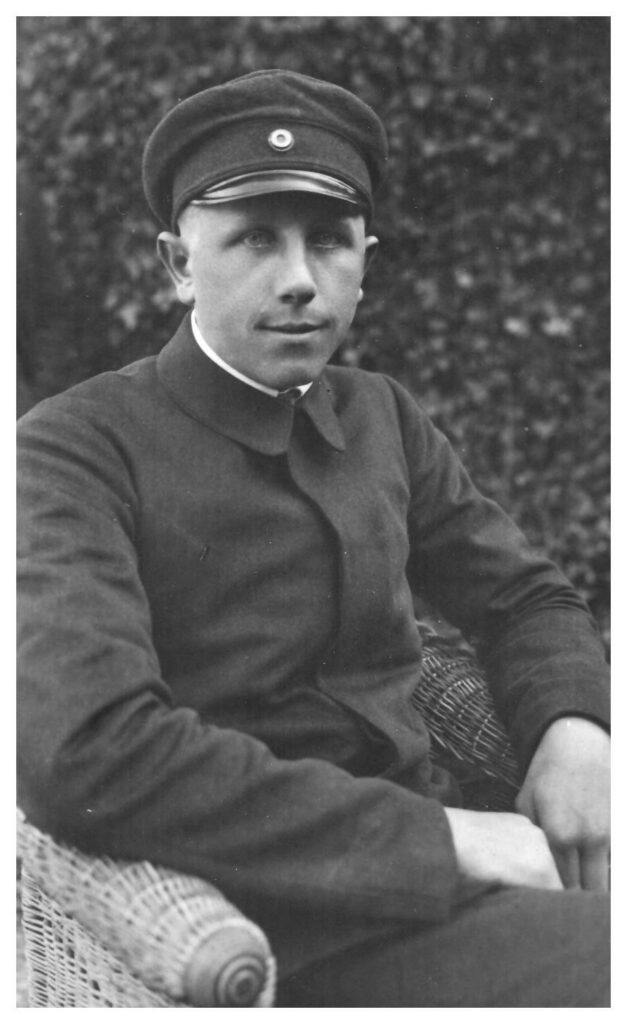
Heinrich Köpke, before 1939.
Private ownership Harm Köpke.
Heinrich Köpke (1904 – 1945) was a carer at the institution in Lüneburg from 1927 to 1939. During this time, he was also employed at the Oerrel (Gifhorn district) and Trauen (near Munster) outposts, where he cared for patients in »work therapy« in forestry and livestock farming.
