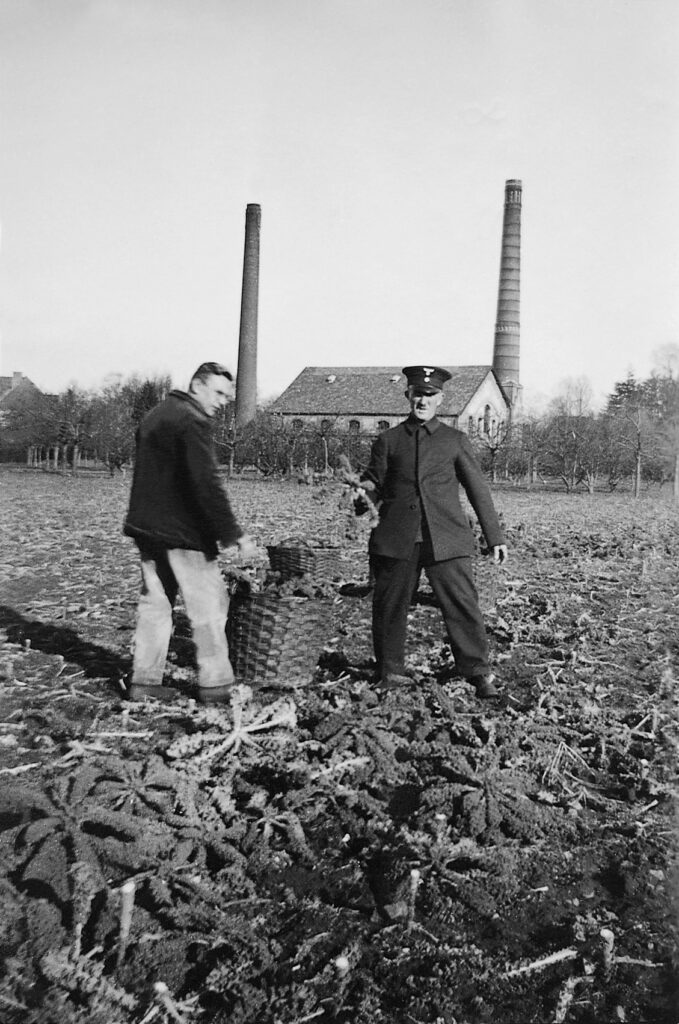
»Field column« harvesting kale, before 1945.
ArEGL 125.
Wienebüttel
The Wienebüttel estate on the city limits of Lüneburg was incorporated into the institution in Lüneburg and used as a branch. In 1908, the »excellent« management was praised at the Hanover Provincial Diet. It remained the most productive outpost until the 1930s. The fields included carp ponds, which enabled the sick and employees to enjoy a communal carp meal once a year. Gut Wienebüttel was also the last outpost operated by the Lüneburg clinic. It was not until 1981 that all the estates were given up and sold in 1982.
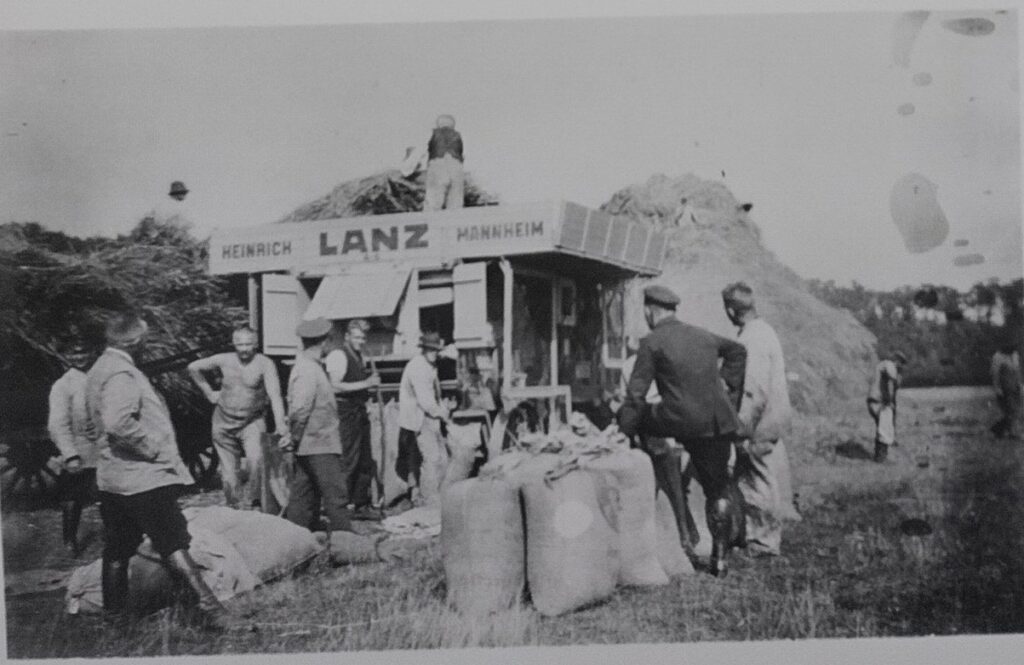
»Field column« harvesting hay, before 1945.
ArEGL 125.
Brockwinkel
After the Wienebüttel estate, the neighbouring Brockwinkel estate was the second estate belonging to the institution. As the number of patients continued to grow, the estate was leased for 25 years in 1911, thus expanding the area used by the sanatorium and nursing home by around 200 hectares.
Trauen
In 1920, the provincial administration acquired the 500-hectare Trauen estate near Munster. Initially, prisoners of war from the First World War and offenders worked there. In 1926, they were replaced by 25 patients from the sanatorium and nursing home. Livestock farming was carried out with horses, cows, pigs and, above all, heath sheep.
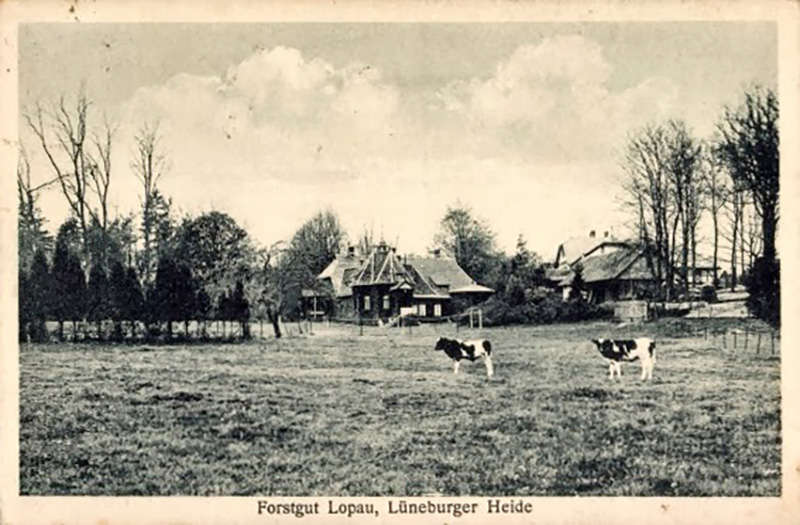
Postcard, Lopau forest estate, 1926.
Lopau
From 1927, the 25-hectare Lopau forestry estate near Munster belonged to the lands of the institution in Lüneburg. Ten to 15 patients worked there exclusively in forestry. Adolf Hitler made a gift of 40 hectares of land to Gauleiter Otto Telschow in 1942, and it fell into disrepair after 1945.
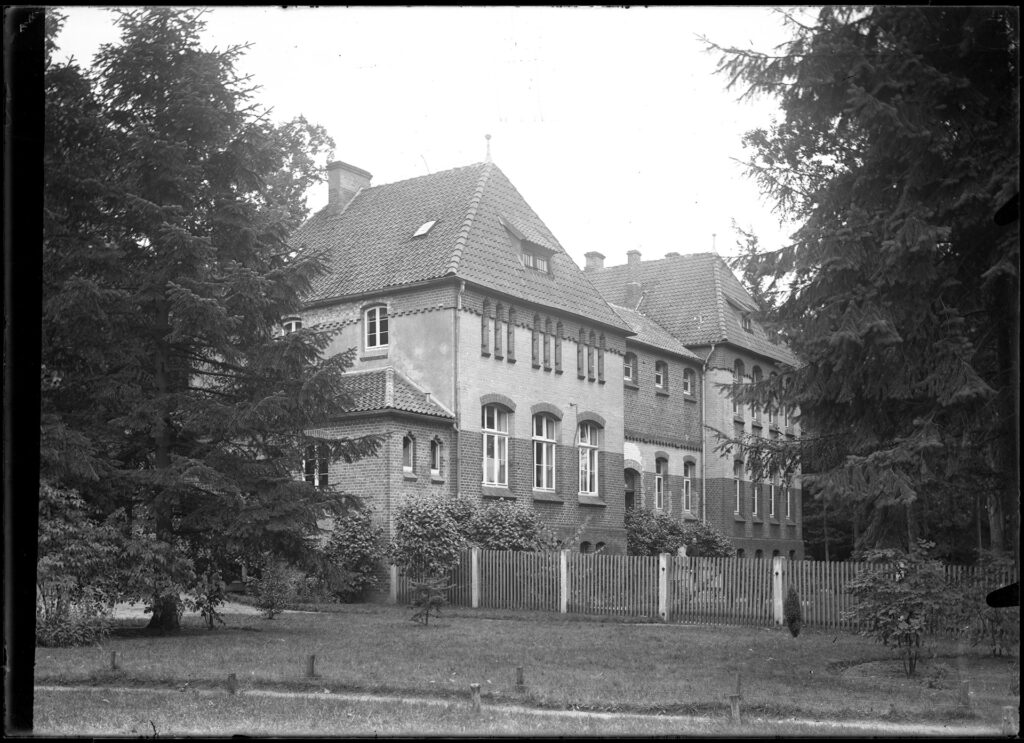
Oerrel branch, 1935, photographer Karl Redeker.
ArEGL-Internet.
OERREL
By resolution of the provincial parliament on 12 December 1899, a branch of the intitution in Lüneburg was built in Oerrel near Brockhöfe/Munster for 50,000 RM. It was run as a „Corrigentenanstalt“, a workhouse for the homeless and the homeless, among others. The branch became independent of the institution by the early 1950s at the latest and from then on became the Waldklinik.
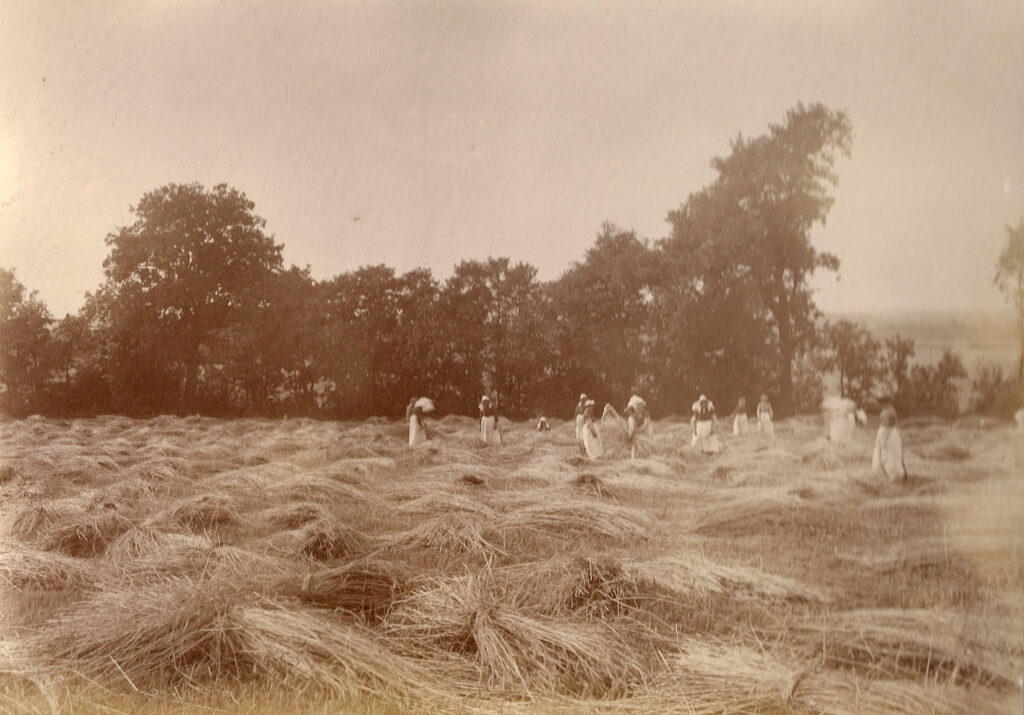
»Field column« harvesting rye, 1906.
ArEGL 1.
SUDERBURG
So far, there are only isolated references to a branch office in Suderburg in the district of Uelzen. It is currently being researched.

back