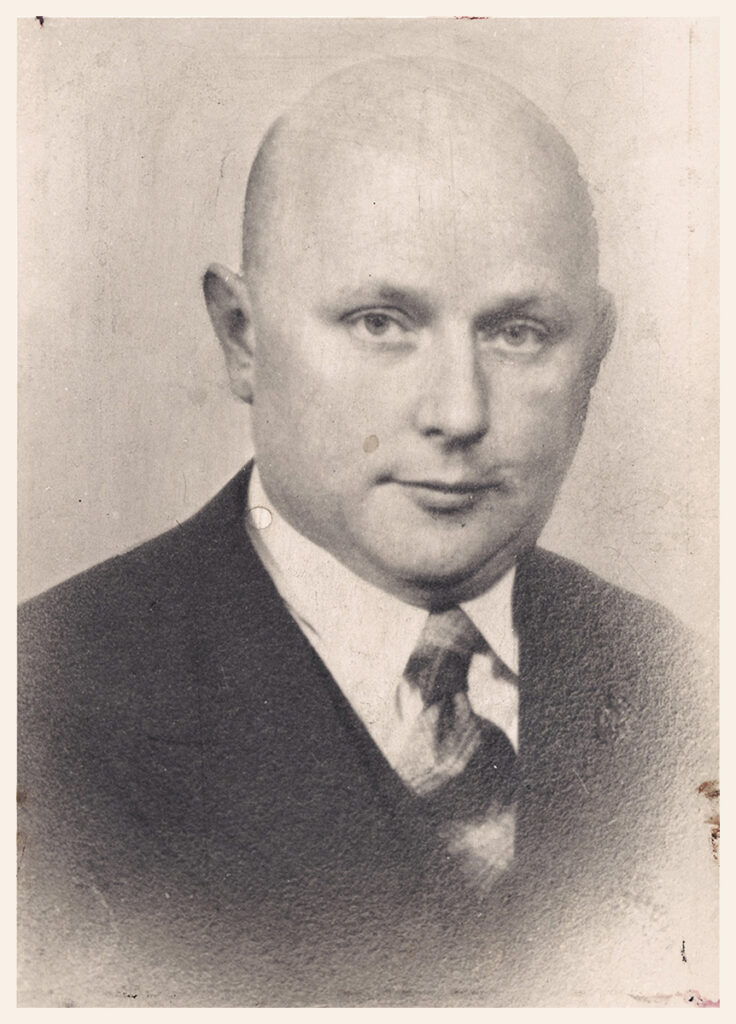
Adolf Wilke, around 1930.
StadtALg BS 44318.
ADOLF WILKE (1898 – 1946)
In addition to Wilke, other doctors (Helmut Bock, Günter Schulz and Friedrich von der Becke), a female doctor (Margret Dehlinger) and a head nurse (Margarete Dethlefsen) from Lüneburg Hospital were involved in the murder of the forced labourers. They decided to murder these women and men with an overdose of morphine.
This is the only photo of the former »Sick barracks« for Eastern labourers. It is the simple, elongated building at the back right, hidden in the trees.
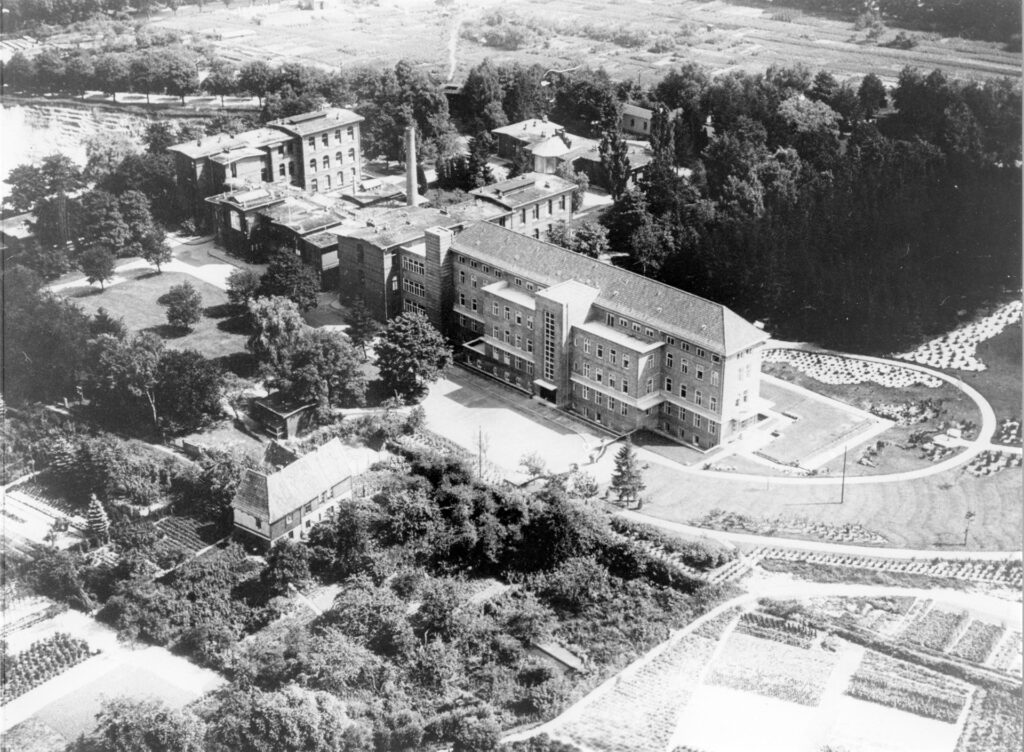
Aerial photo of Lüneburg Hospital, c. 1950.
Municipal Hospital Lüneburg.
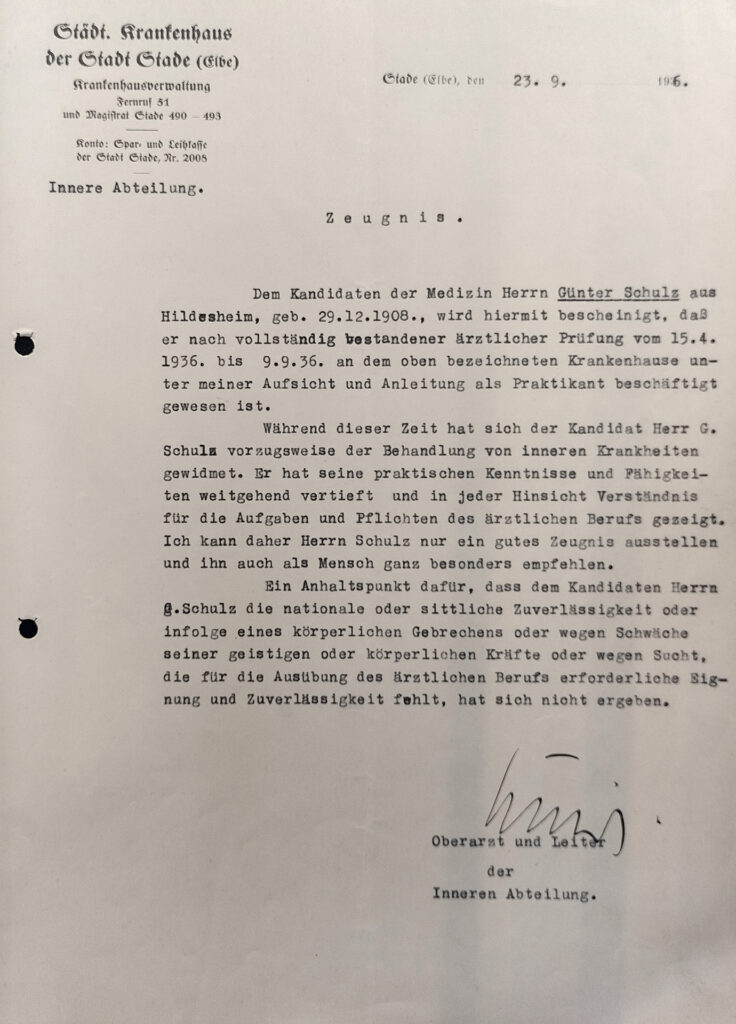
Certificate from the municipal Hospital of the city of Stade about Günter Schulz, 23 September 1936.
StadtALg PA 471.
GÜNTER SCHULZ (1906– 1946)
»To the Lord Mayor of the City of Lüneburg, I have been informed that the post of Head of the Internal Medicine Department has become vacant. I would hereby like to apply for this position. I qualified in 1936, from 1936 to 1937 I was a scheduled assistant doctor at the Städt. Hospital Stade from 1936 to 1937, and since 1937 I have been a scheduled assistant doctor at the Municipal Hospital Lüneburg. In March 1944 I was called up for military service and from July 1944 I was a departmental doctor at various field hospitals in the East. I am currently employed as an internist at a local hospital. I have been recognised as a specialist by the Lower Saxony Medical Association since June 1940. An assessment of my professional performance in the army can be requested from my current staff physician, the consultant internist Colonel Dr med. habil. Berg can be requested. I have applied for discharge today […].«
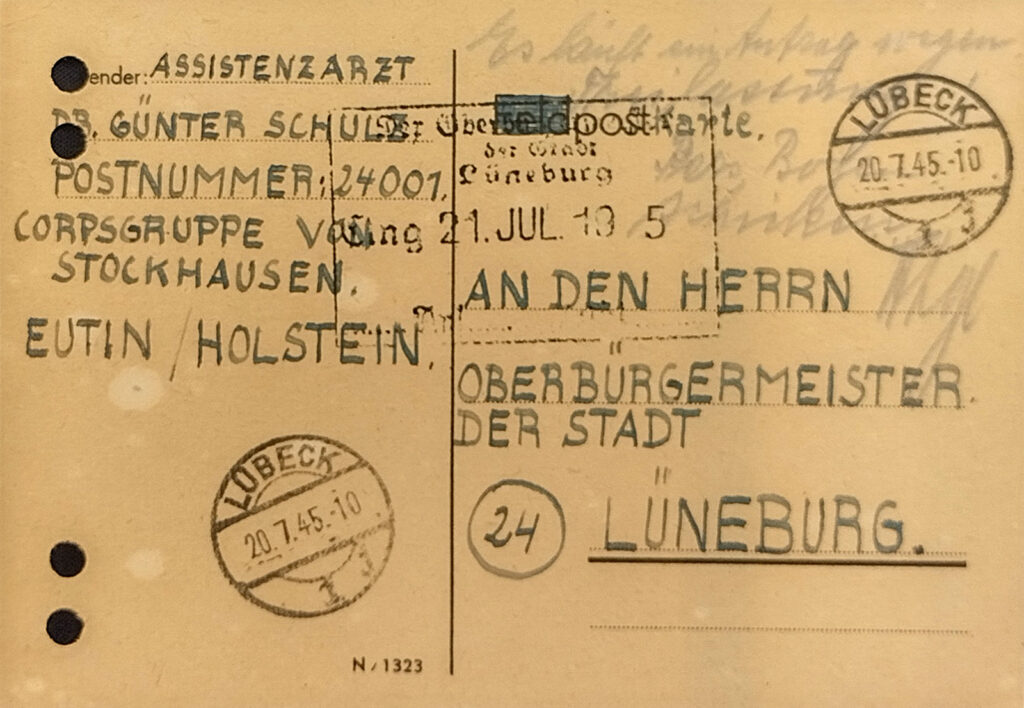
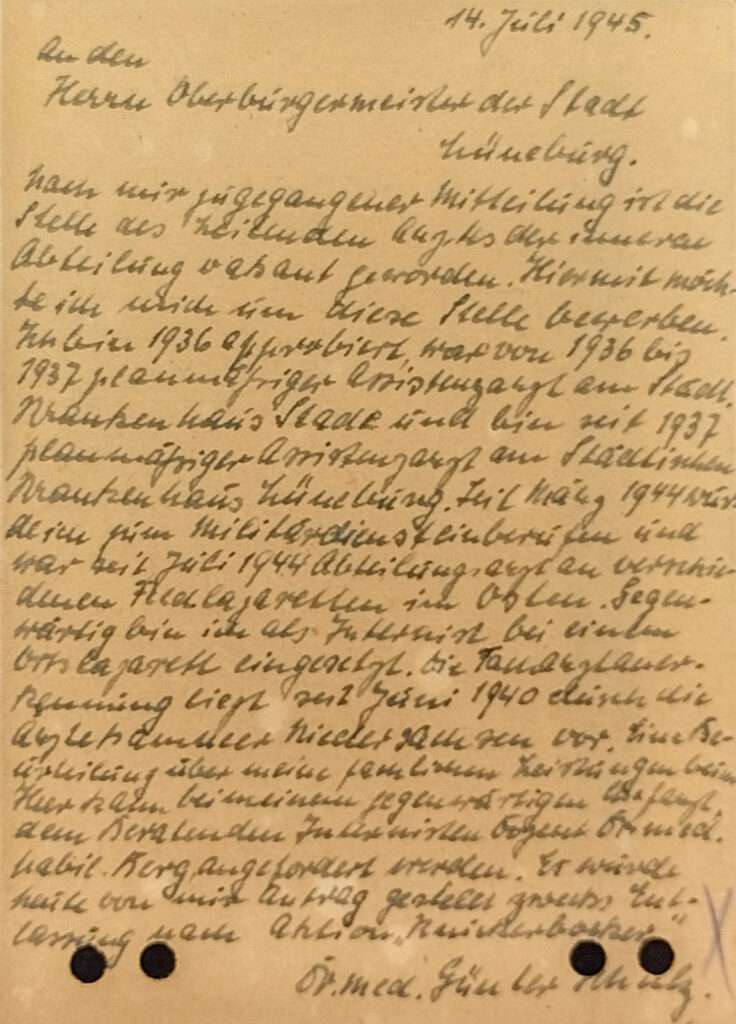
Application from Günter Schulz to the Lord Mayor of the City of Lüneburg, 14 July 1945.
StadtALg PA 471.
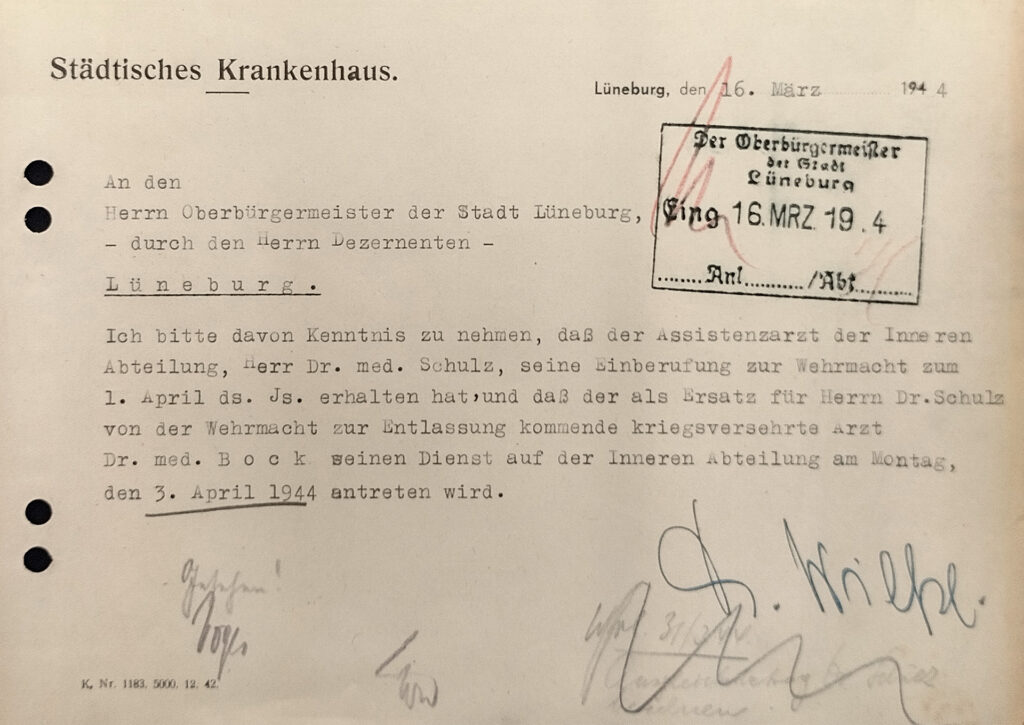
Letter from Adolf Wilke to the Lord Mayor of Lüneburg, 16 March 1944.
StadtALg PA 128.
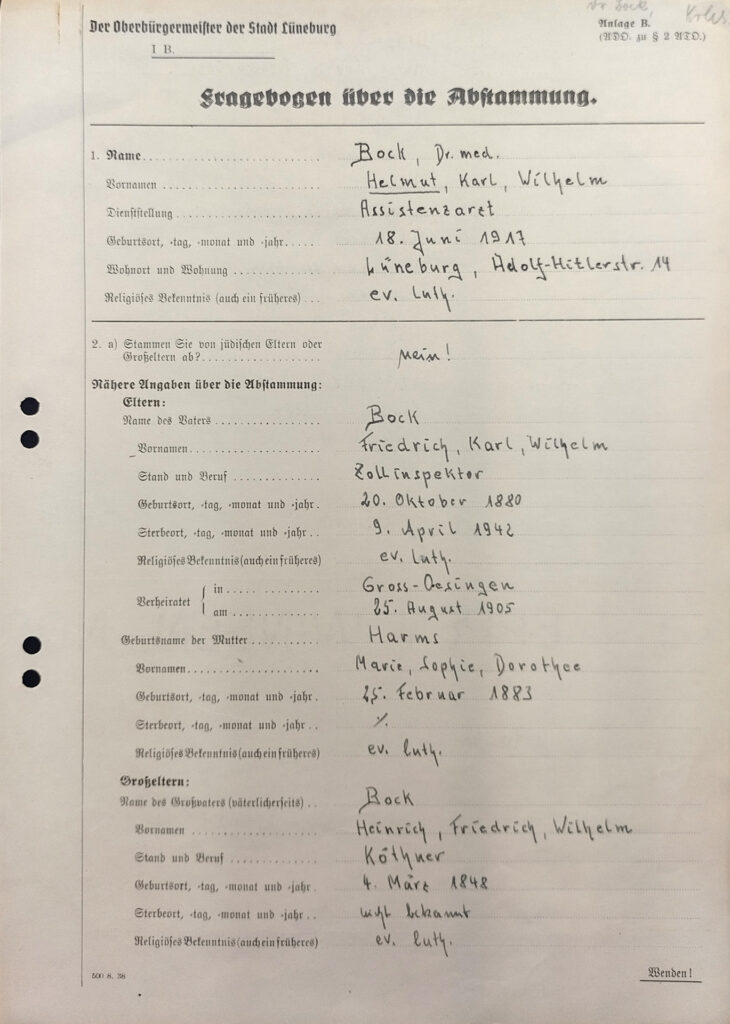
Questionnaire on ancestry, completed by Helmut Bock, front page, 10 December 1944.
StadtALg PA 128.
HELMUT BOCK (1917 – 1946)
MARGRET DEHLINGER, GEB. GIESCHEN (1913 – 1990)
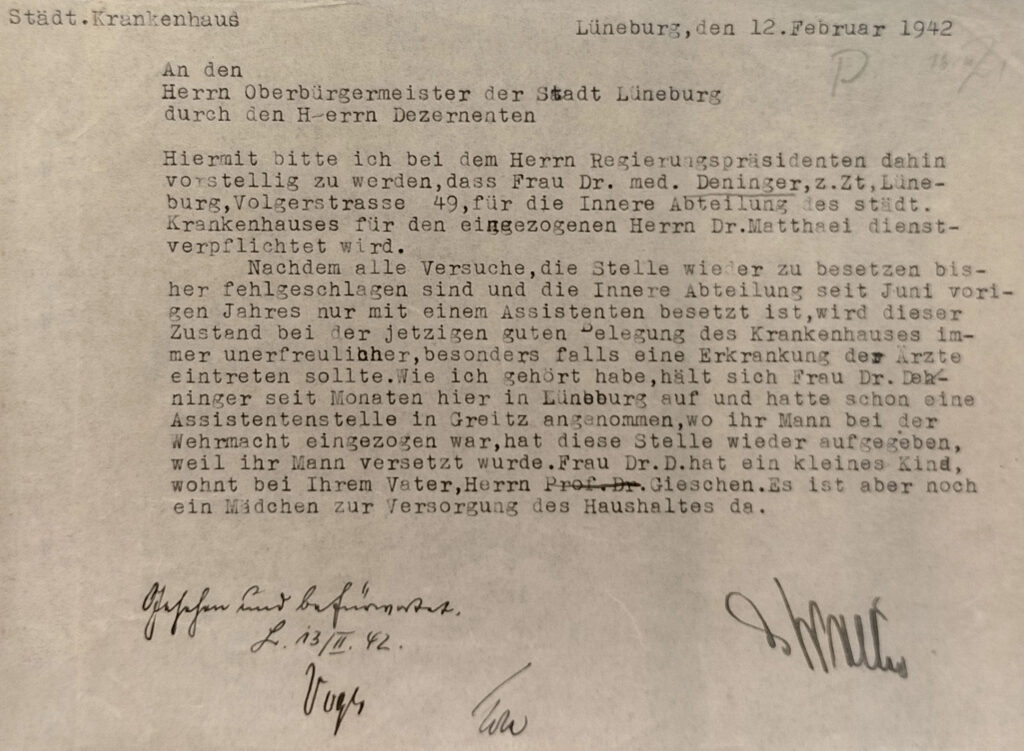
Letter from Adolf Wilke to the Lord Mayor of the City of Lüneburg, 12 February 1942.
StadtALg PA 154.
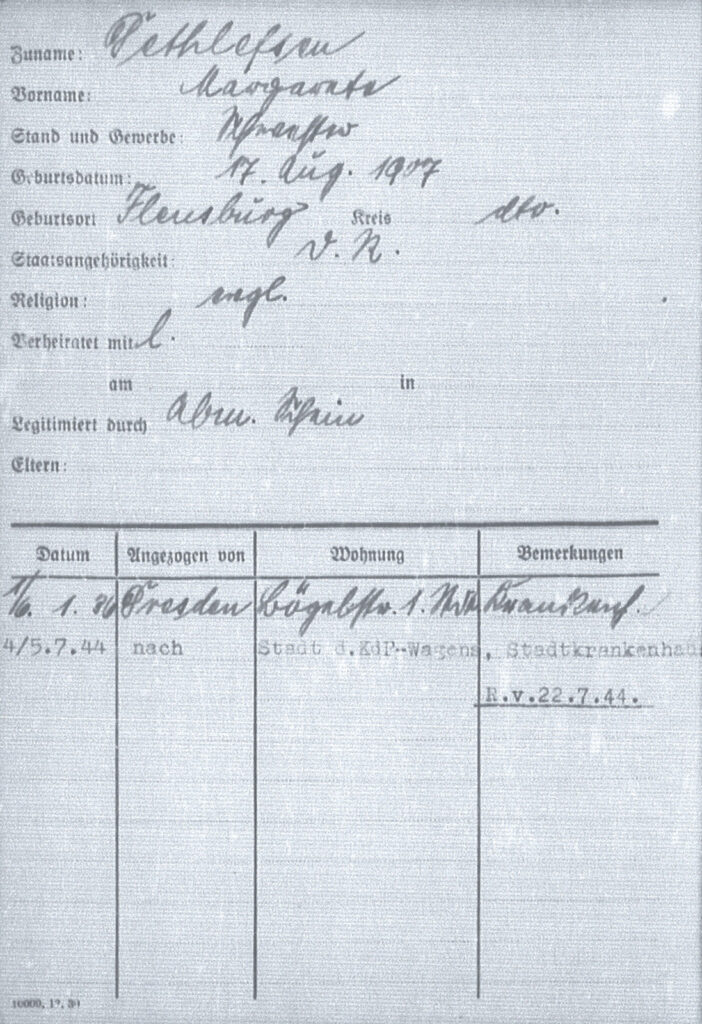
Extract from the civil register of Margarete Dethlefsen, 1944.
StadtALg, EMA-EK, Dethlefsen-Margarete.
MARGARETE DETHLEFSEN (1917 – 1946)
RICHARD HÖLSCHER (1868 – 1949)
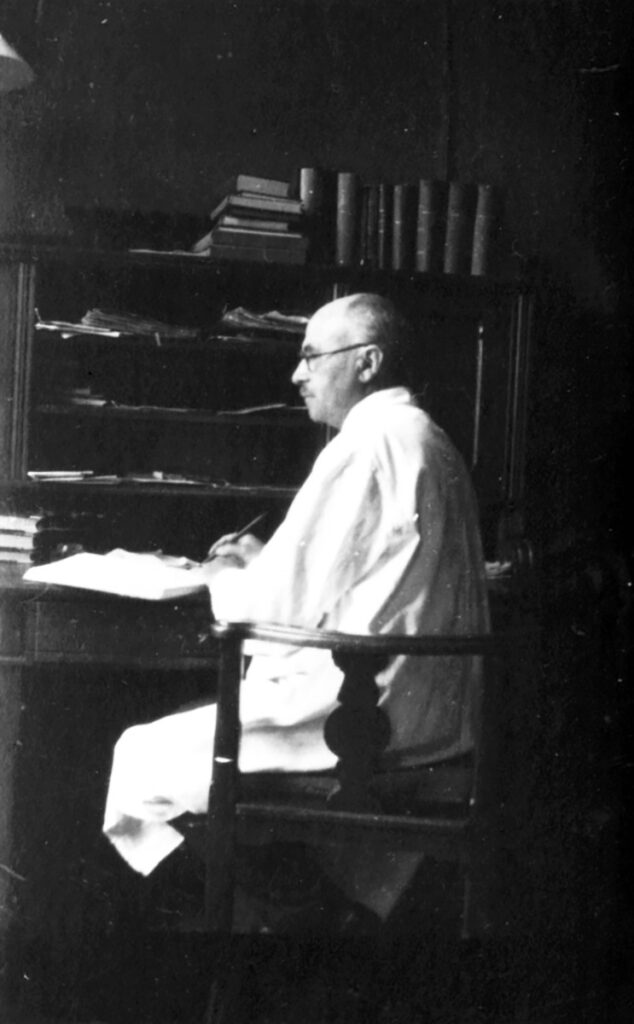
Richard Hölscher died on 17 August 1949 in Lüneburg.
Medical officer Richard Hölscher, around 1925. Album commemorating the 25th anniversary.
Lüneburg Municipal Hospital.
StadtALg PA 42.
From January 1943 to August 1945, Hölscher once again took over the management of the surgical department due to the war. Werner Kalliske had been drafted. It was not until 6 August 1945 that Richard Hölscher was decommissioned for good.
Throughout this time, Richard Hölscher was involved in forced sterilisations. He must also have been aware of the murder of forced labourers in the »foreigners‘ barracks« at his hospital, as he enjoyed the highest level of trust among the staff as the former medical director and head of surgery.
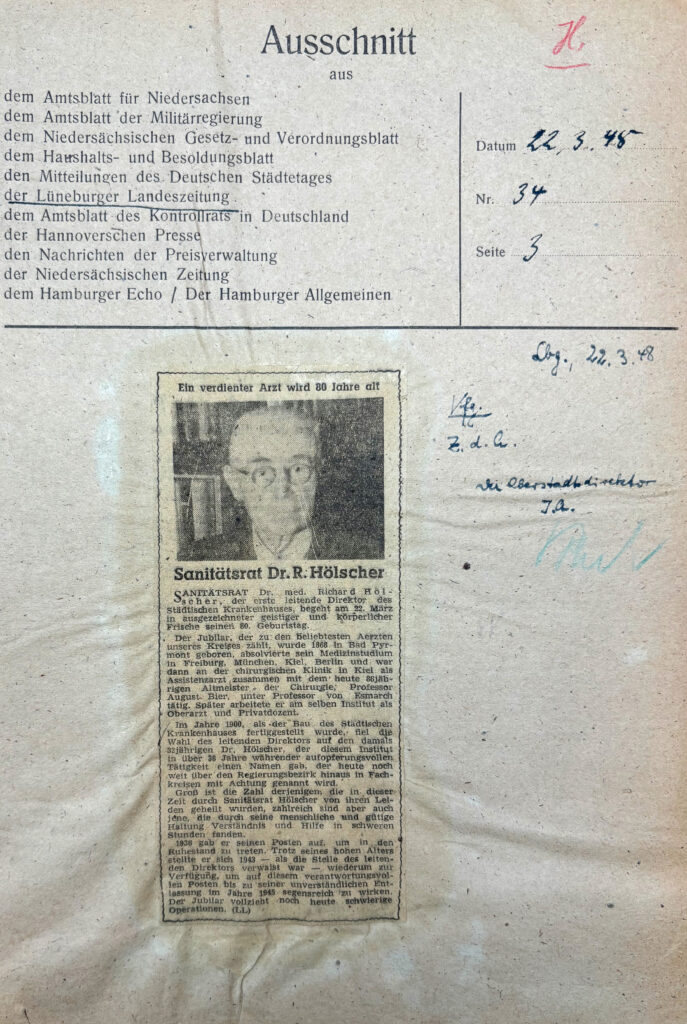
Newspaper report from the Lüneburger Landeszeitung of 22 March 1948, Vol. 3, No. 34, p. 3.
StALg PA 42.
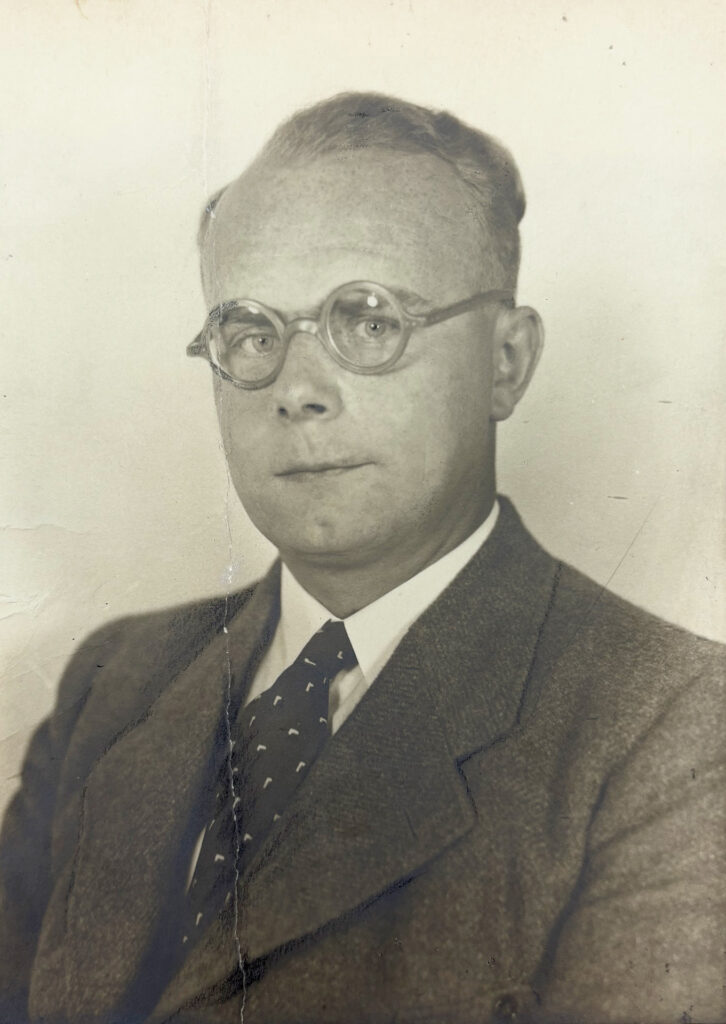
Werner Kalliske, 1936.
StALg PA 286.
WERNER KALLISKE (1901 – 1949)
MAX BRÄUNER (1882 – 1966)
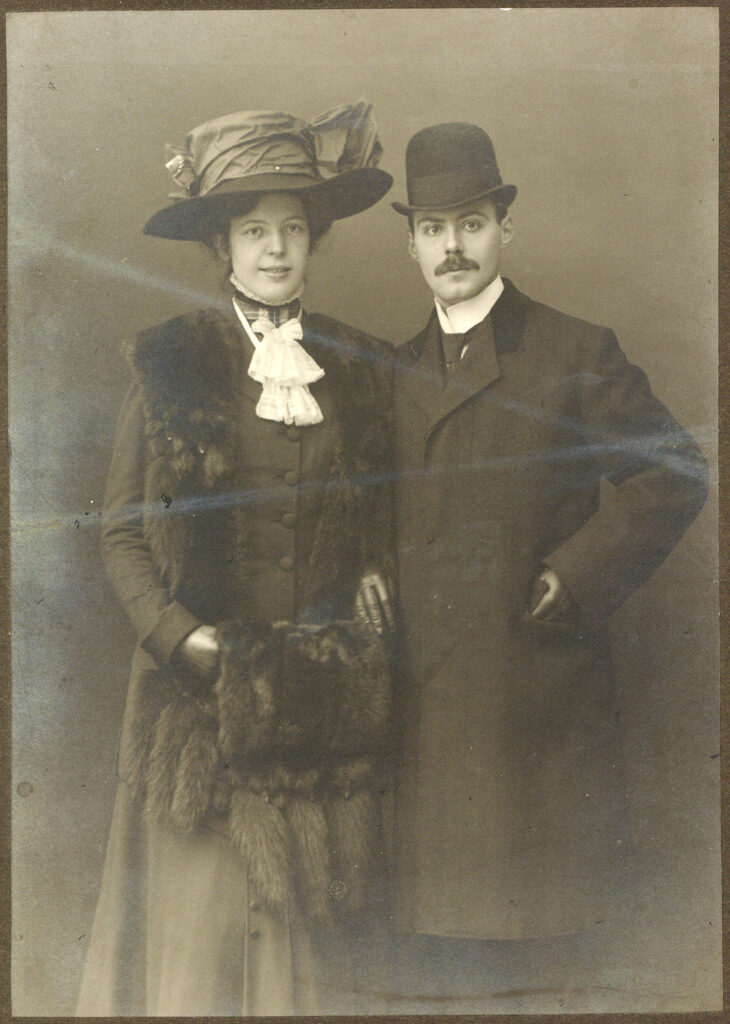
Photo of Helene Feddersen and Max Bräuner, 1911.
Private property Gisela Bhatia | ArEGL 90.
Max Bräuner was born in Karlsruhe. He was the son of a post office director and studied medicine in Munich and Göttingen. In 1909, he joined the Lüneburg Sanatorium and Nursing Home as an assistant physician. He had met his future wife, Helene Feddersen. They married in 1911. Their only son was born in 1917. In 1936, Max Bräuner became medical director of the Lüneburg Sanatorium and Nursing Home.
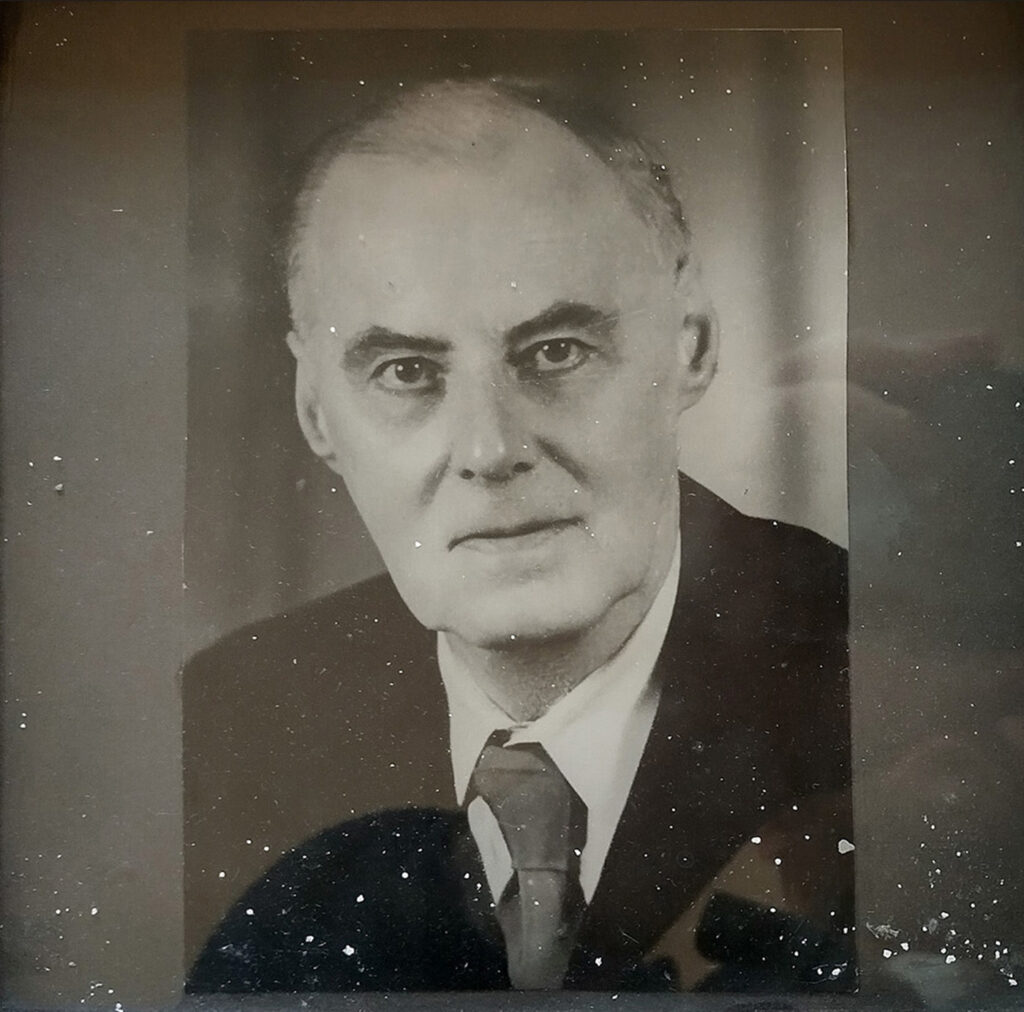
Picture in wooden frame. Front: Photo of Max Bräuner, after 1945.
Private property Gisela Bhatia | ArEGL 90.
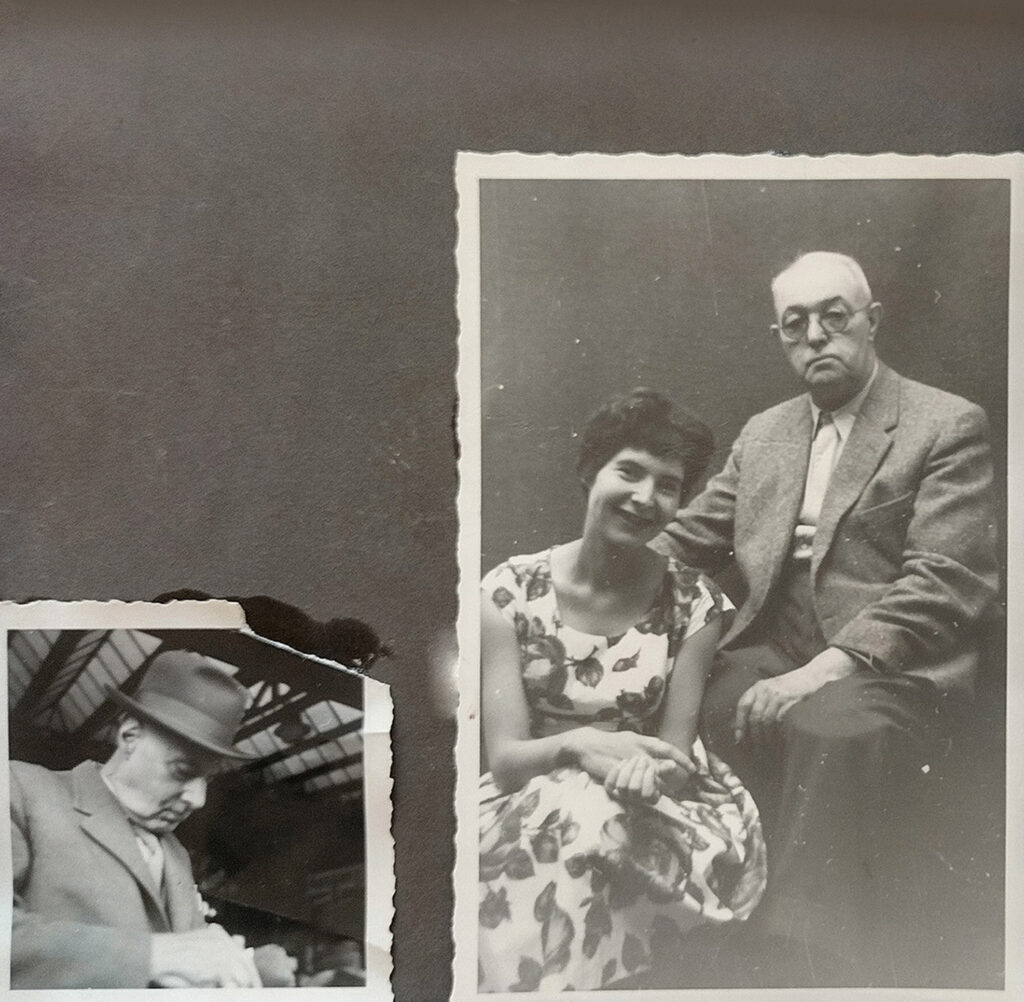
Back: (left) photo of Max Bräuner, ca. 1965; (right) unknown, c. 1960s.
Private property Gisela Bhatia | ArEGL 90.
The portrait in the wooden frame shows Max Bräuner at the age of around 65. It was taken after the war. There are more photos on the back. In the picture on the left, he is already over 80 years old. In 1961, he had decided to confess his involvement in the »euthanasia« programme. As a result, investigations that had been closed in 1949 were resumed.
