DEALING WITH THE GRAVES
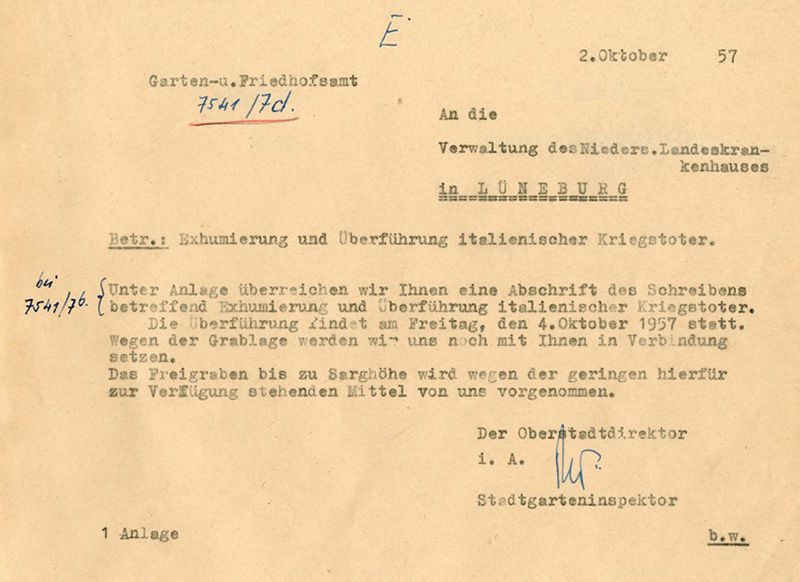
Letter from the cemetery office of the city of Lüneburg to the former sanatorium and nursing home Lüneburg dated 2 October 1957.
StadtALg, VA2, 5001.
In France, the Netherlands and Italy, the dead of the Lüneburg sanatorium and nursing home were recognised as victims of National Socialism. Their bodies were reburied between 1949 and 1957. The French and Dutch war dead were repatriated. The Italian Mariano Tedeschi was transferred to the Hamburg-Öjendorf cemetery.
Leonardus Adrianus Krol (1918 – 1945) from Noordwijk was a baker. He had fled to the German Reich to seek safety from the approaching Western Front. As he could not be treated in Bremen due to the bombing, he came to Lüneburg and was admitted to the »Ausländersammelstelle« on 8 January 1945. He was dead within three months.
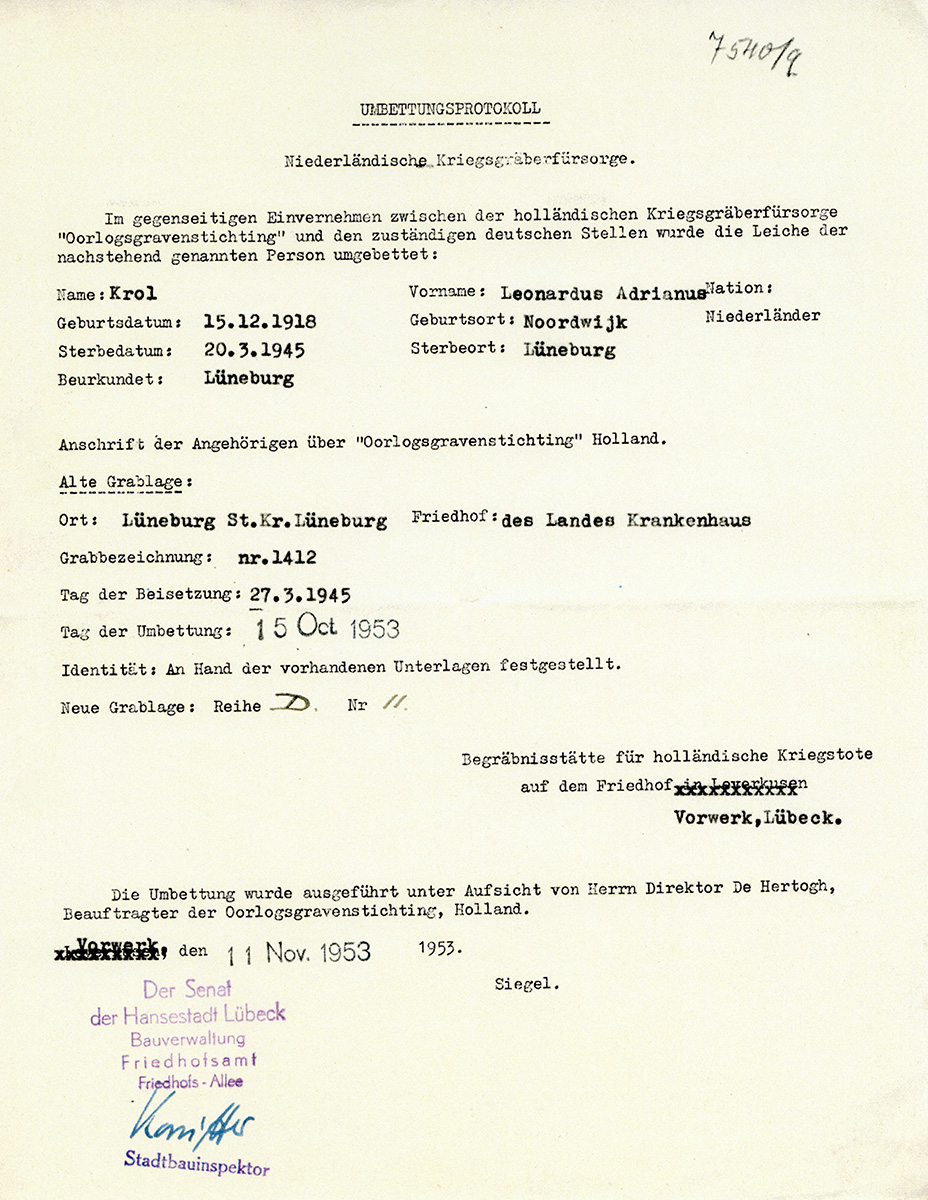
Transcript of the reburial of the Dutchman Leonardus Adrianus Krol on 15 October 1953.
StadtALg, VA2, 5001.
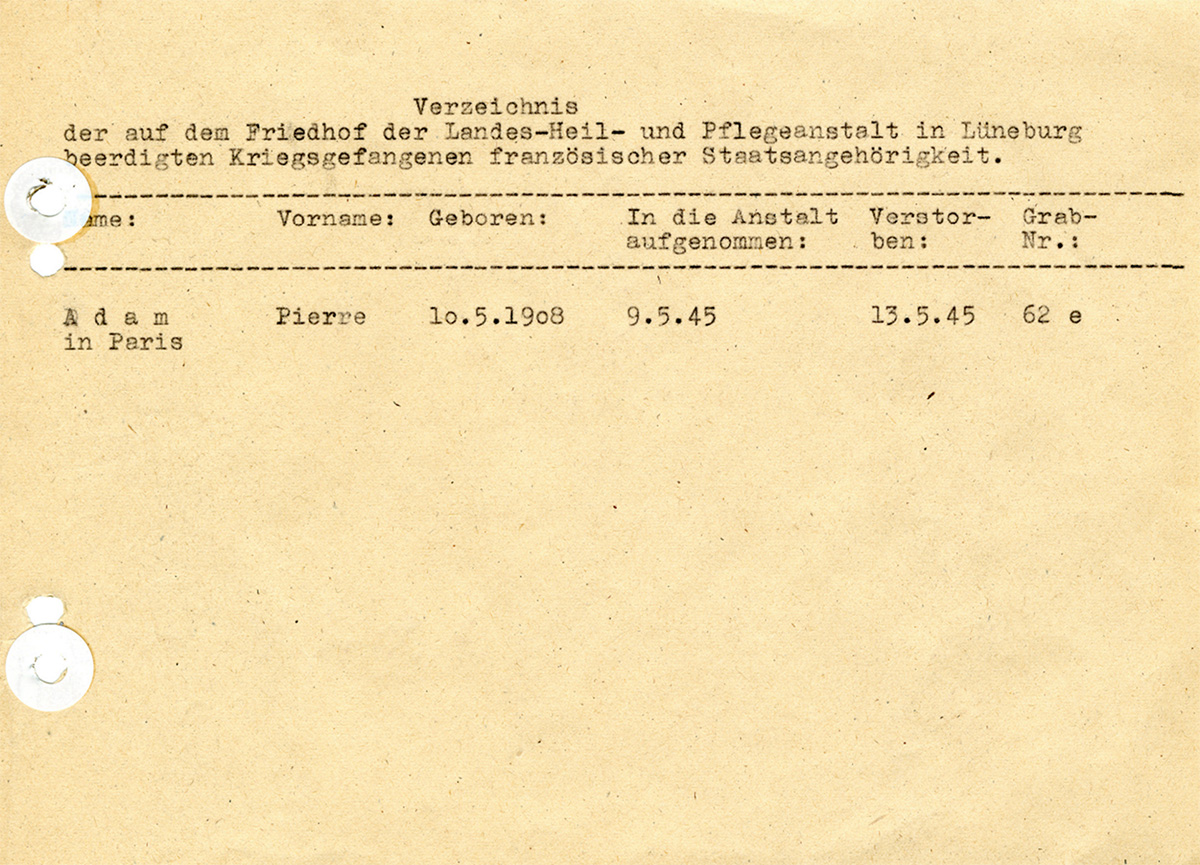
List of prisoners of war of French nationality buried in the cemetery of the state sanatorium and nursing home in Lüneburg before 1949.
StadtALg, VA2, 5001.
Pierre Adam (1908 – 1945) from Paris is one of the reburied French dead. He was a prisoner of war. He was admitted to the Lüneburg sanatorium and nursing home on 9 May 1945 and died after four days. He was transferred to France in 1949.
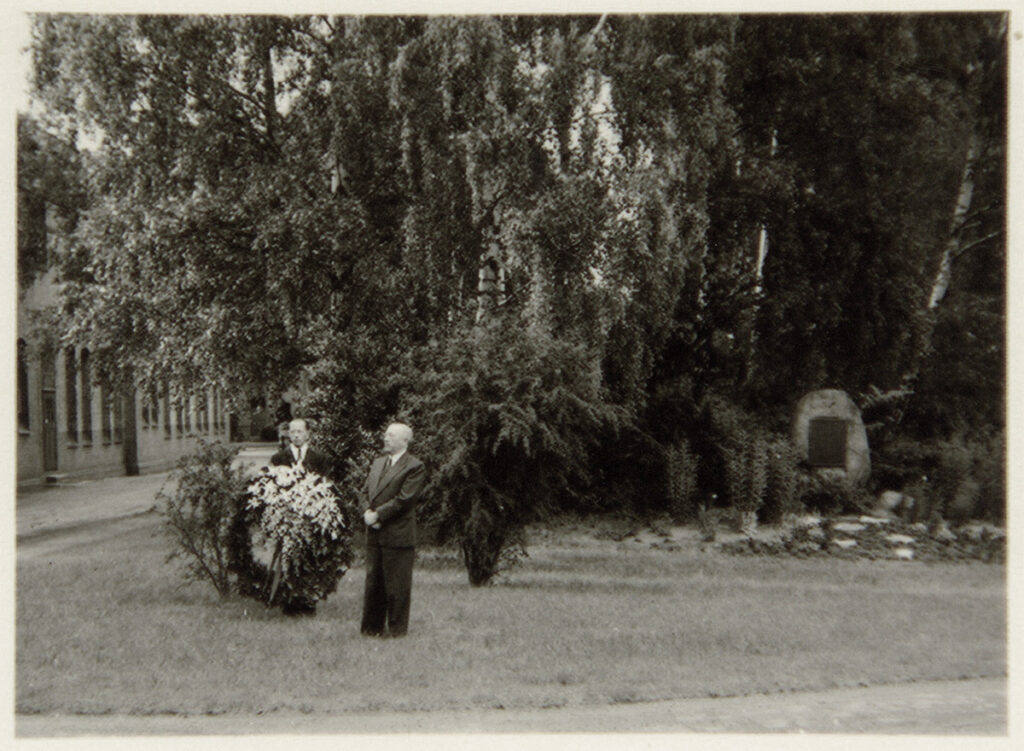
Rudolf Redepenning at the memorial service on the occasion of the 50th anniversary of the Lüneburg sanatorium and nursing home, summer 1951.
ArEGL 159-2.
The first commemoration of the dead after 1945 at the former Lüneburg sanatorium and nursing home took place on the occasion of the 50th anniversary of the institution. In the 1930s, a memorial stone was erected between House 9 and House 34 for those who died in the First World War. It was used in 1951 to also commemorate the fallen of the Second World War. In contrast, for decades there was no memorial stone for those murdered in the institutional cemetery.
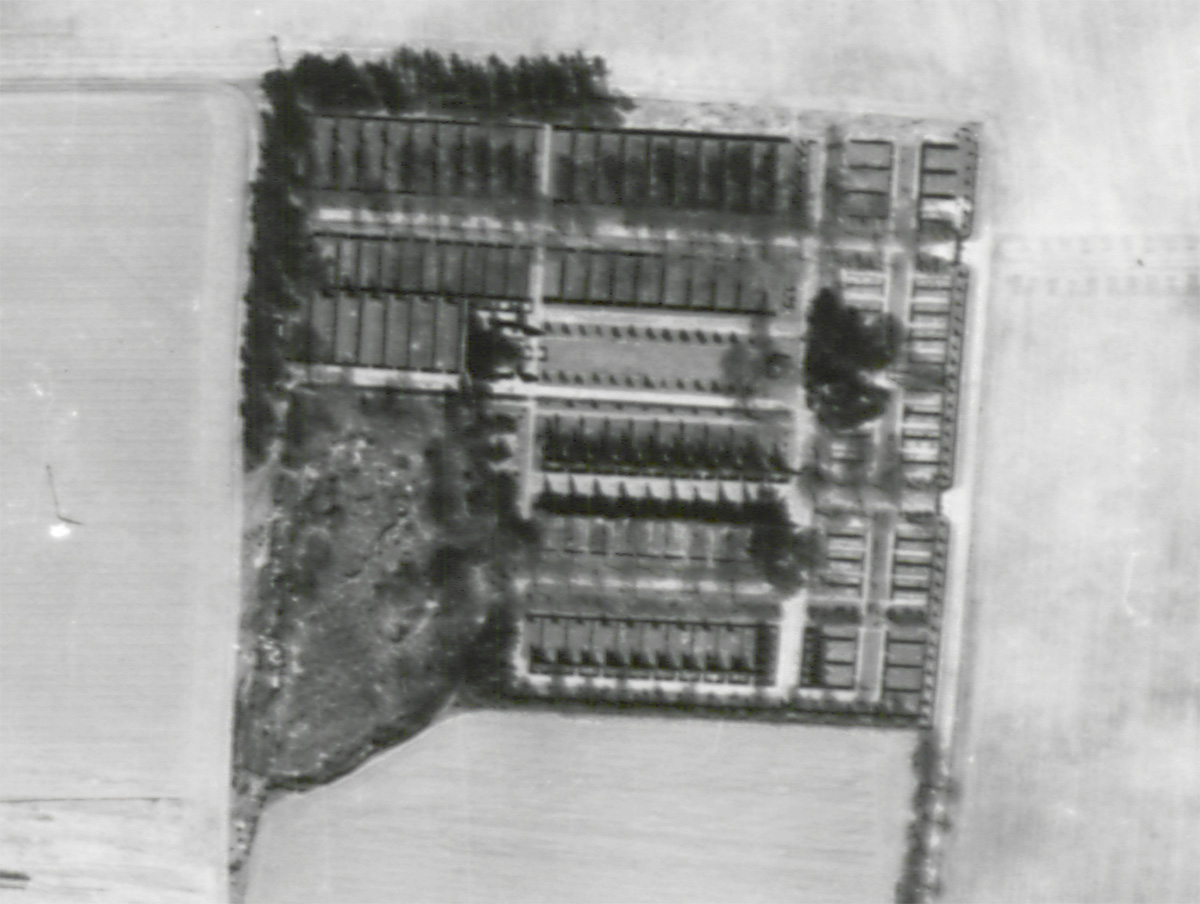
Detail from an aerial photograph, institutional cemetery, 13 April 1963, from: Aerial photograph Bildflug Lüneburg-Barum (224), picture No. 3/142.
StadtALg, BS, Pos-Gr-3822.
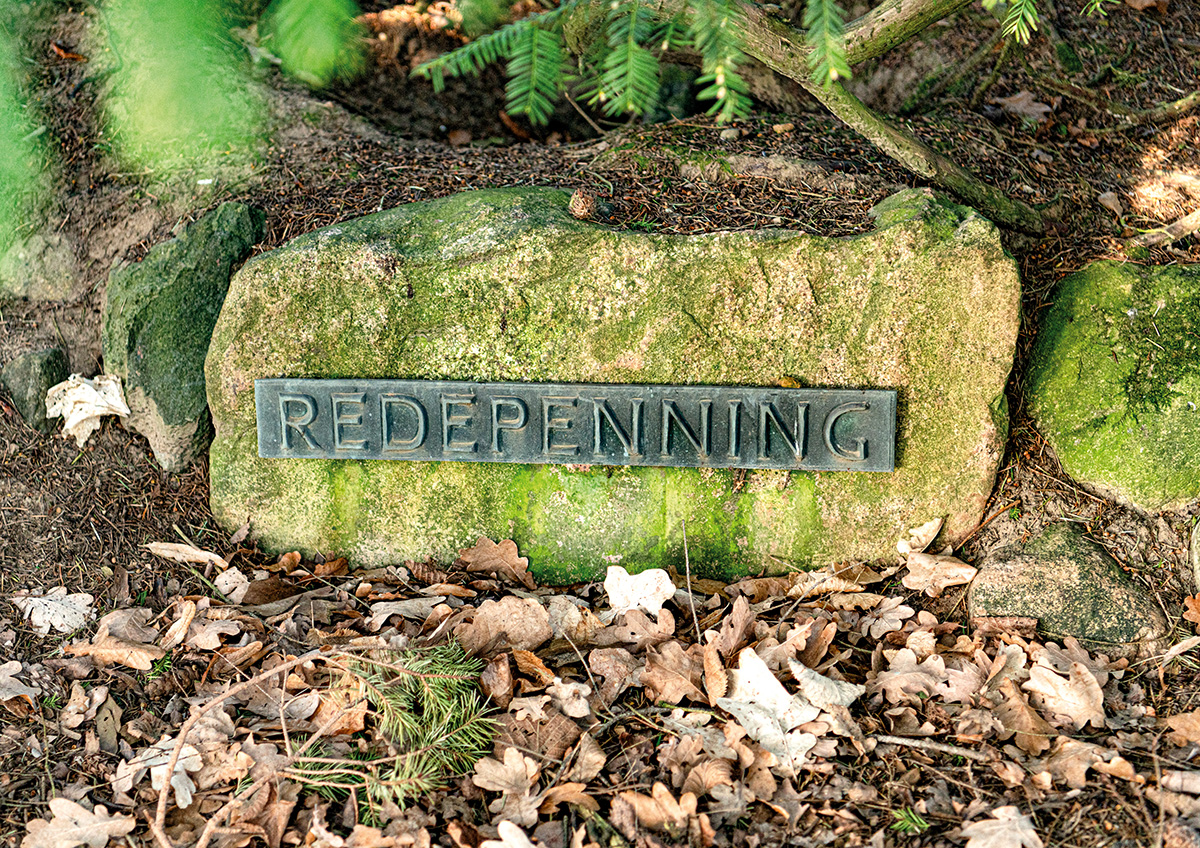
Grave of Rudolf Redepenning, 2025.
Photographer Mathias Mensch.
ArEGL.
Before 1963, a grove of honour was laid out in the hospital cemetery, presumably for the victims of the murder of patients in the Lüneburg sanatorium and nursing home. When Rudolf Redepenning died in 1967, he was buried there. All of the victims‘ graves were still there. He was jointly responsible for the deaths of some of them. The site is now a memorial.
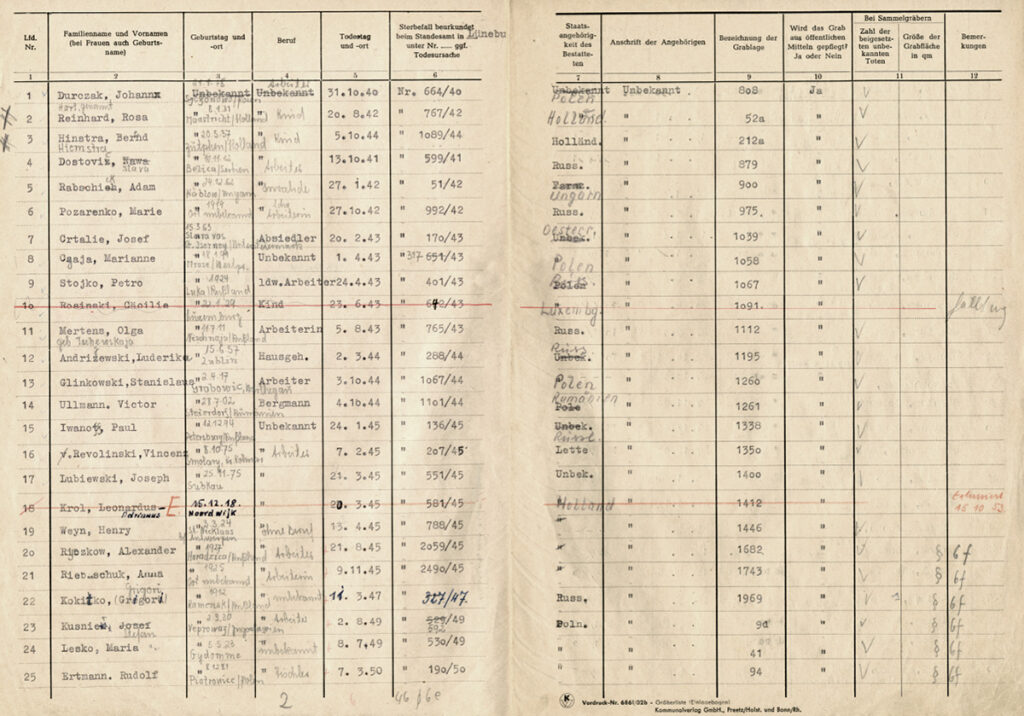
Extract from the list of graves (§ 6 letter e of the War Graves Act of 27 May 1952) for the cemetery of the former Lüneburg sanatorium and nursing home dated 3 February 1954.
StadtALg, VA2, 5001.
From 1975 onwards, hundreds of graves of the victims of infanticide and post-war psychiatry were covered over after their 25-year resting period had expired. Nobody was interested in the results of the public prosecutor’s investigations and the resulting requirement to preserve all the graves. The cemetery office at the time thus violated the War Graves Act.
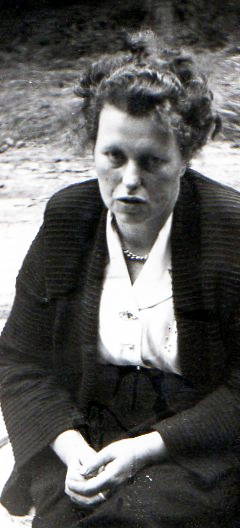
Else Wehde at the grave of her son Fritz Wehde, after 1945. The grave disappeared in the 1970s.
Privatbesitz Uta Wehde.
When Fritz Wehde’s grave, like the other 300 gravesites of children and young people, was closed, his parents were deprived of their only place of mourning.
In 1975, a war cemetery was created with mock graves for 50 »euthanasia« victims. Their reburials were predetermined but never took place. In addition, 35 graves of dead who were not the designated »euthanasia« victims were included. The relevant list of graves was falsified. The site was never publicly inaugurated. Even after its construction, there was no public commemoration there until 2013.
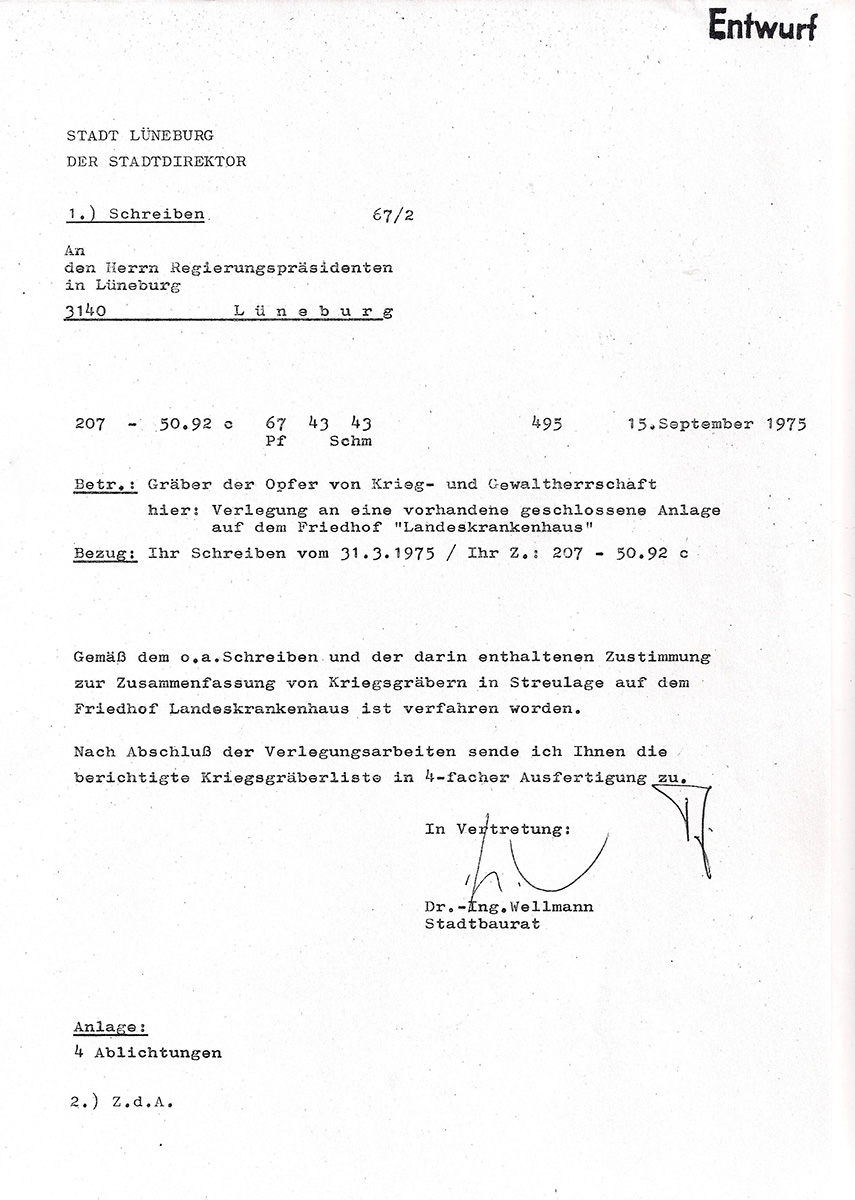
Letter from the City of Lüneburg to the District President dated 15 September 1975.
Cemetery Office of the Hanseatic City of Lüneburg, loose-leaf collection, copy ArEGL.
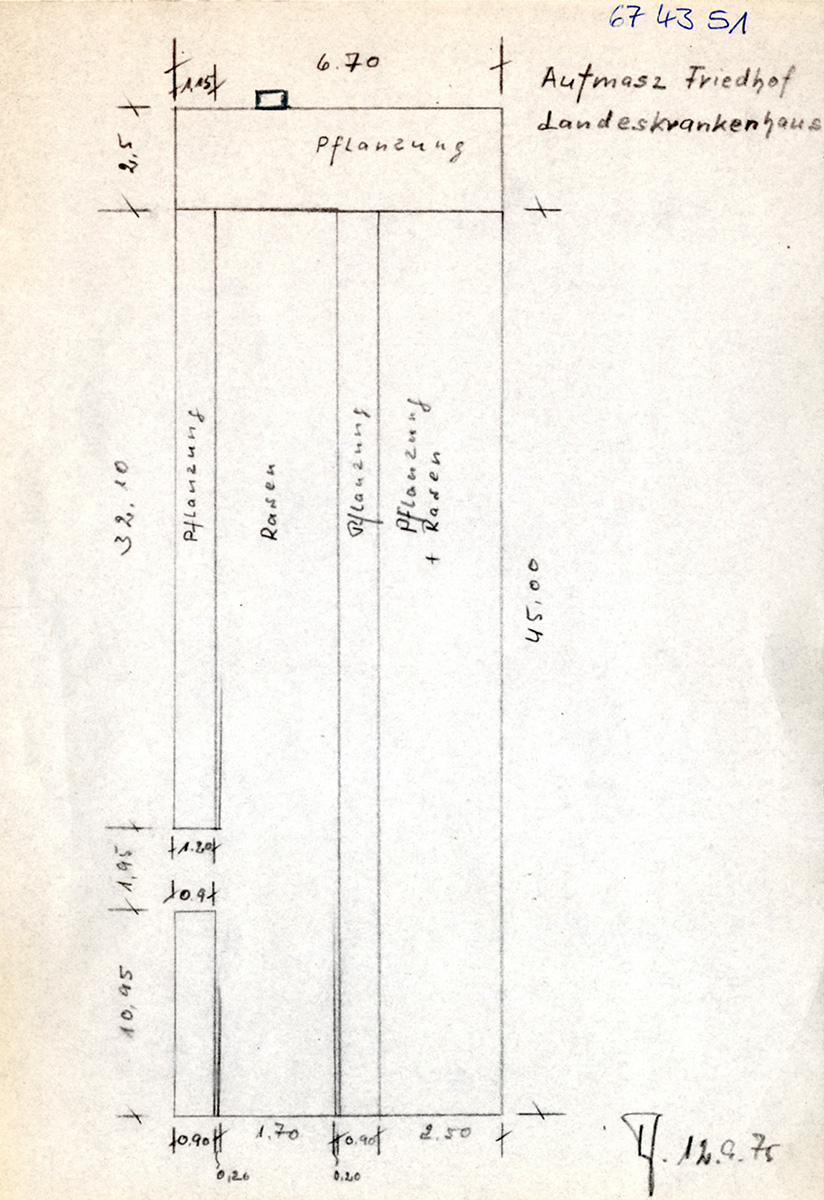
StadtALg, VA2, 5001.
Survey for the construction of a war cemetery on the former hospital cemetery dated 12 September 1975. The gardening work was carried out by the nursery of the state hospital. Some of the patients at the time were also involved.
The simple grounds (lawn with a double row of graves, pillow stones for »single graves«) were given a hedge and a wooden cross with the inscription »1933 – 1945«. In this form, the site was easy to mow and cost hardly any money.
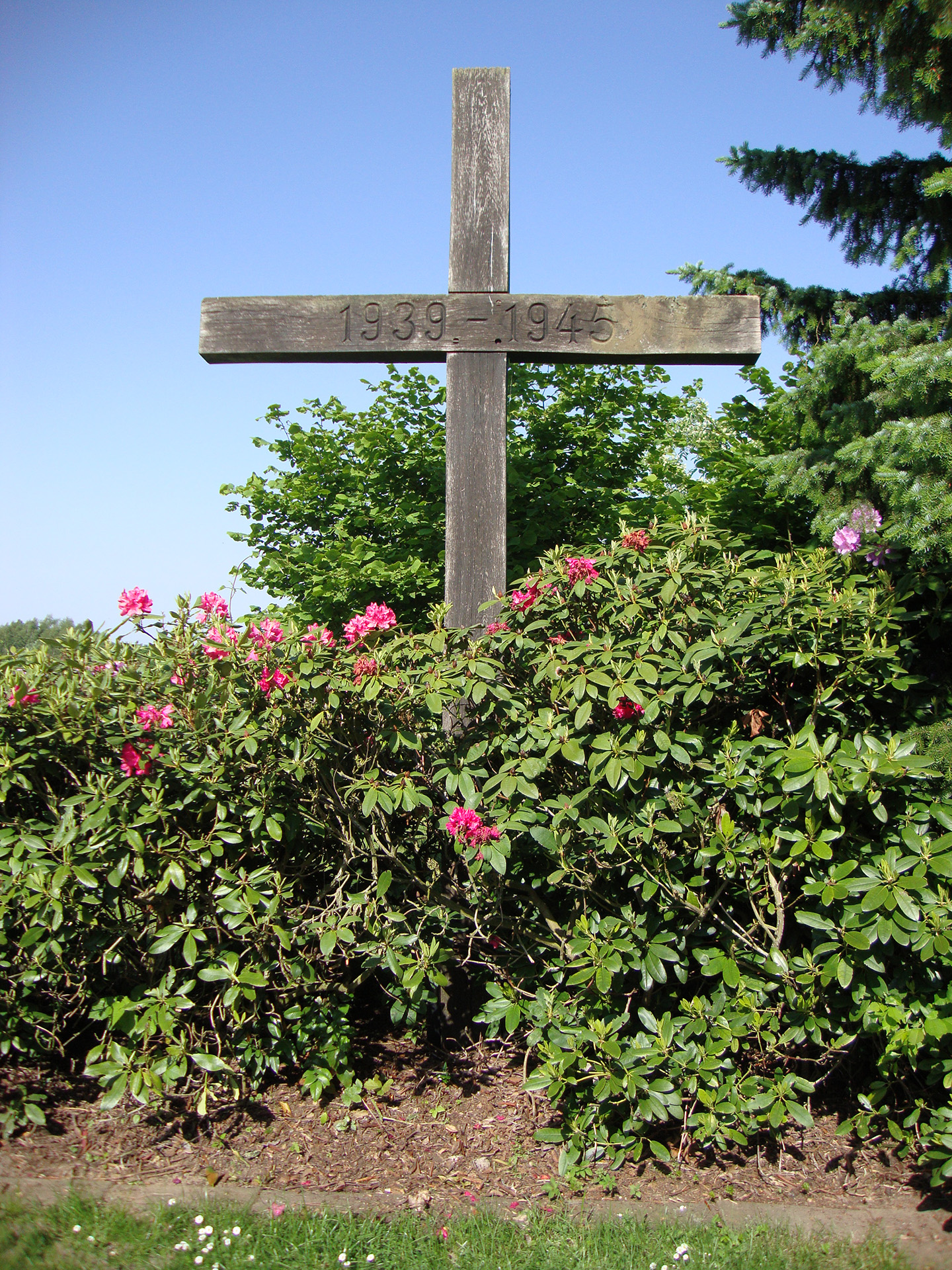
High cross of the war cemetery in the North-West Cemetery, 2014.
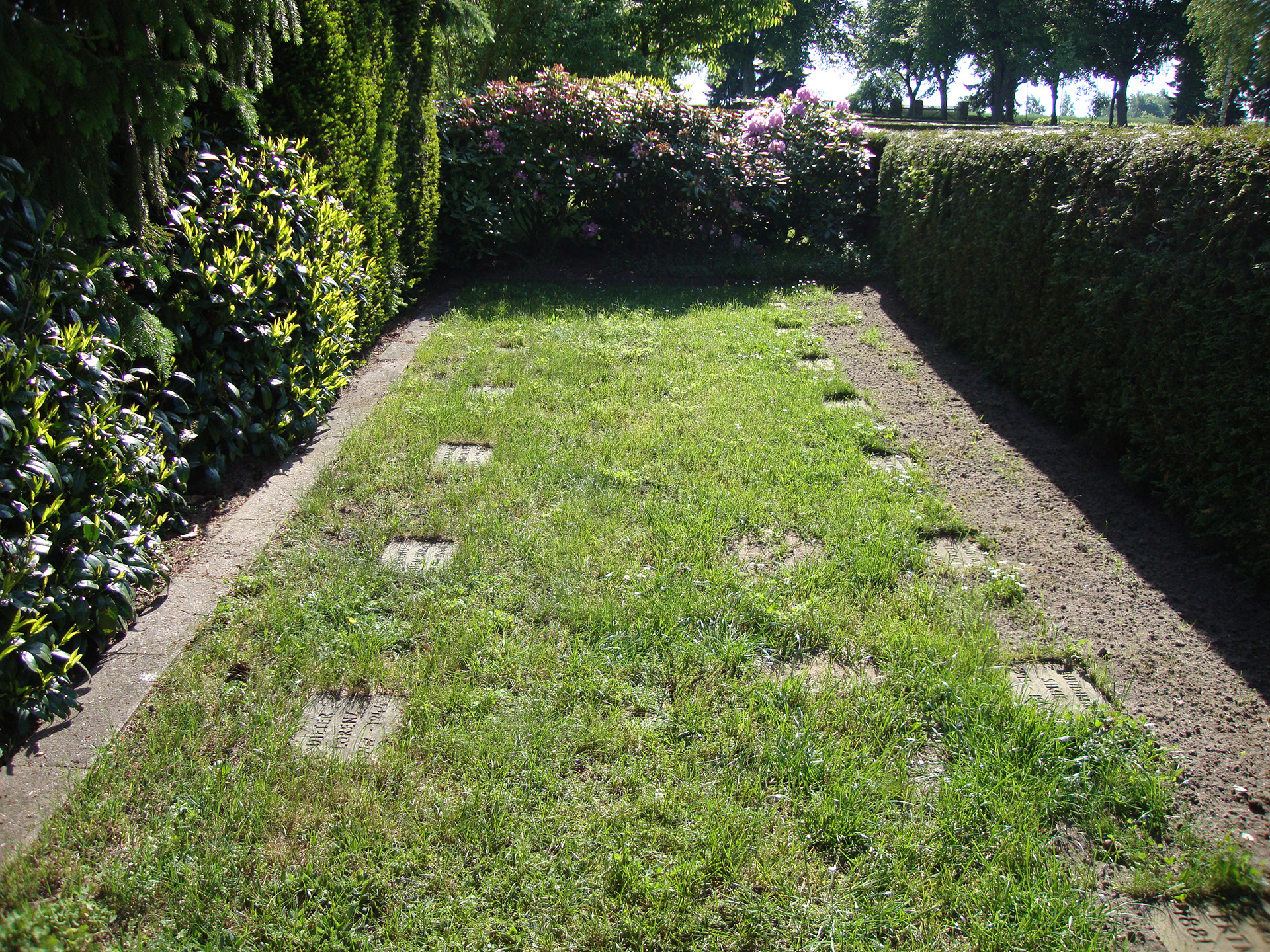
Rows of graves with mock graves as part of the war cemetery at the North-West Cemetery, 2014.
ArEGL.
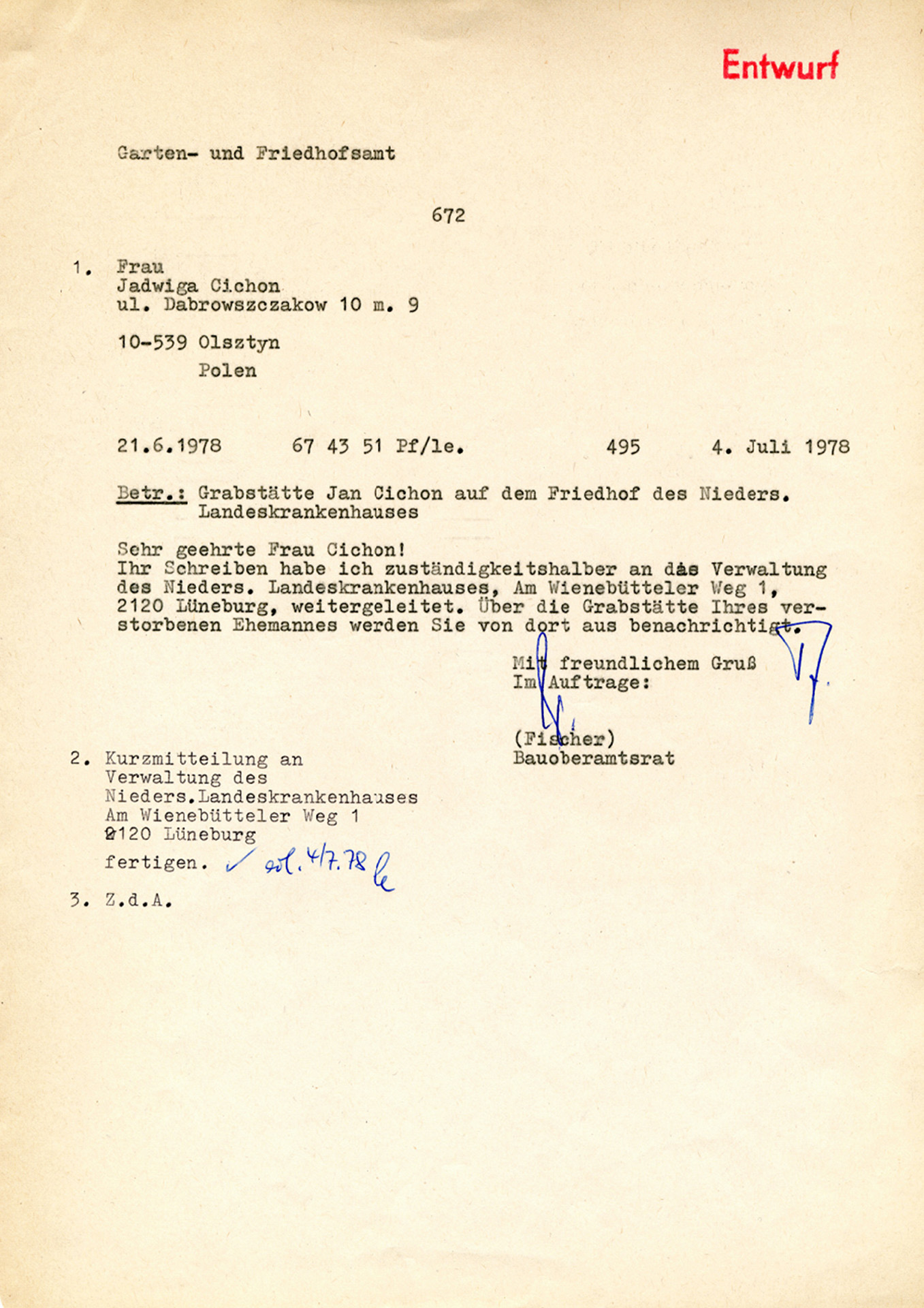
Letter (draft) from the cemetery office of the city of Lüneburg to Jadwiga Cichon dated 4 July 1978.
StadtALg, VA2, 5001.
When Jadwiga Cichon, the wife of Jon Cichon (1892 – 1945), enquired about the location of her husband’s grave in 1978, the cemetery office referred her to the former sanatorium and nursing home in Lüneburg. His grave was not taken into account when the war cemetery was established. Relatives were not involved in dealing with the graves of their dead.
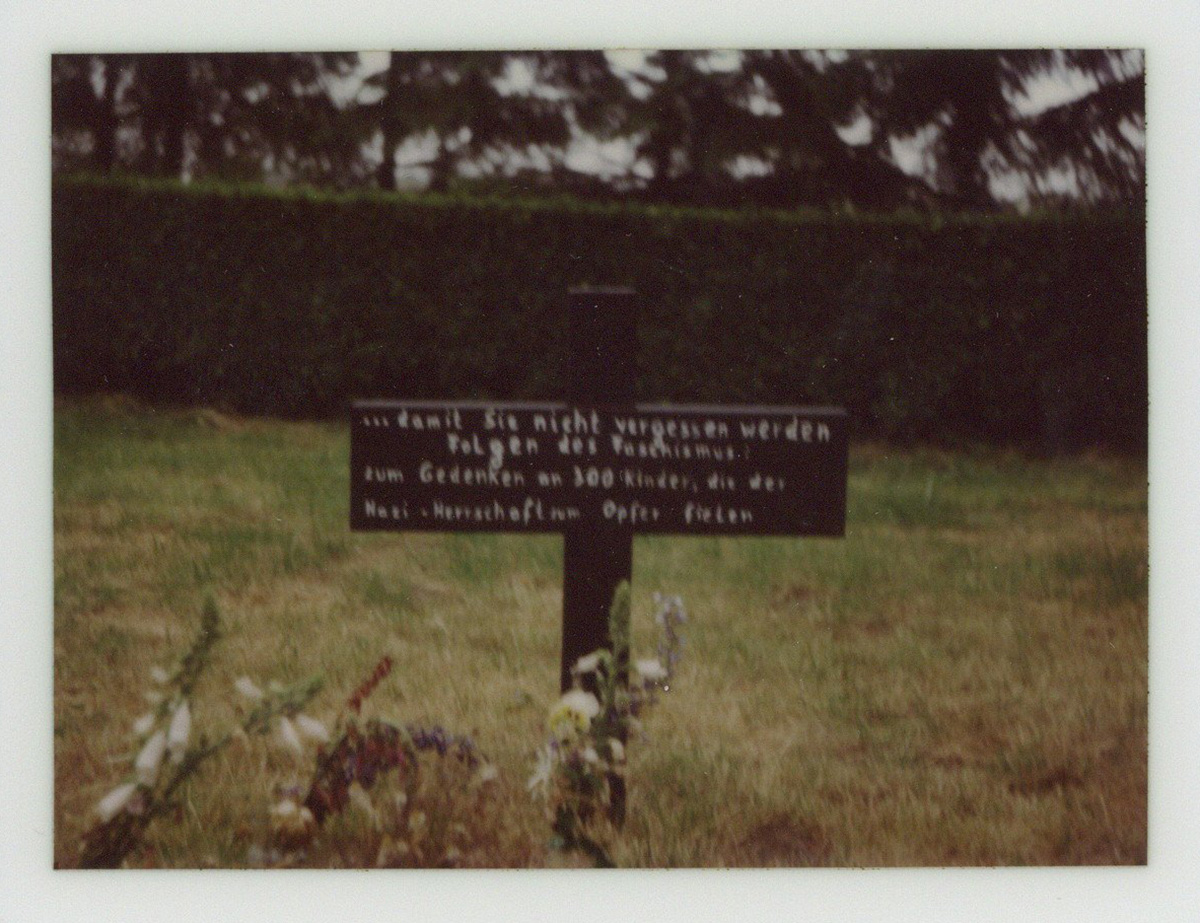
Wooden cross at the institutional cemetery, 1 July 1983.
ArEGL 19.
Members of civil society set an example independently of the efforts of the authorities and the state hospital. In spring 1983, they erected a wooden cross in the hospital cemetery. As it had been erected by an unknown person and did not meet the expectations of the medical director, the wooden cross was dismantled at the beginning of July 1983 and stored in the nursery of the state hospital.
»…. so that they are not forgotten
Consequences of fascism:
In memory of 300 children who were
victims of Nazi rule.«
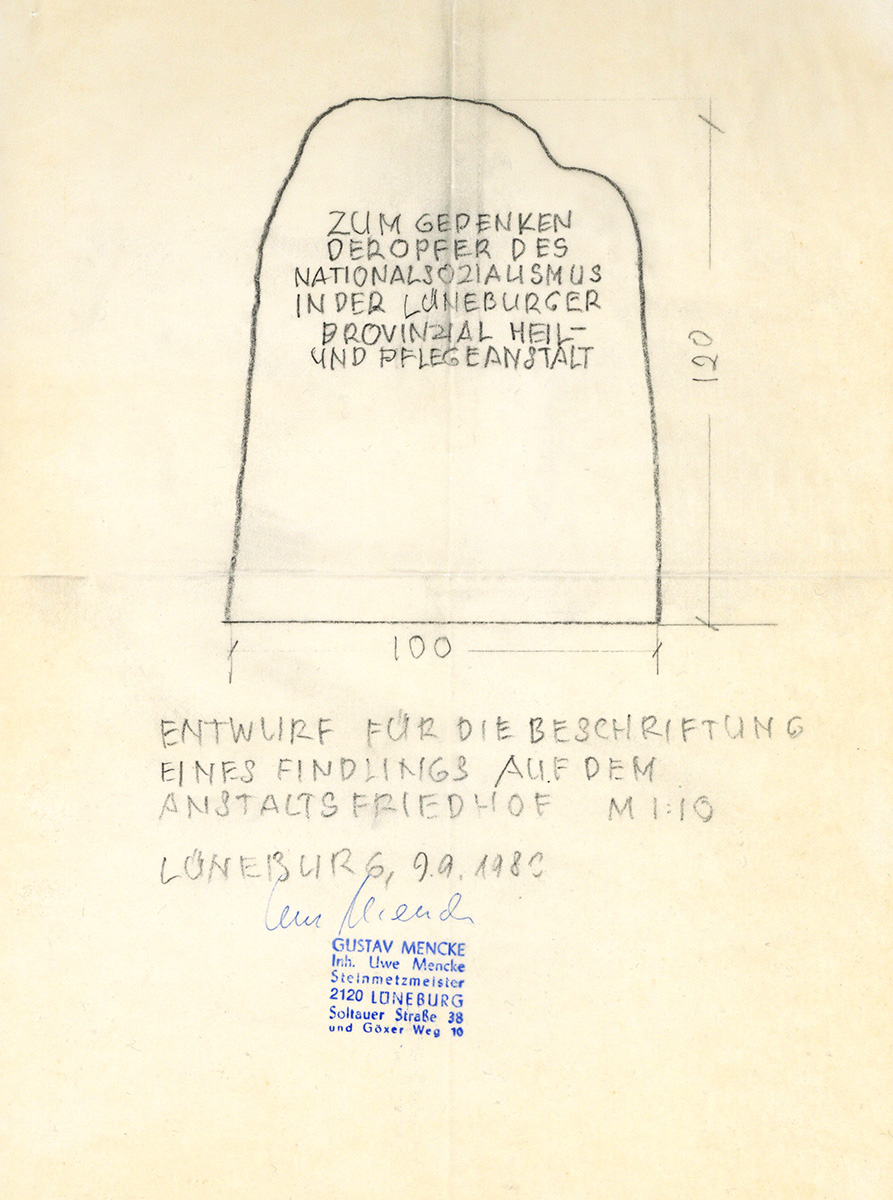
Design sketch by Uwe Mencke, 9 September 1983.
ArEGL 19.
The state social welfare office covered the cost of the memorial stone, which totalled around DM 1,750. The design came from the Lüneburg stonemason Mencke. When planning and erecting the memorial, the intention was to commemorate only the murdered children. The victims of foreign origin, who were officially buried at the war cemetery next door, were neither considered nor included in the design. They were completely ignored.
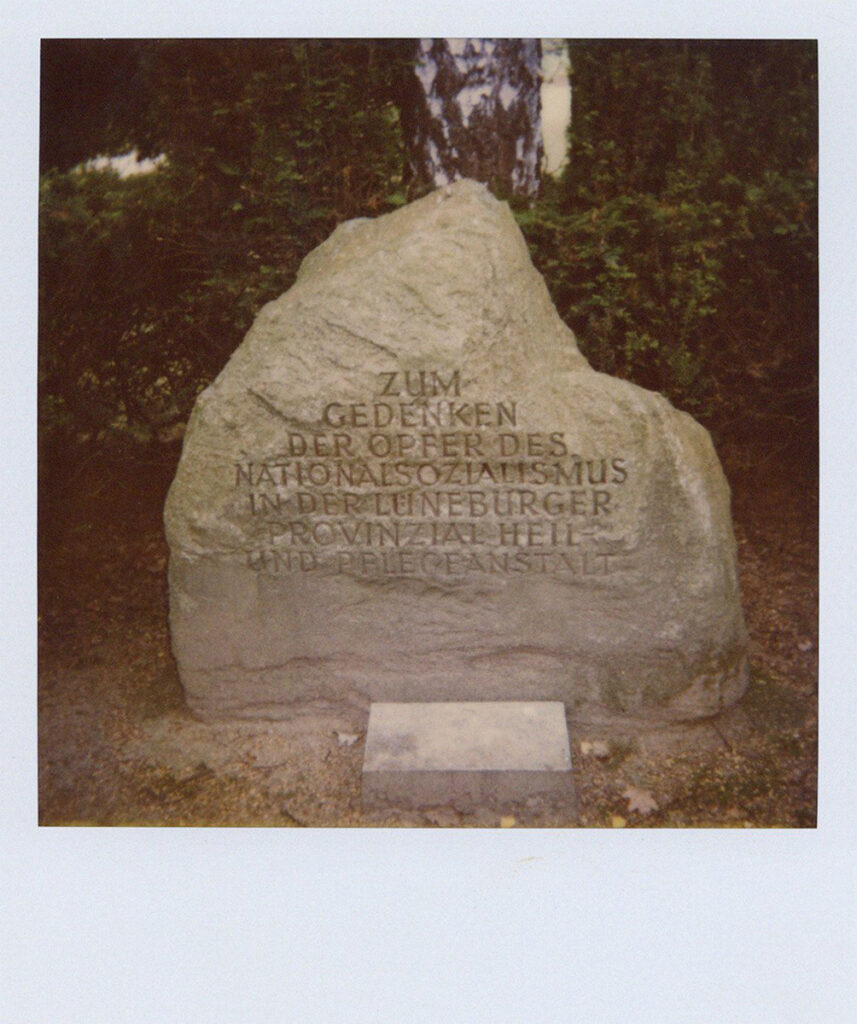
Memorial stone at the site opposite the tool shed after its erection, 1983.
ArEGL.
On 20 November 1983, the memorial stone was unveiled at the prison cemetery. A place opposite the tool shed away from the main paths was chosen as the location. The inauguration only took place in a small circle of employees. No invitations were sent out.
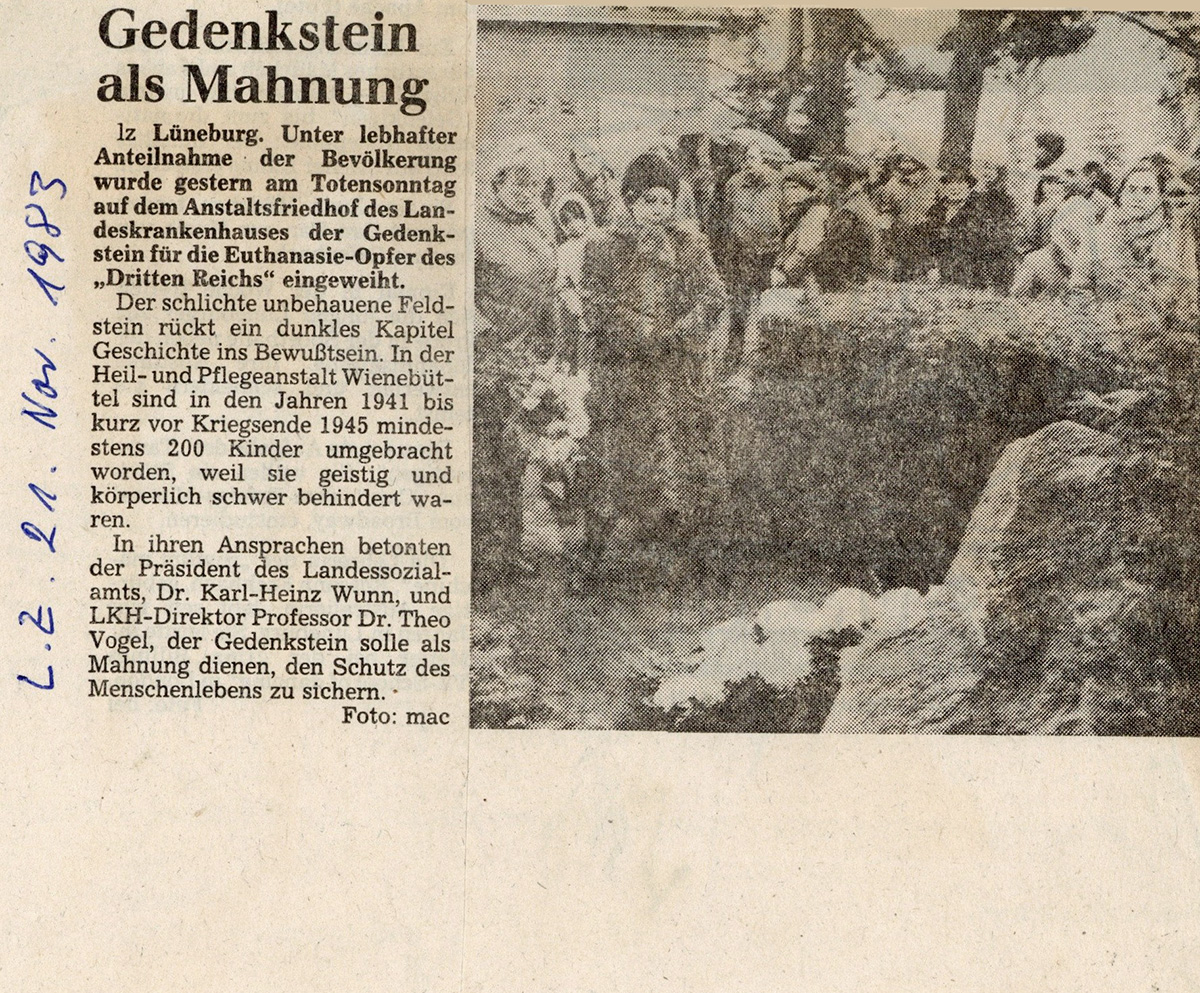
Newspaper report with the title »Memorial stone as a reminder«. Lüneburger Landeszeitung from 21 November 1983.
ArEGL.
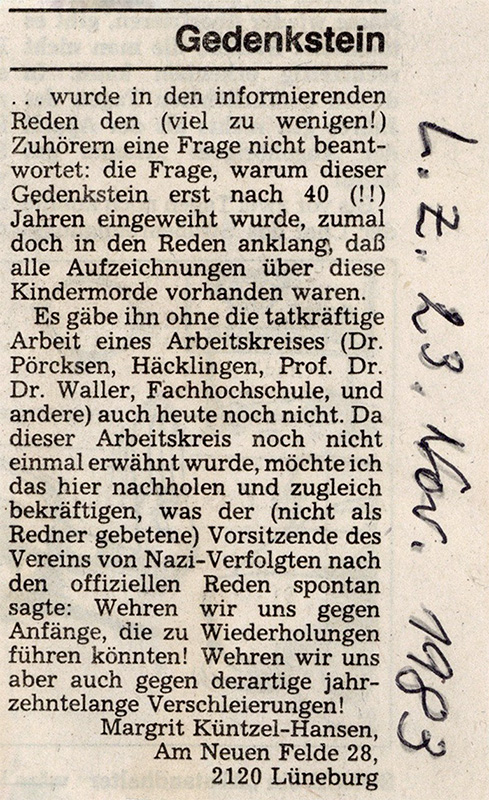
Letter to the editor in the Lüneburger Landeszeitung by Margrit Küntzel-Hansen from 23 November 1983.
ArEGL 19.
As the newspaper – informed about the uninvited »Machtergreifung« working group – had also reported in advance, interested members of the town’s population also attended the dedication of the memorial stone. Nobody considered the possibility that there are families in the region who are still mourning their children and for whom such a stone could mean a lot. The relatives of those murdered were ignored.
In 1999, a working group was formed consisting of employees, relatives of patients and members of civil society. They are working on an anniversary edition to mark the 100th anniversary of the state hospital. Jürgen Lotze headed the working group. He had the vision of a memorial. During the renovation of the water tower in 1989, he ensured that concrete ceilings were installed on five levels. They were intended to enable future »museum use«. His successor was Sebastian Stierl.
»[…] the water tank can be retained even if the tower is used as a museum. After all, there are then 5 storeys available.«
Handwritten note in the building file dated 5 October 1989.
Building authority of the Hanseatic City of Lüneburg | Copy ArEGL.
![It is DIN A5 paper, slightly yellowed. There is a handwritten note on it. The key message is: "[...] I think the water tank can be retained even if the tower is used as a museum. After all, there are then 5 storey levels available. [...]".](https://k2.gedenkstaette-lg.de/wp-content/uploads/2025/07/05-07-20-01.jpg)
Extract from the building file, 1989.
StadtALg, VA2, 5001.
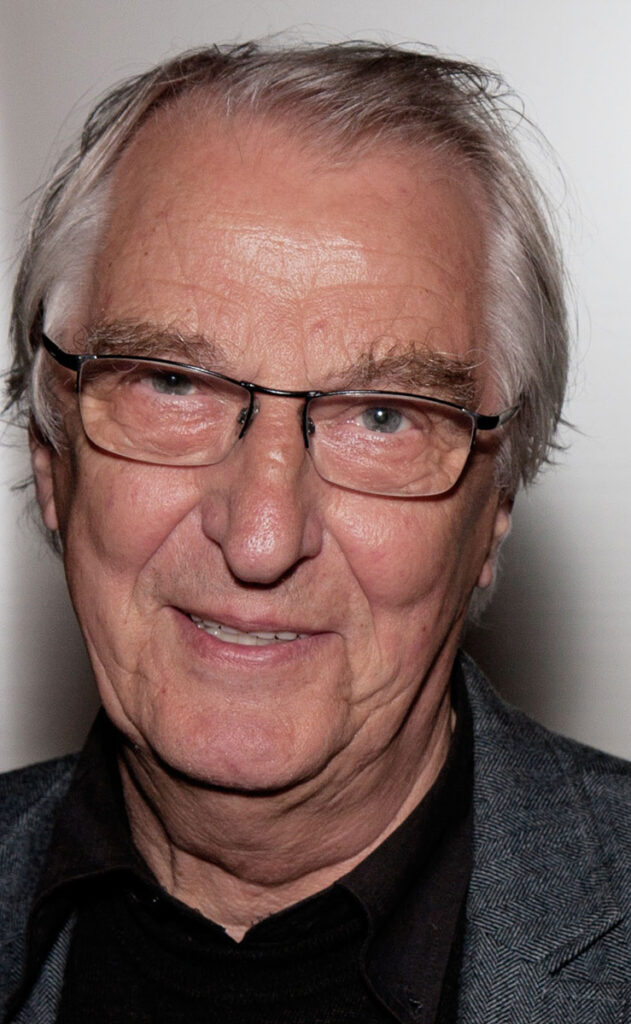
Jürgen Lotze, 2012.
ArEGL.
JÜRGEN LOTZE (1941 – 2020)
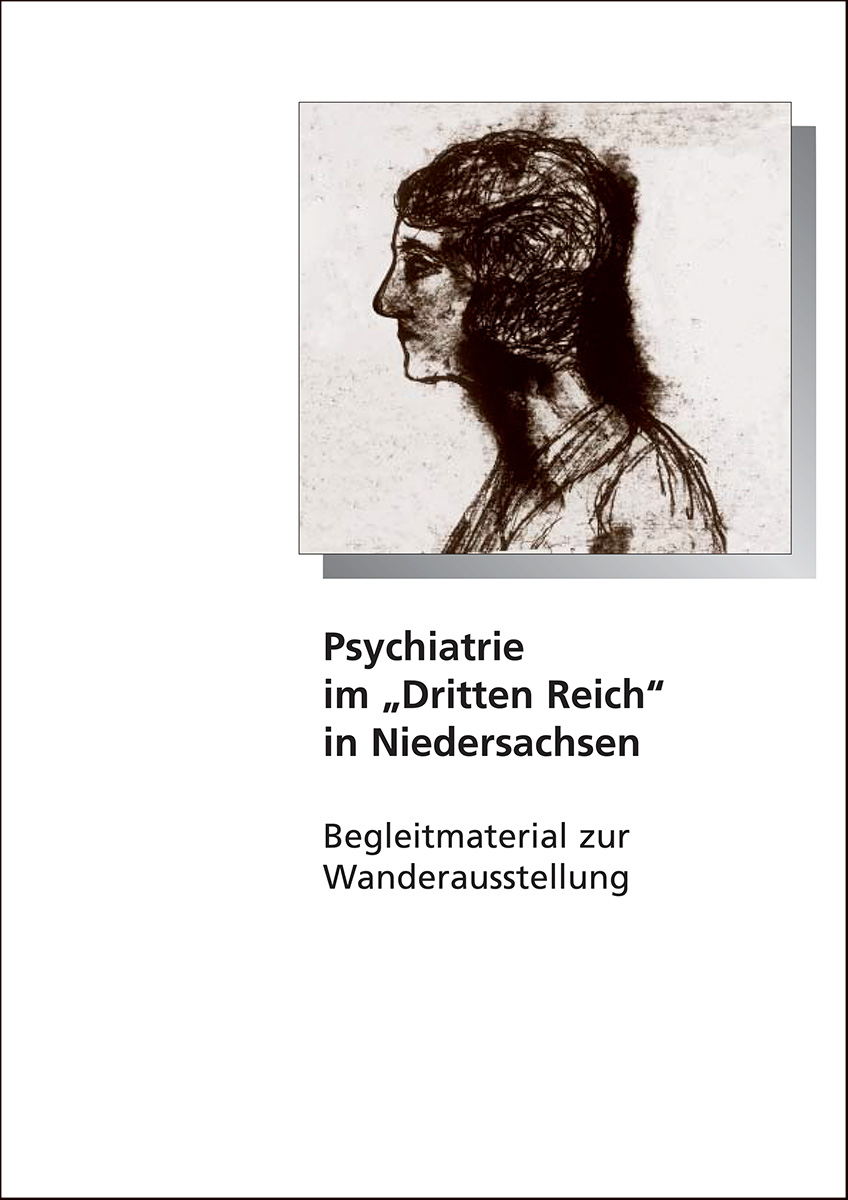
Psychiatry in the »Third Reich« in Lower Saxony. Accompanying material to the travelling exhibition.
ArEGL.
The working group received support from Raimond Reiter, who completed the project »Psychiatry in the Third Reich in Lower Saxony« at the same time. His travelling exhibition was opened in 1997 at the Hanover Adult Education Centre and shown for the last time in 2020 at Wunstorf Psychiatric Hospital. The state of research was no longer up to date. The people affected were portrayed without dignity and the narrative picked up on the discrimination from the National Socialist era.
This sign was erected by an unknown person in front of the former bathhouse at the water tower when it was converted for future use as a memorial site.
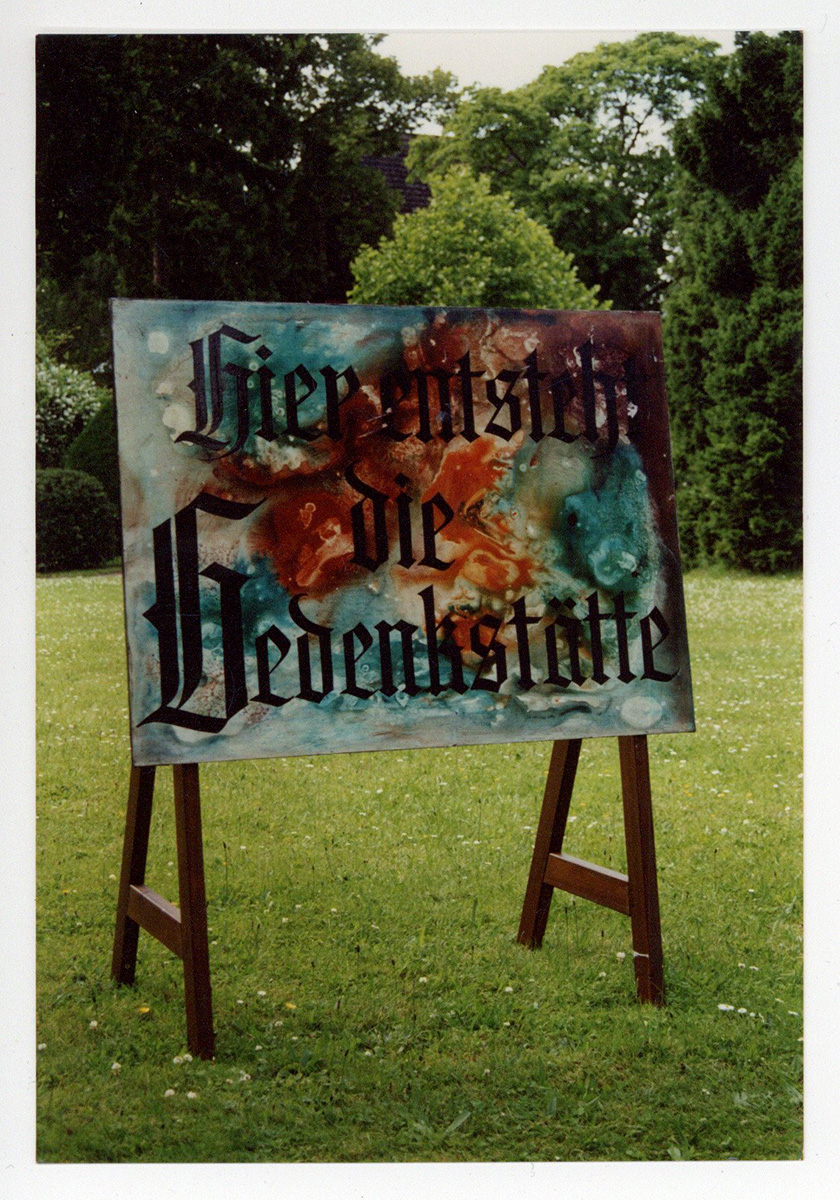
Construction site sign in front of the future memorial, around 2003.
ArEGL 163-2.
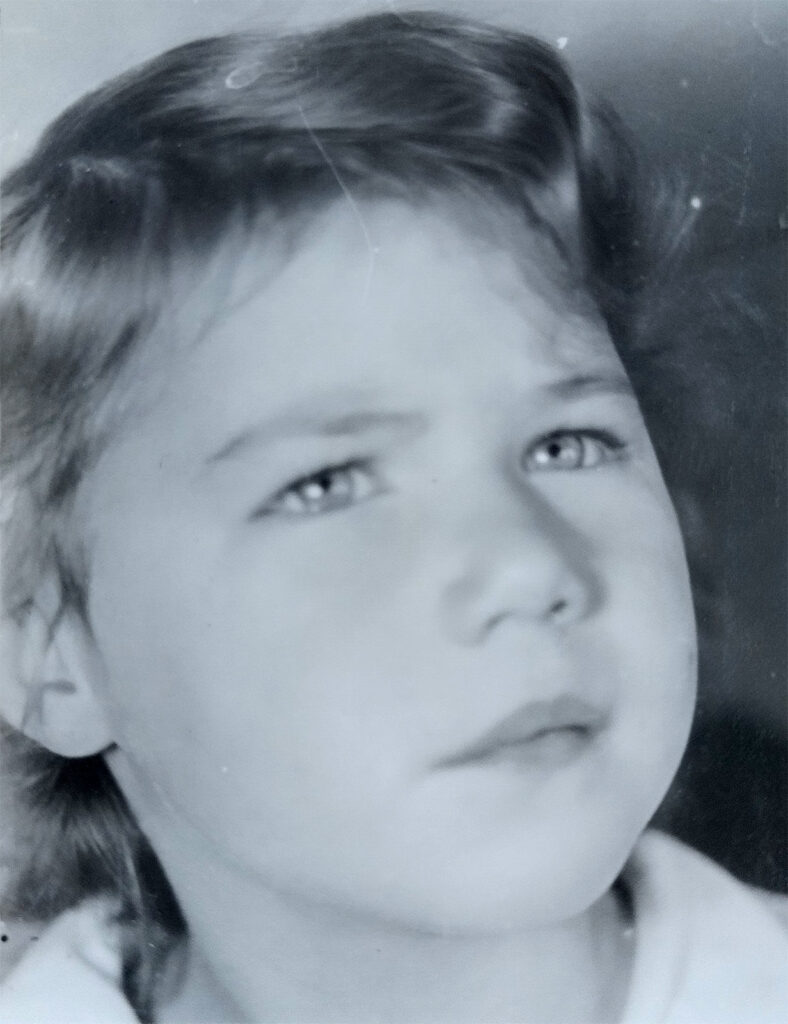
Hanna Thiele, around 1938.
NLA Hannover Hann. 155 Lüneburg Acc. 56/83 No. 435.
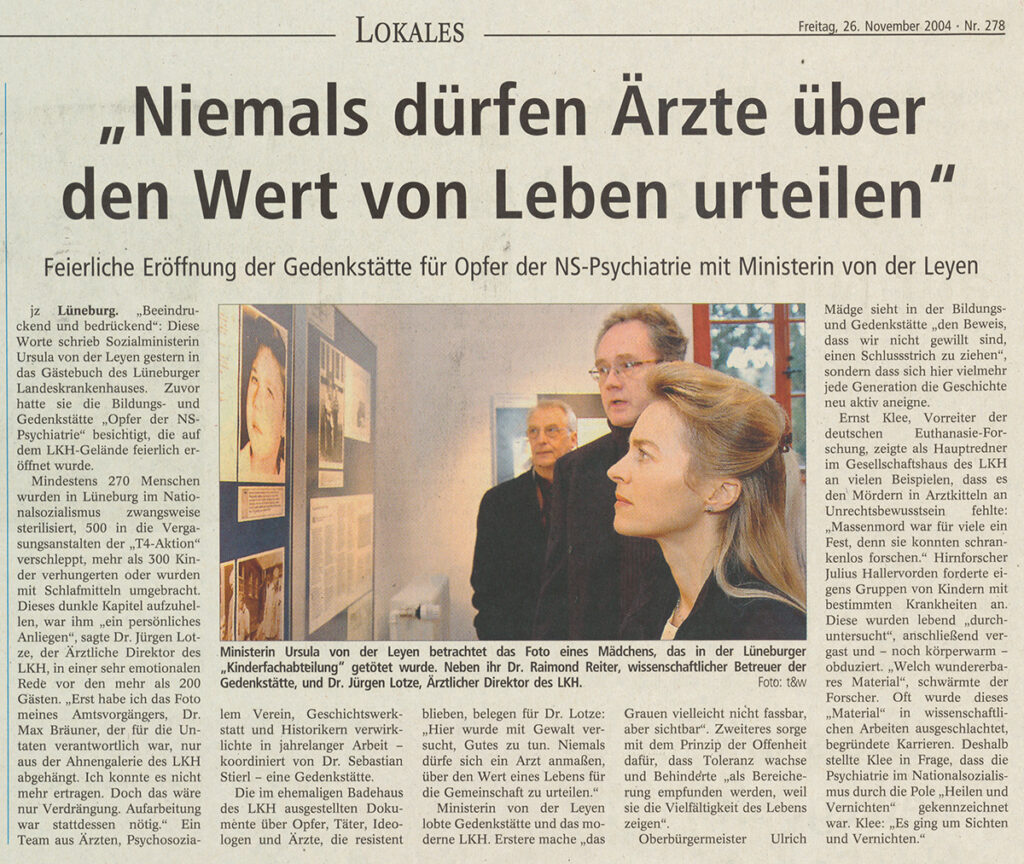
Newspaper report from the Lüneburger Landeszeitung of 26 November 2004.
ArEGL.
The »Educational and Memorial Site ‚Victims of Nazi Psychiatry’« was inaugurated on 24 November 2004. It was based on the travelling exhibition »Psychiatry in the Third Reich in Lower Saxony« with official documents and medical records. The murder of patients of foreign origin was not addressed, nor were carers and families mentioned. Reports or memorabilia from contemporary witnesses and relatives were not included in the exhibition content.
The working group selected a photo from the medical file of Hanna Thiele (1932 – 1944) for the leaflet. In the exhibition, she was only described as a »child of the children’s ward« who had been murdered on 26 January 1944. The visitors learnt nothing more about the victims.
SETTING AN EXAMPLE AND REMEMBERING DIFFERENTLY
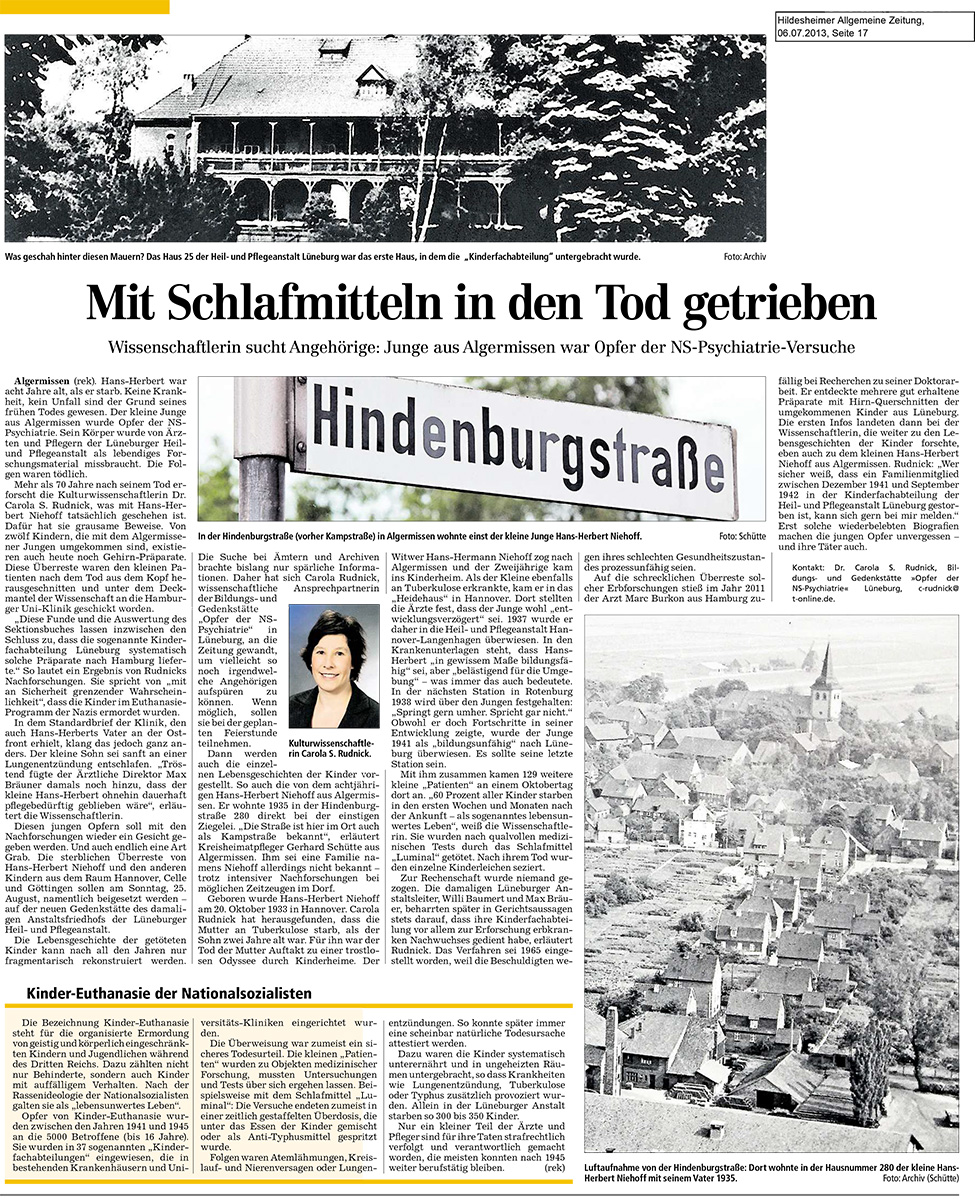
Hildesheimer Allgemeine Zeitung from 6 July 2013, p. 17.
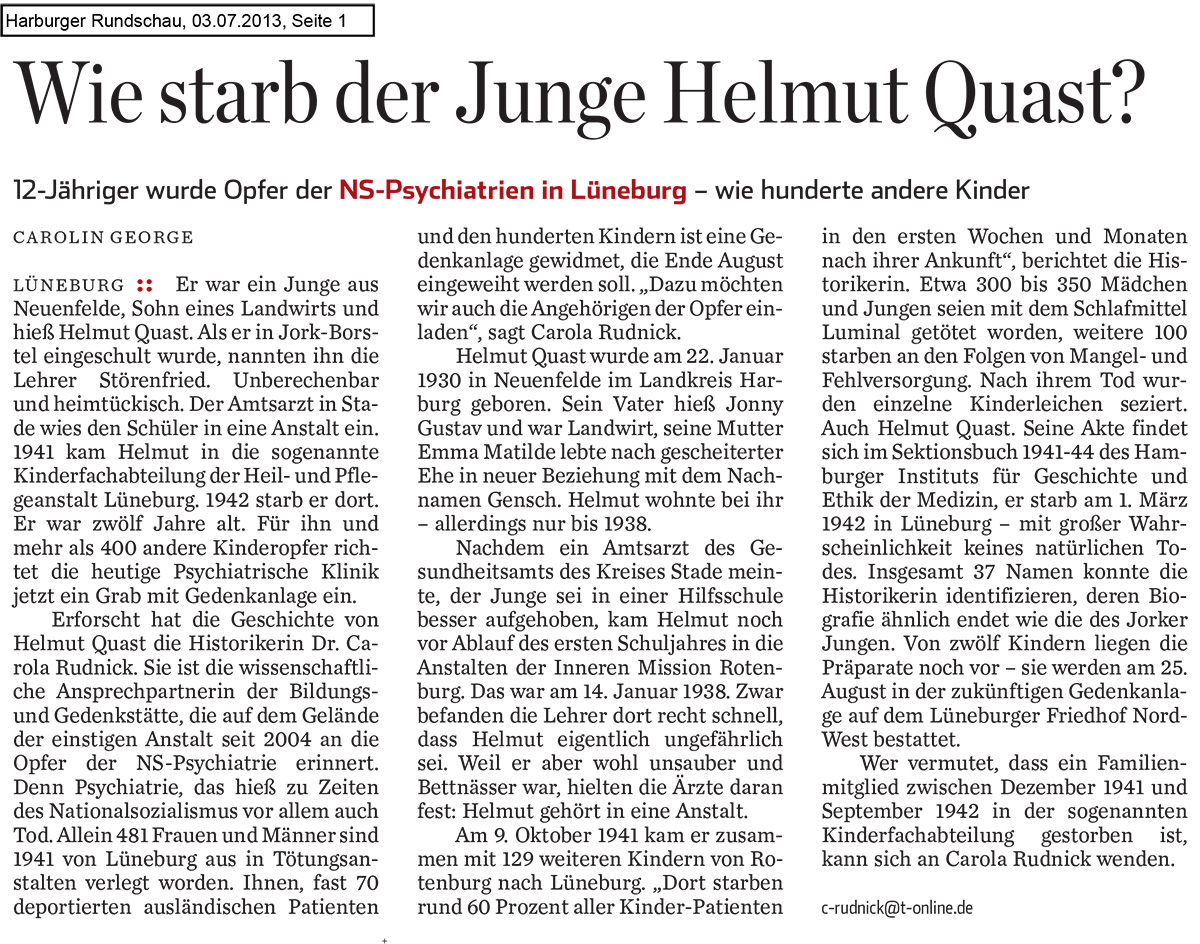
Harburger Rundschau from 3 July 2013, p. 3.
ArEGL 163-2.
The names of victims are mentioned. This was triggered by the search for relatives of twelve children whose brain remains were to be buried in 2013. In order to enable the relatives to attend the burial of the mortal remains, the names of the victims were published for the first time. As a result, relatives of nine of the twelve families were found.
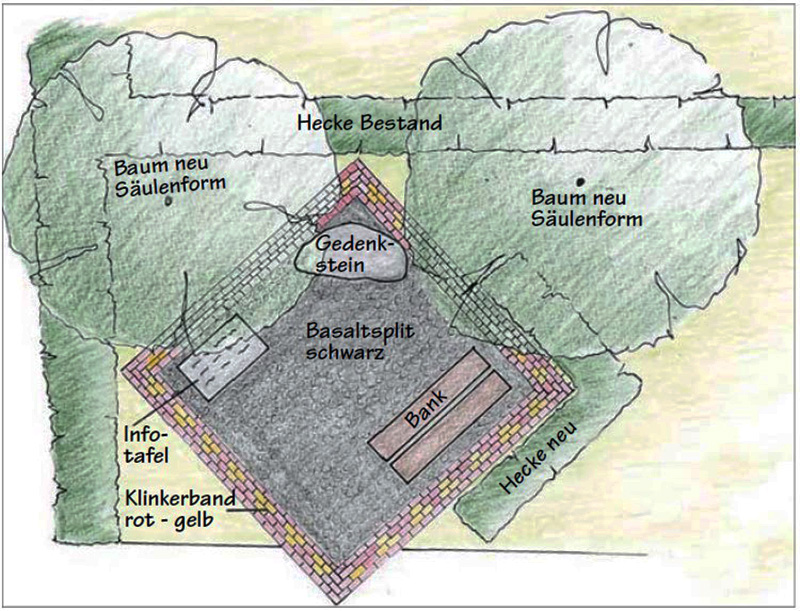
Design draft of the memorial complex at the North-West Cemetery (former institutional cemetery) from 24 June 2013, in: Lüneburger Landeszeitung from 26 June 2013, p. 5.
ArEGL.
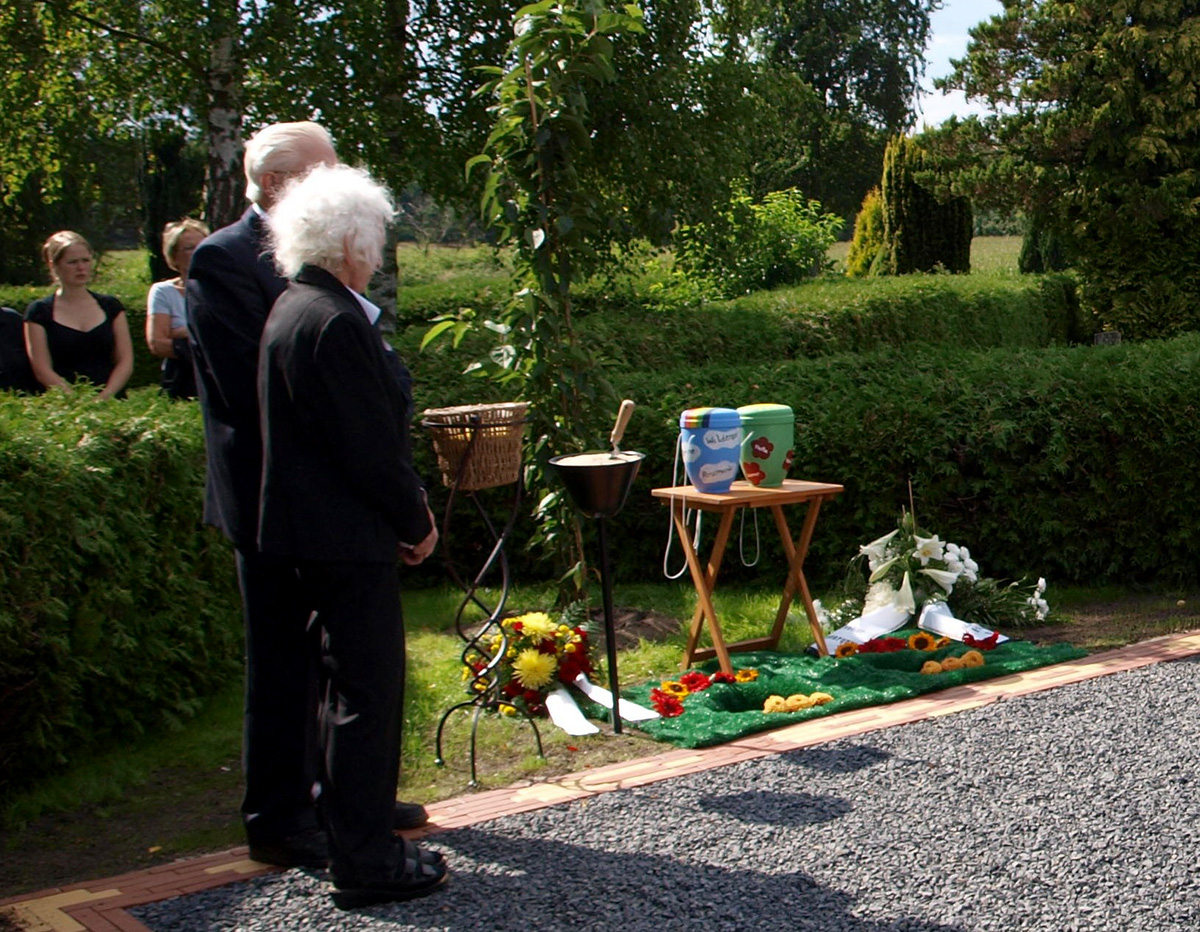
Public memorial service with burial of brain specimens in the presence of relatives, 25 August 2013.
ArEGL 224.
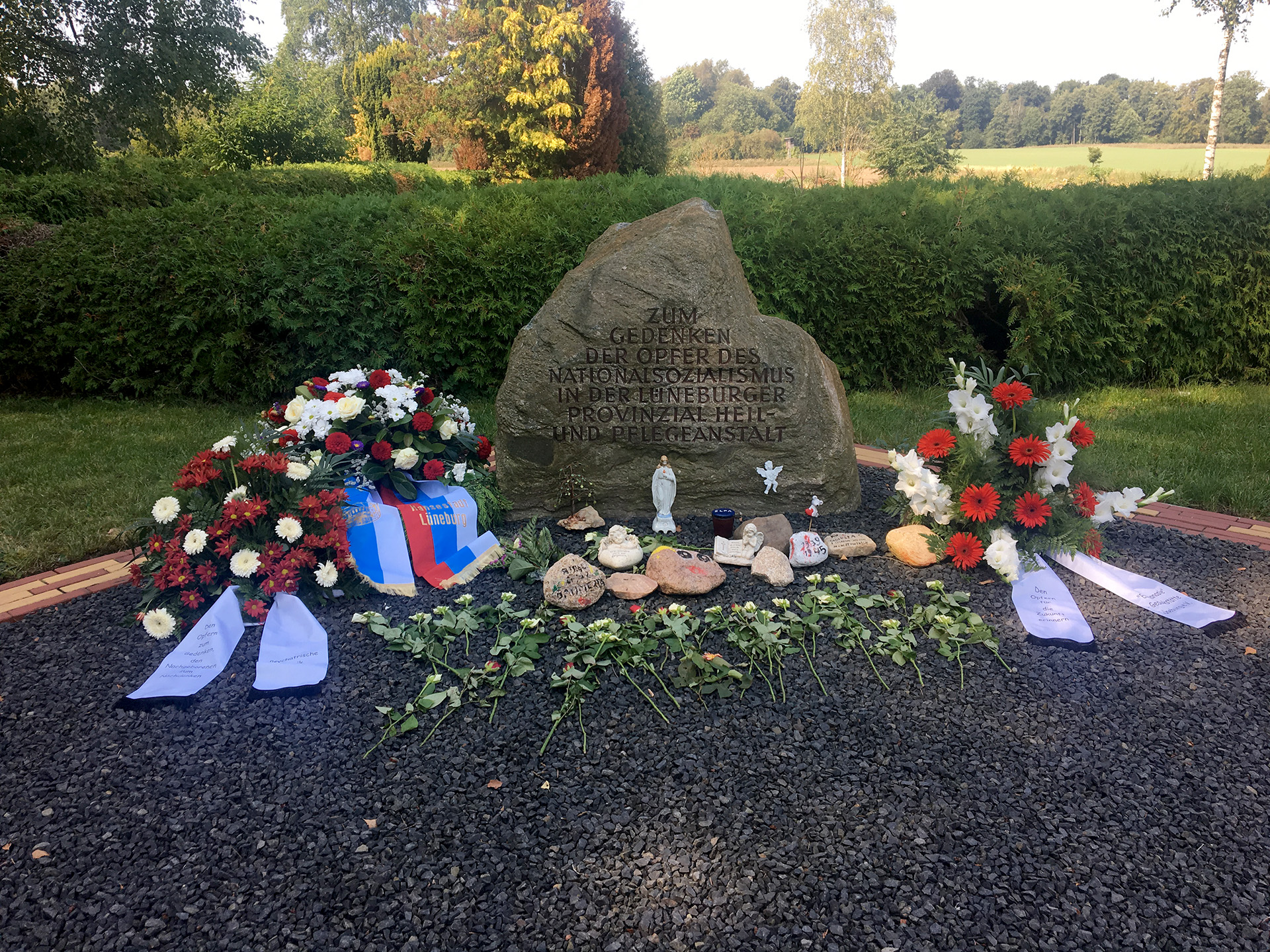
Memorial at the North-West Cemetery, 2019.
AArEGL 230.
A memorial complex was created at the former institutional cemetery. There are public memorial ceremonies. A different thematic focus is set each year. Pupils are often involved in the programme.
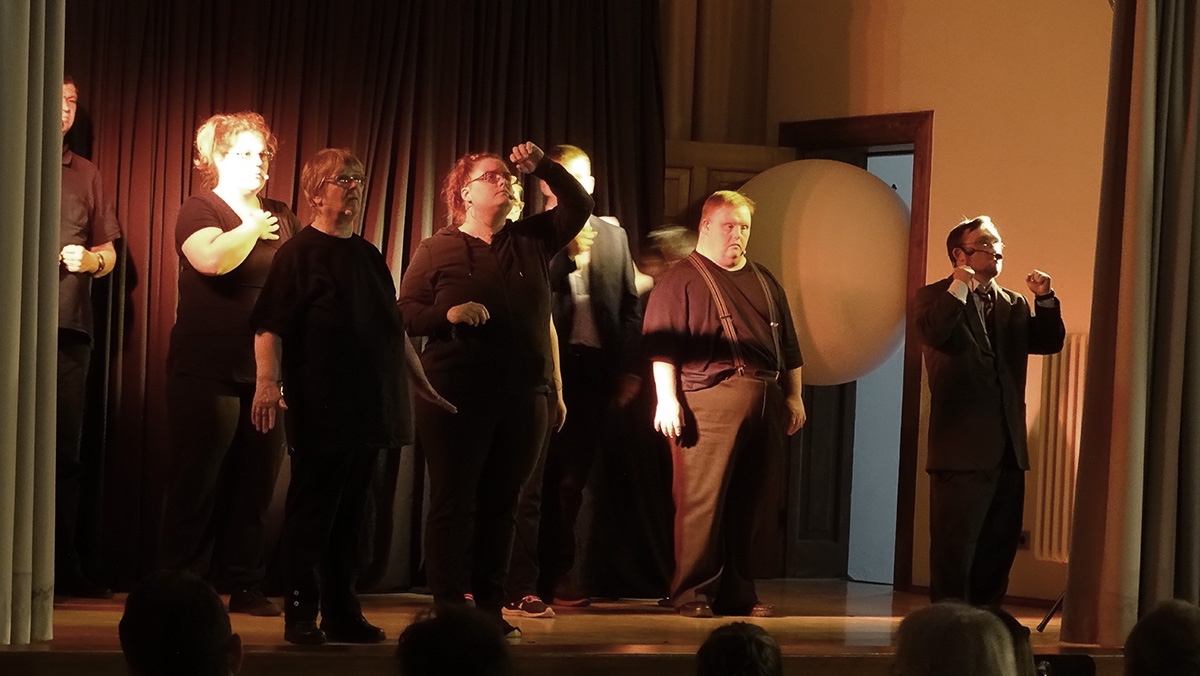
Theatre performance by the »Die Weltenbrecher« theatre group from Lebenshilfe Lüneburg-Harburg, commemoration 2018.
ArEArEGL 229.
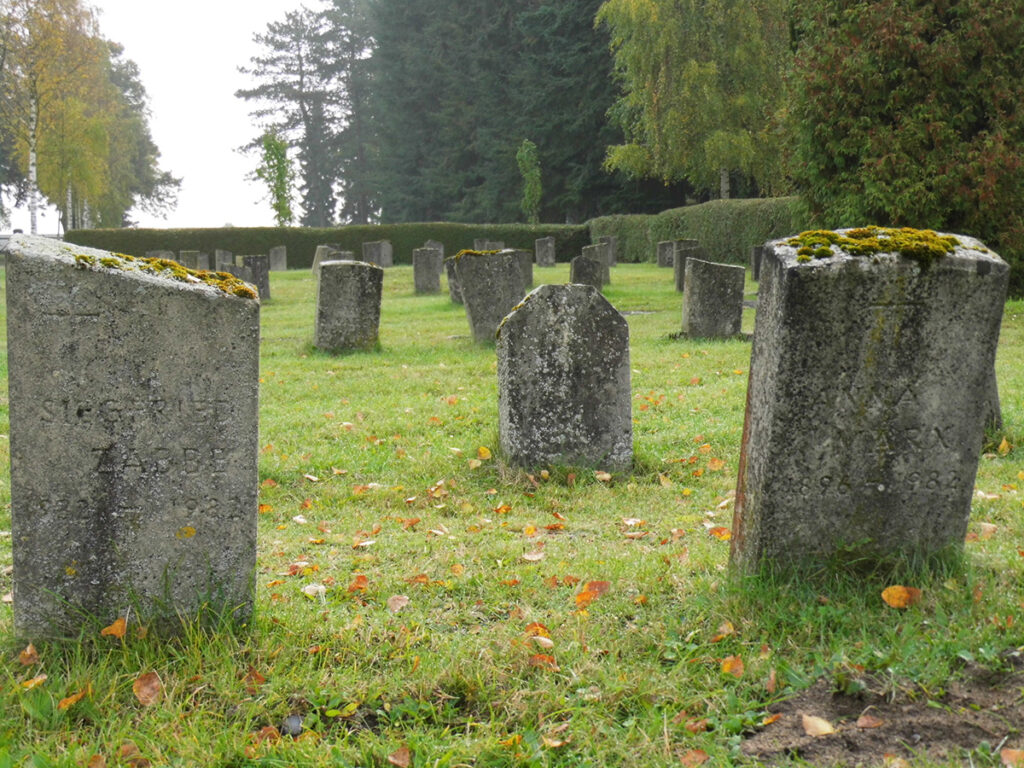
Cemetery with graves of patients from the state hospital from 1976 to 1982, 2016.
AArEGL.
A cemetery with graves from 1976 to 1982 in the former institutional cemetery and the graves of victims in Lüneburg’s central cemetery are under protection. A grove of honour has been recognised as a landscape monument and will be permanently preserved.
The memorial centre offers workshops and seminars and is also a venue for international meetings lasting several days. The offers are open to everyone and take place in the educational centre for human rights, social psychiatry and encounters, which was built in the old gardener’s house in 2019 and 2020. All of the programmes are aimed at helping people with disabilities and mental illnesses to live a good, valuable life. In 2022, the memorial was honoured by the Lower Saxony Ministry of Culture as a »place of learning for democracy education«.
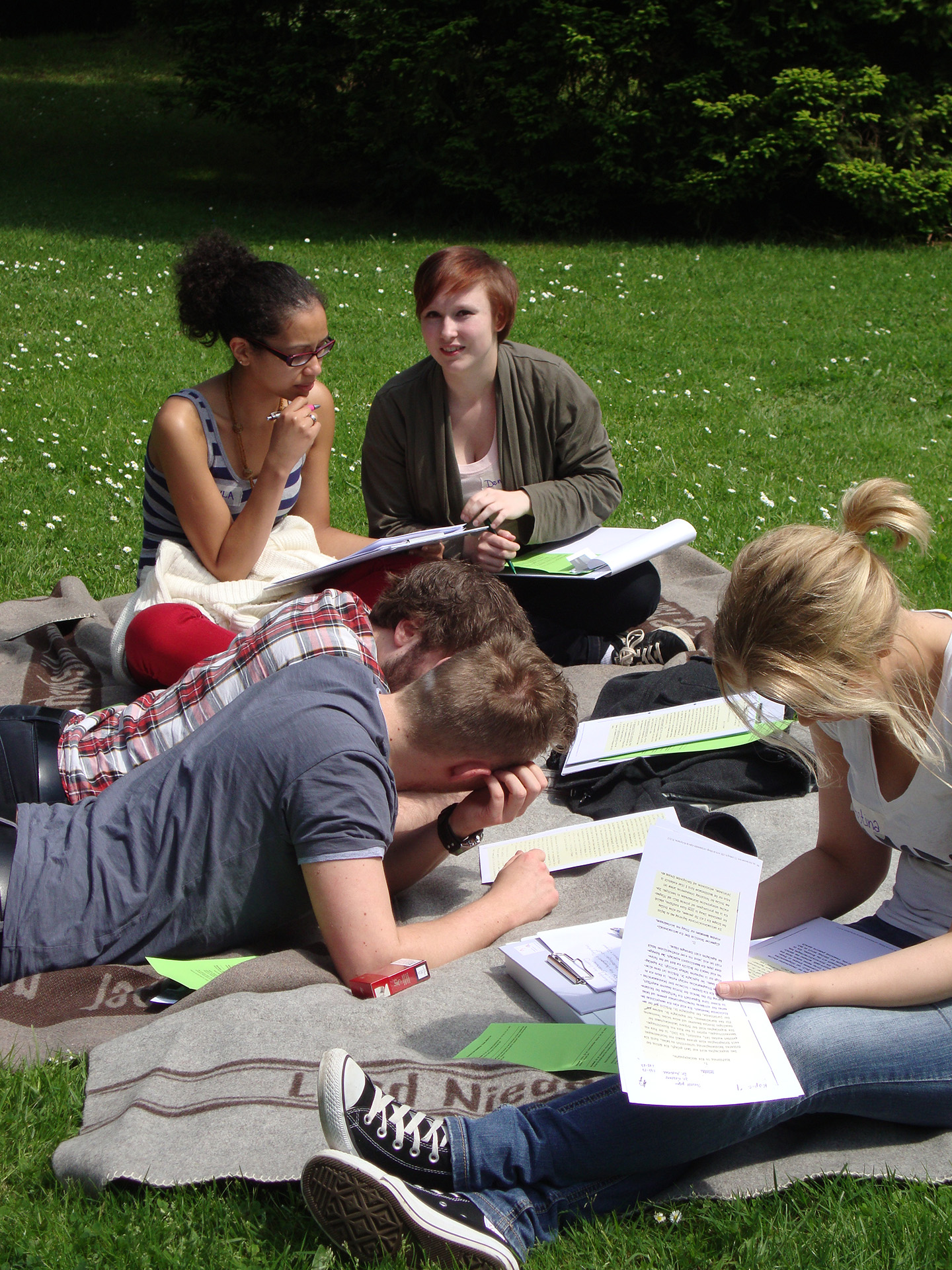
Participants in a multi-day »inclusion training course«, spring 2013.
ArEGL.
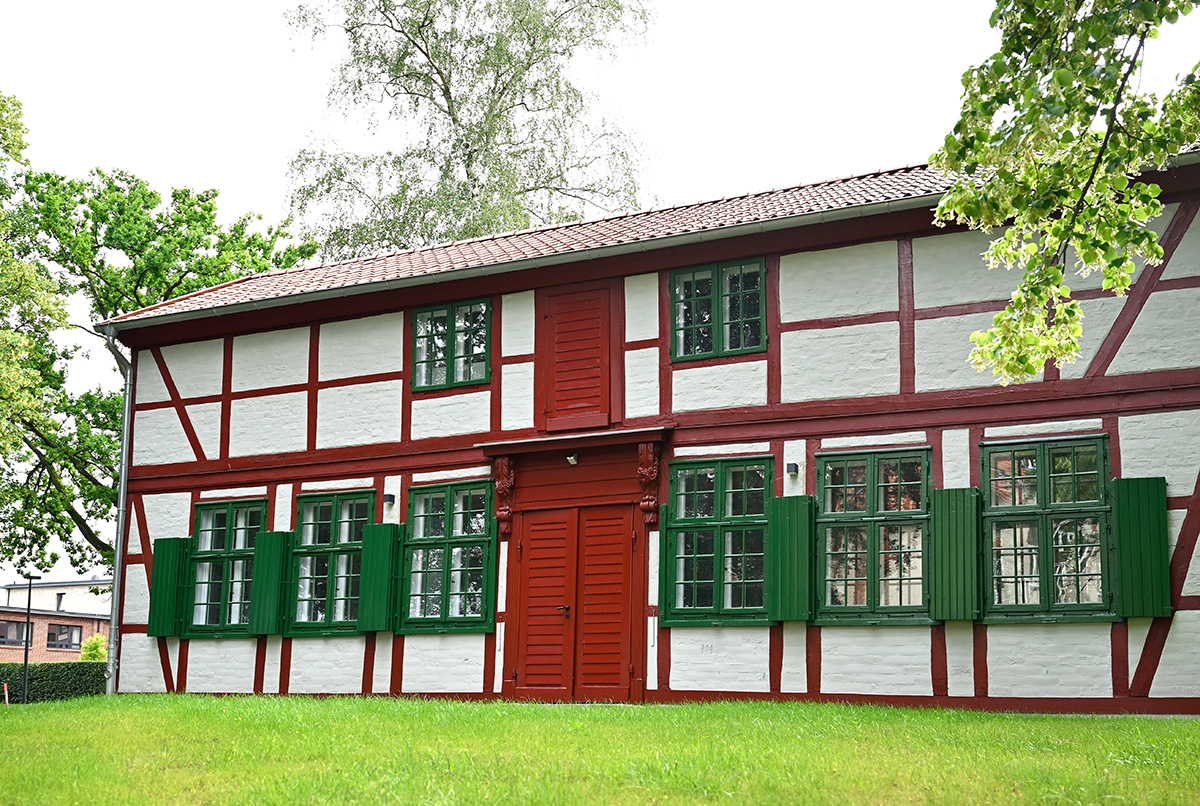
Educational Centre for Human Rights, Social Psychiatry and Encounter, August 2020, photographer Anne Meyer.
Psychiatric Clinic Lüneburg.
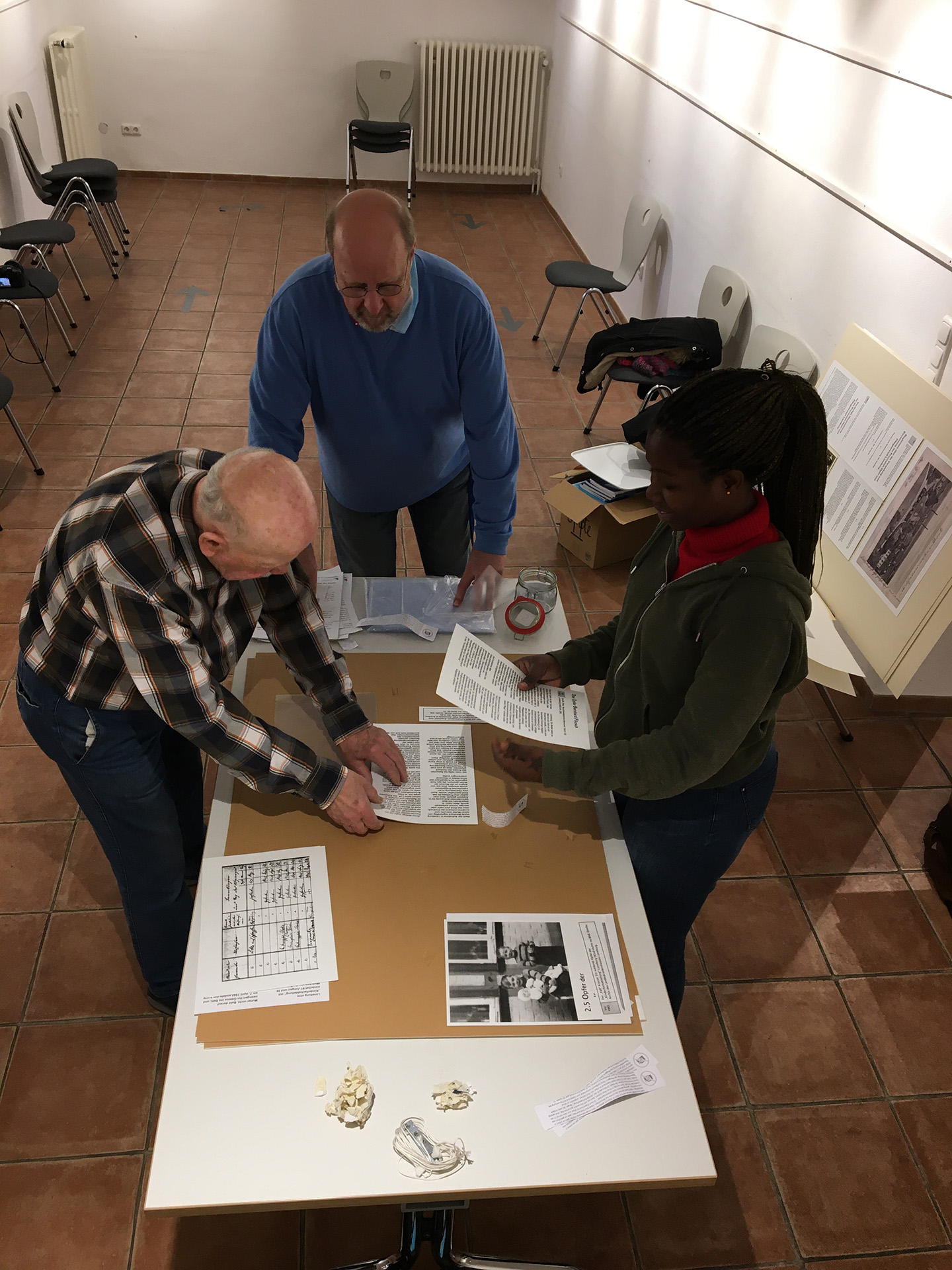
Volunteers taking down the permanent exhibition from 2004, 26.11.2021.
ArEGL 238.
The supporting organisation is founded in 2015. People and organisations from civil society become members. A teacher is seconded to the memorial centre in 2016. Since 2017, the memorial work has also been supported by freelance staff. In 2022, a non-profit limited company is founded, whose sole shareholder is the non-profit association. Many volunteers are involved in civil society work. The working group founded in 1999 meets several times a year and actively supports the memorial work.
Since 2019, the memorial has been training schoolgirl guides in cooperation with the Lüneburg History Workshop, who convey the history of Lüneburg under National Socialism on city tours. Since 2023, student guides have also been offering tours of the Lüneburg medical crimes on the grounds of the psychiatric clinic.
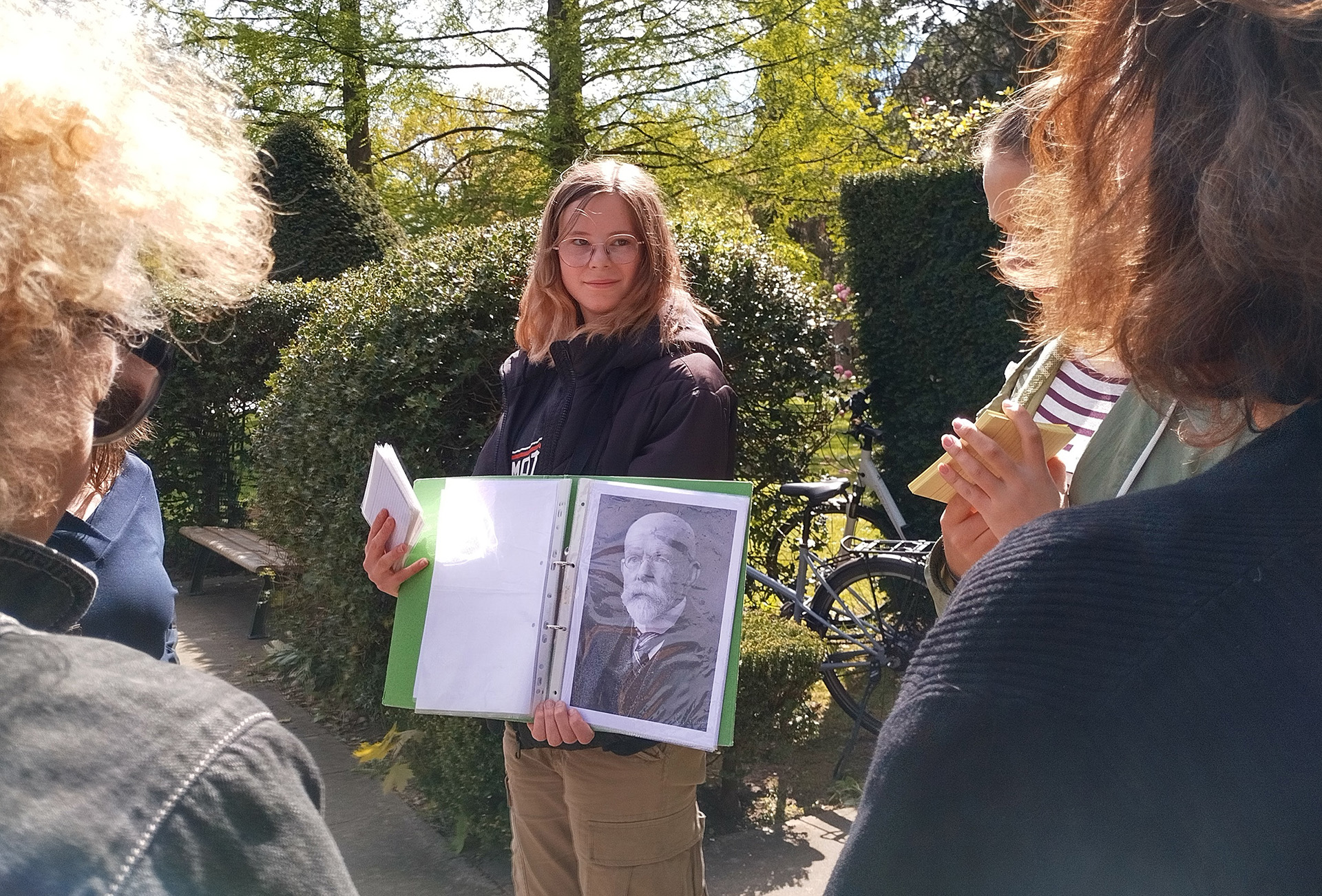
Pupil Guides of the grammar school Herderschule, 2023.
ArEGL.
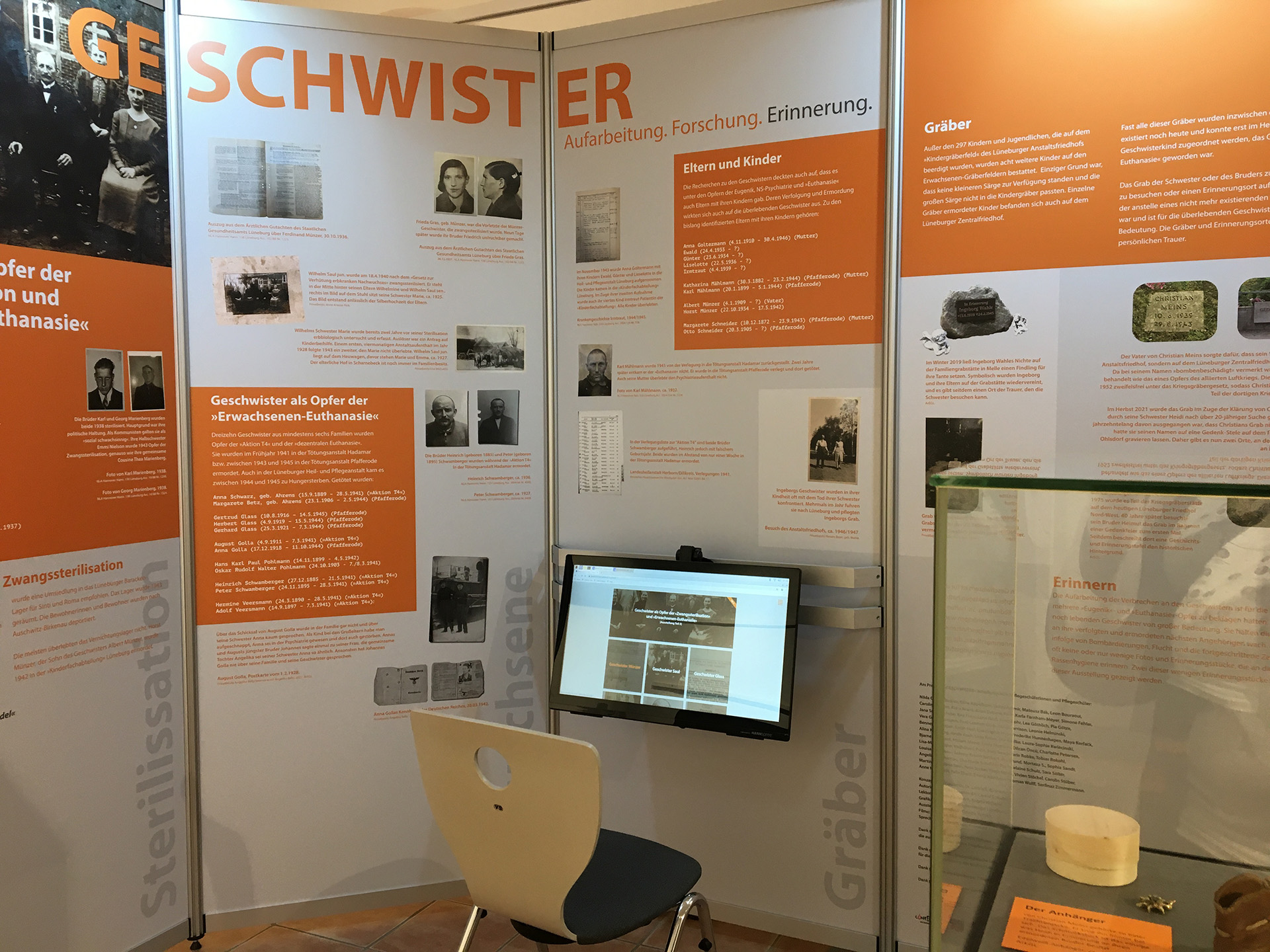
The special exhibition GESCHWISTER was the first to be published simultaneously in analogue and digital form, 24.11.2021.
ArEGL.
Since 2021, there has been a virtual exhibition space in which the special exhibitions are accessible without barriers. Since 2022, all offers have been available via a media station.
In the course of developing a new permanent exhibition, many items and documents of significance to the history of the Lüneburg sanatorium and nursing home were found, collected and stored in our archive. Much of this has been incorporated into this exhibition.
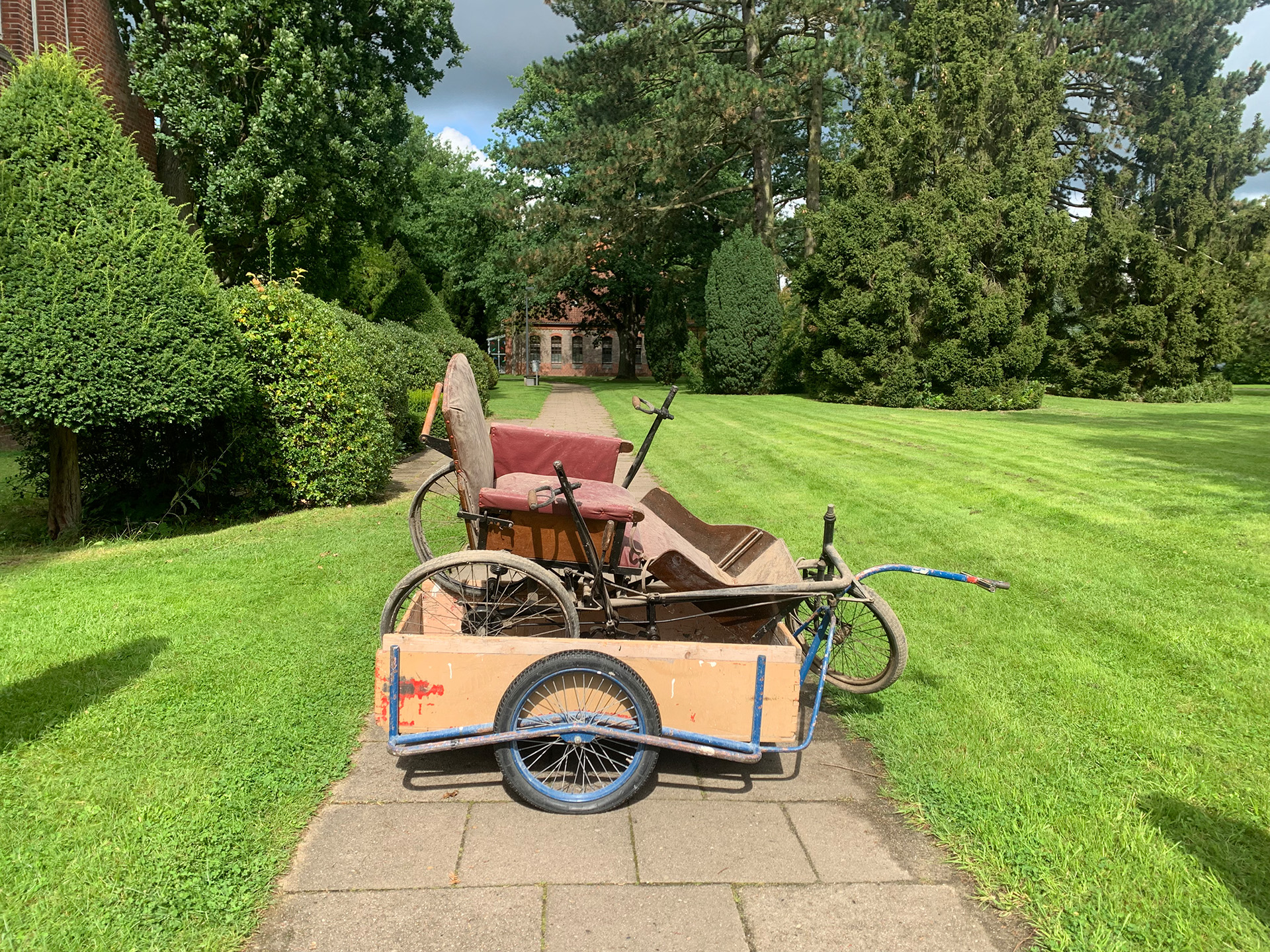
he hand lever lift was found in the crawl space in house 17 in autumn 2023.
ArEGL.
ArEGL.
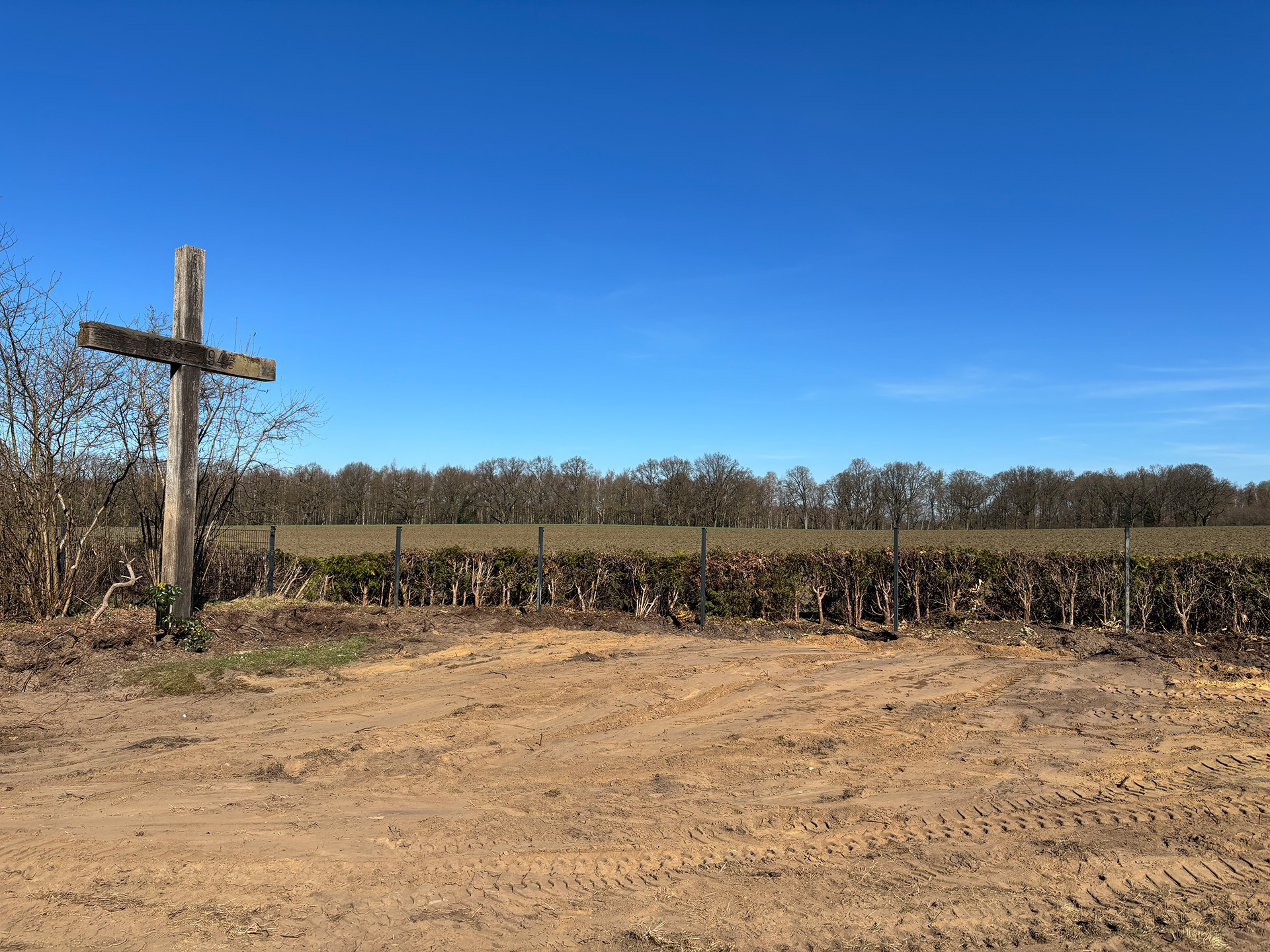
In the course of a planned redesign of the war cemetery in spring 2025, it was discovered when opening individual graves that many graves on the war cemetery were mock graves. The mortal remains found did not match the occupancy plan. This called the war cemetery into question and the search for the graves began.
On 31 August 2025, a documentation centre was opened in the former bathhouse at the water tower. The permanent exhibition »LEBENSWERT« shows how people THOUGHT, DECIDED and ACTED back then. Visitors can find information on every known victim of sterilisation and infanticide in the MEMORIAL room.