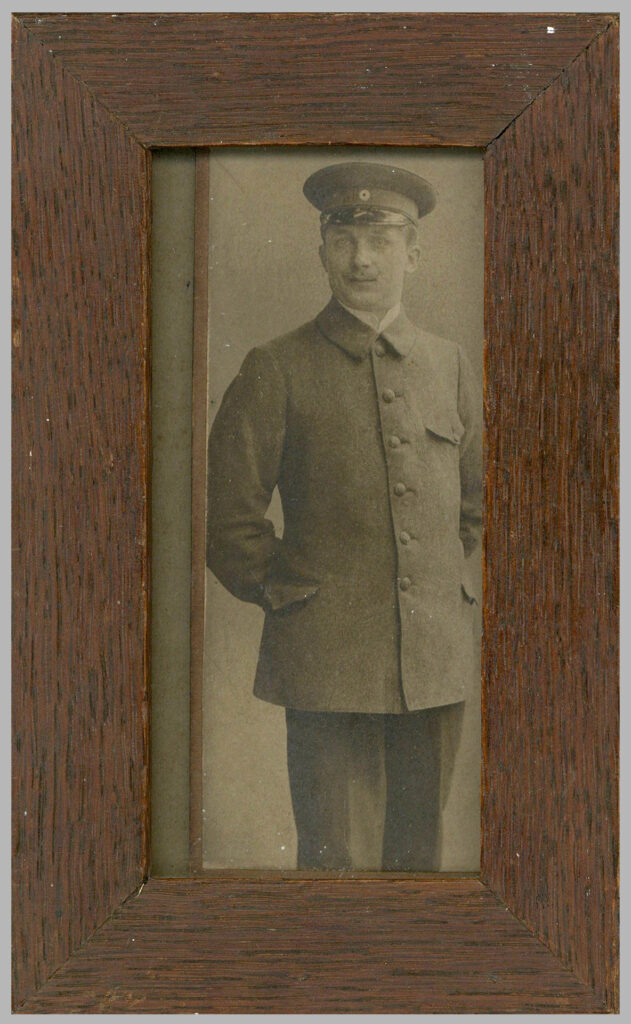
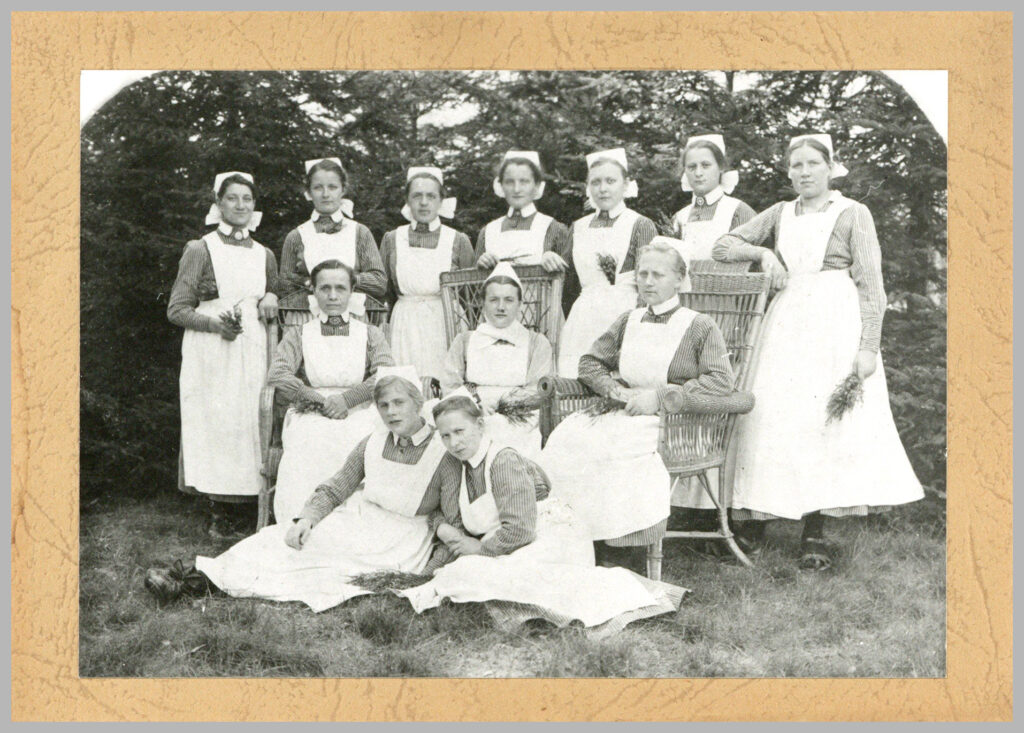
The Bünger couple met as warder and warder in the Lüneburg sanatorium and nursing home and married in 1912. Ernst came from a poor family. He had learnt to be a glassblower in Stade and became a warder in 1911. This earned him more money. Auguste came to Lüneburg from Ummeln near Hildesheim to work as a guard. Two daughters were born in 1913 and 1915, and Auguste stopped working as a guard.
Due to low capacity utilisation, employees were allowed to live in the wards during the First World War. The Büngers moved into House 4, and when the number of patients increased, the family moved into the »Wardens’ Estate«. The Büngers continued to live there after their retirement. They used the bathhouse for bathing. Ernst Bünger was popular with the patients because of his humorous and friendly manner. In his spare time, he sang in the men’s choir and played in the theatre group that performed in the clinic’s social hall.
Ernst and Auguste Bünger observed that there was a sharp increase in the number of deaths during the Second World War. They suspected that patients were being murdered. As many suffered from hunger, they provided some of them with food from their garden.