KEEP AND LOCK AWAY
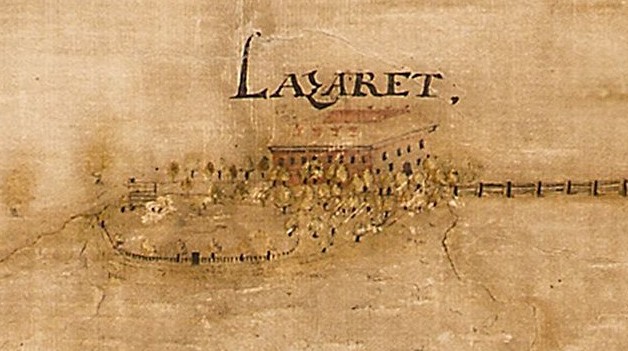
Detail from a plan showing the Breite Wiese military hospital, recognisable as a half-timbered house in the middle of a forest, 1700.
StadtALg K 12 C-55-(k).
Until 1815, sick people in Lüneburg were kept in the Breite Wiese military hospital. This was a former plague and poorhouse on the outskirts of the city. The building was constructed in 1565 and initially only had room for 20 patients.
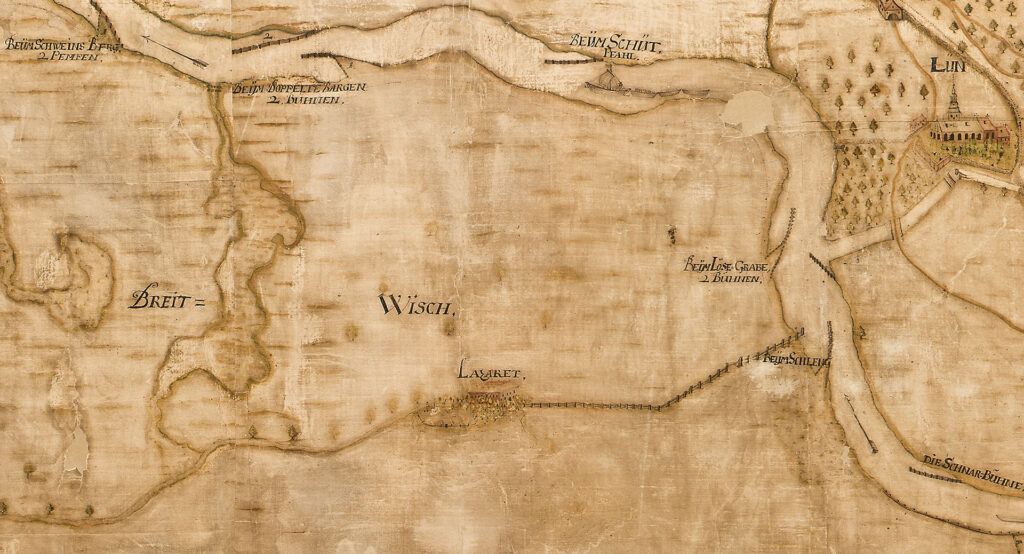
Detail of a plan showing the Breite Wiese military hospital. After 1700, it was expanded into a four-winged building and enlarged in 1714.
StadtALg K 7-G-27-1-(R).
»[…] the sick unfortunates who have been ordered to stay at the Breitenwiese – not as a punishment – but as a charity – are in a bad way. The insane are kept in containers to which access is through the cowshed, the container itself is full of stench, which rises from the uncovered entrance, dark, as it should be bright, as even the weakest mind seeks light. The diet given to all is partly too meagre, partly unhealthy; in that apart from bacon, cheese and potatoes they are given nothing else, still less vegetables and fruit […].«
City Physician Lentien quoted from Marianne Pagel: Gesundheit und Hygiene. On the social history of Lüneburg in the 19th century, Hanover 1992, p. 222.
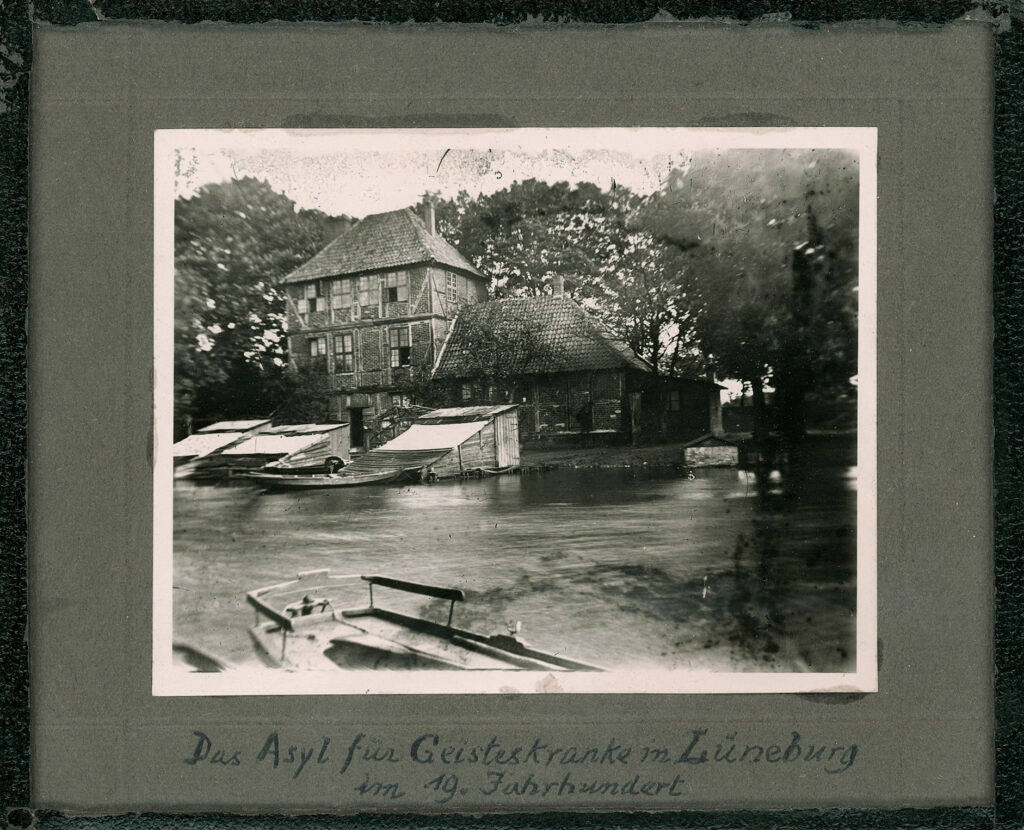
Photo of the Lüneburg Am Wandrahm hospital, 1892, photographer unknown. The handwritten note was added later and is not correct.
ArEGL 162.
From 1816 onwards, patients were placed in the Am Wandrahm hospital in the city for observation. From here, they were transferred to existing institutions in Hildesheim (1827), Göttingen (1866) or Osnabrück (1868) and finally separated. Due to the catastrophic conditions, the hospital was avoided by the physically ill.
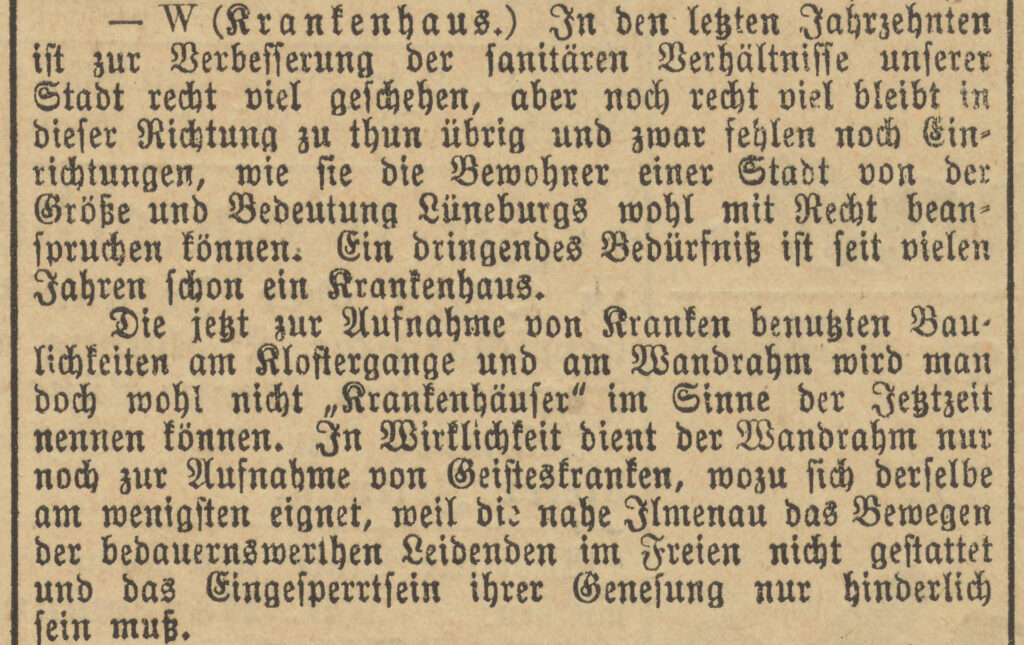
Extract from the Lüneburgischer Anzeiger of 2 February 1885, p. 3.
StadtALg 8.2 LLA-B, 1885-02.
The report in the Lüneburgischer Anzeiger of 2 February 1885 describes the adverse conditions in which sick people were locked up in the Am Wandrahm hospital. Sick people were not worthy of being treated humanely.

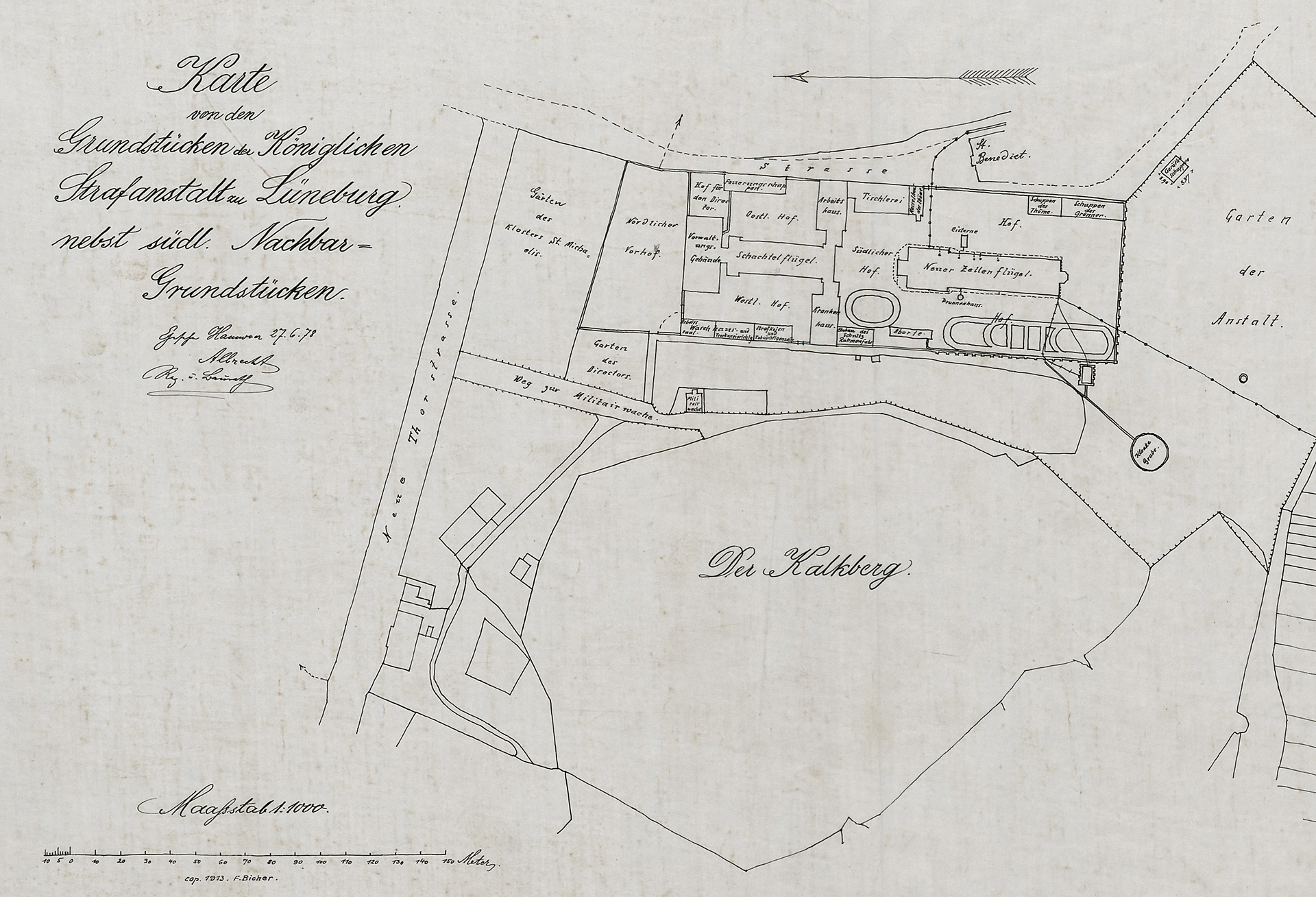
Map of the properties of the Royal Penal Institution in Lüneburg, 1878.
StadtALg K 17-C-43.
The Am Benedikt workhouse and penitentiary was used to house offenders or those who posed a danger to themselves. There was a separate area for »compulsive addicts«. The prison cells were not initially segregated by gender and the inmates were shackled.
The modernisation of the prison system also had an impact on the accommodation of mentally ill prisoners. In addition to the separation of the sexes, »work therapy« with workshop and gardening work was introduced. It was the model for a reorientation of institutional psychiatry towards a self-sufficient institution.
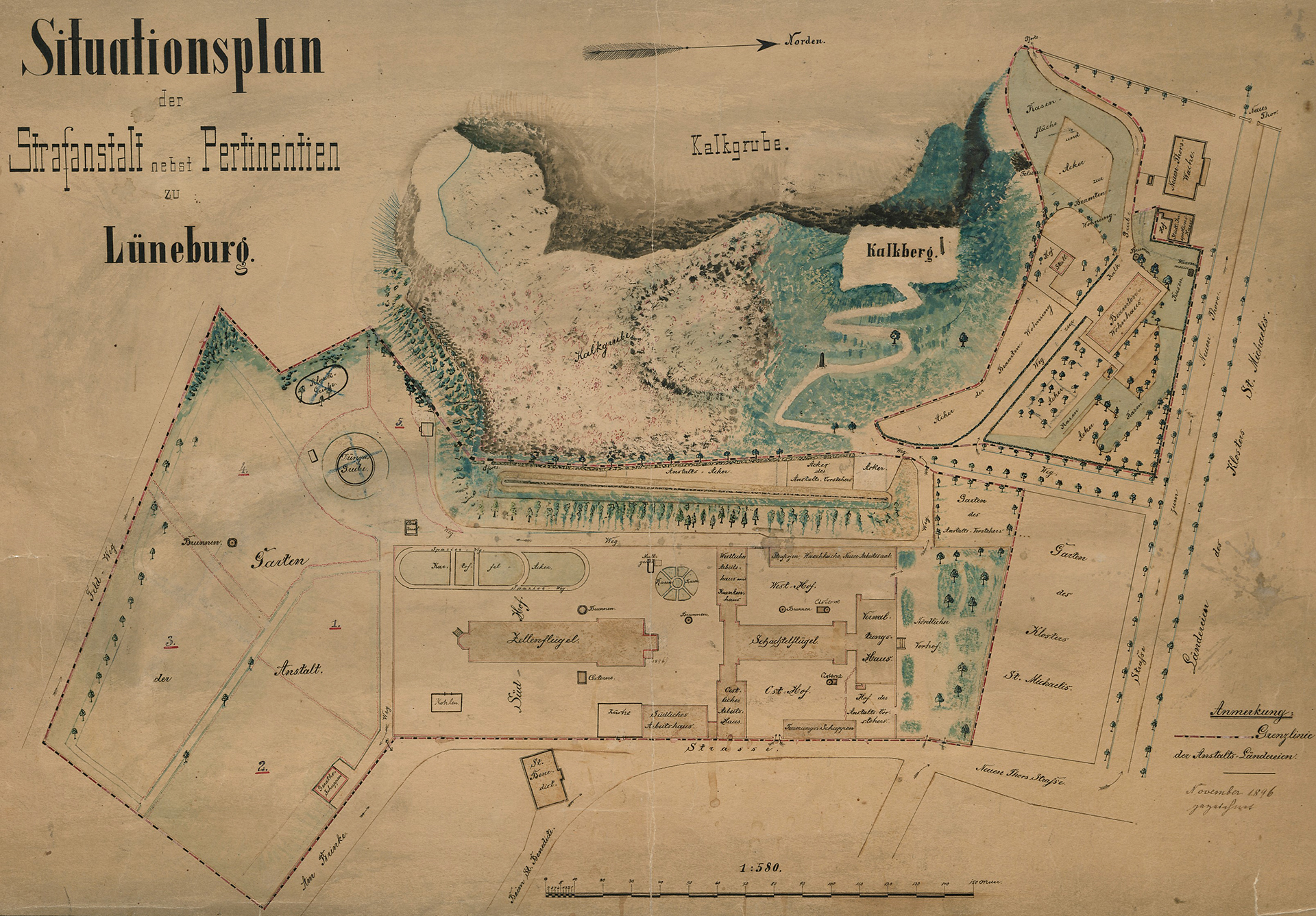
Location plan of the prison and pertinent information in Lüneburg, 1896.
StadtALg K 17-C-44-1.
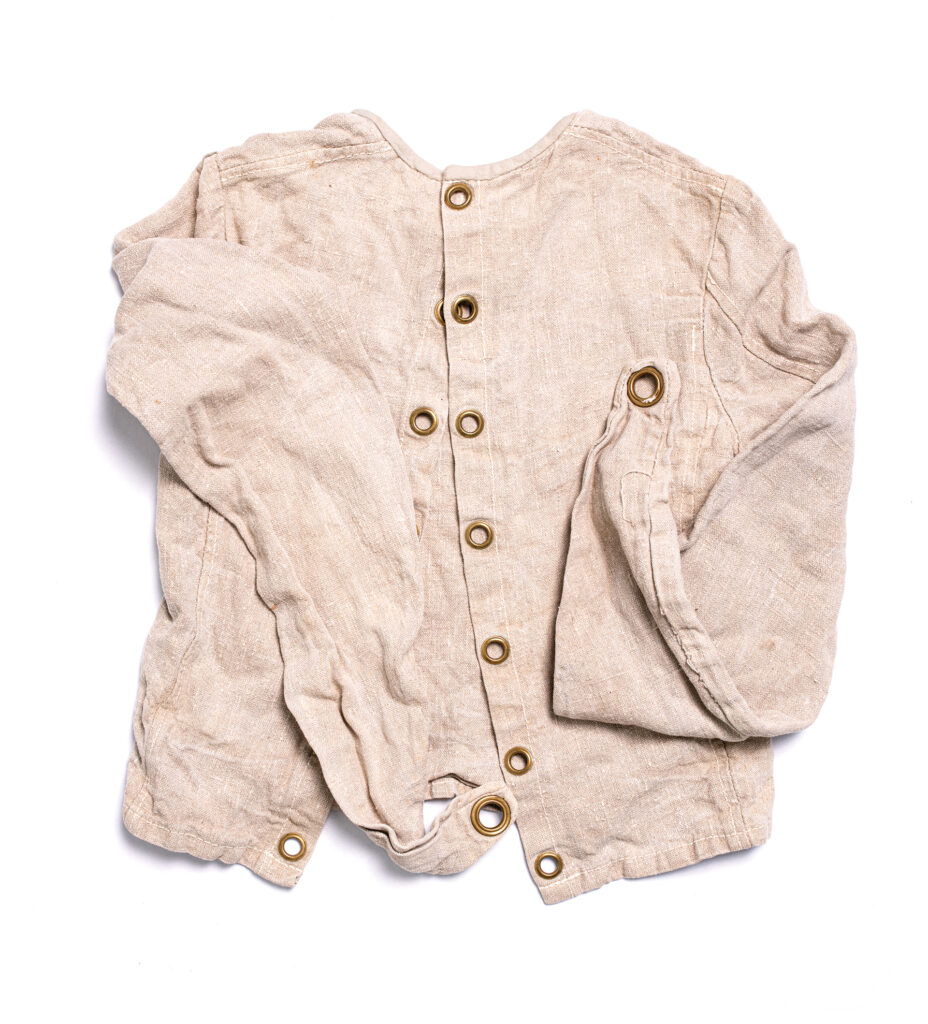
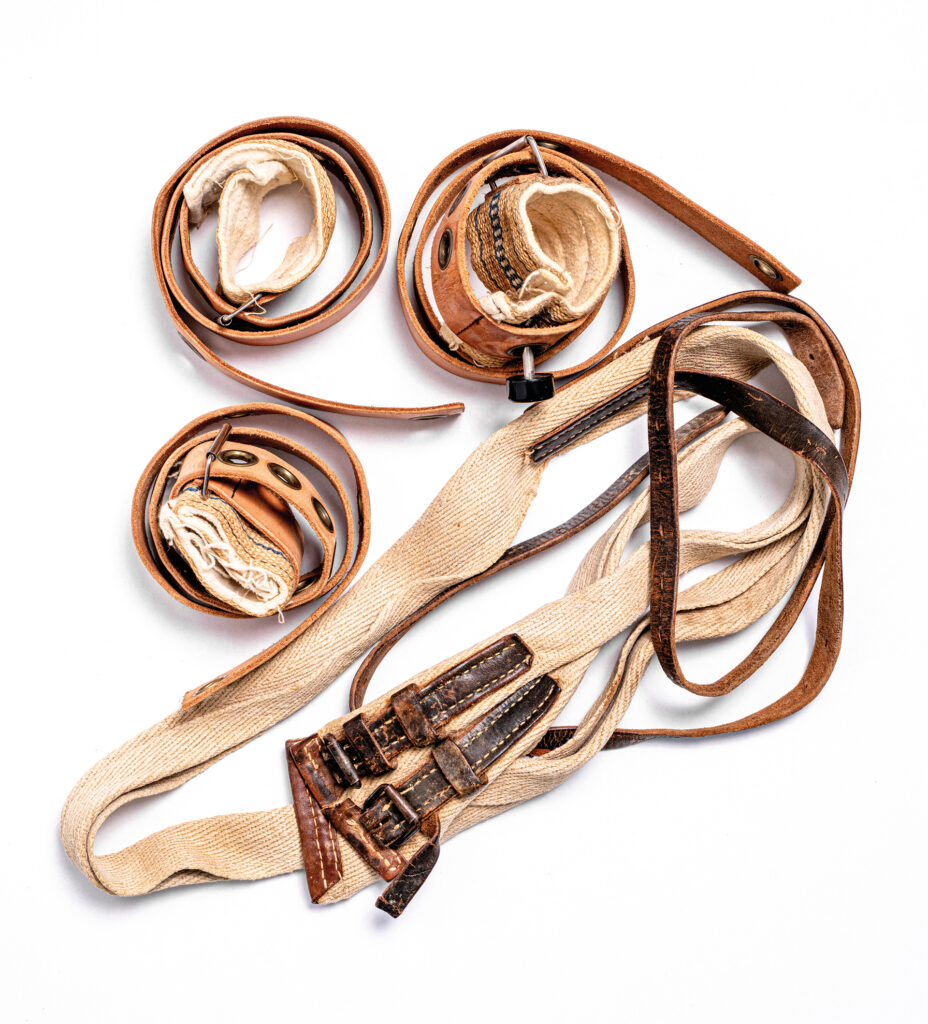
Straitjacket and restraint belt from the Lüneburg Psychiatric Clinic, after 1945.
ArEGL 145 |146.
Straitjackets and restraint belts replaced chains and shackles from the middle of the 19th century. Until the 1970s, there was a belief that particularly restless patients could only be pacified by force and violence. The jacket, euphemistically called a »protective jacket«, is no longer used today.
