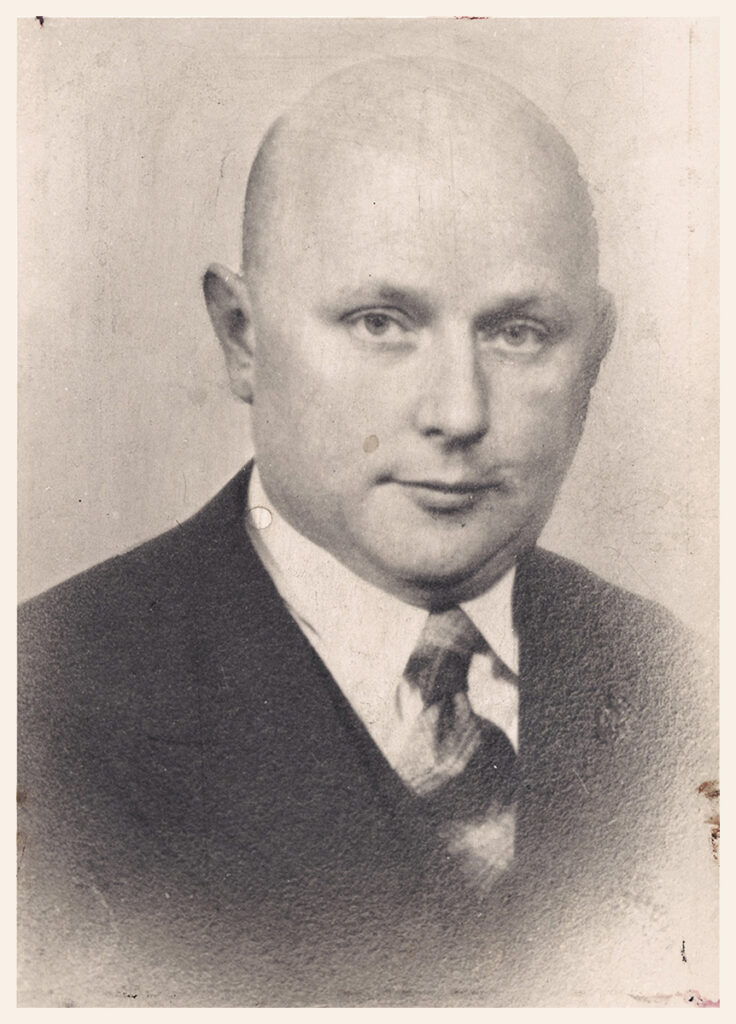
It is a black and white portrait photo of Adolf Wilke. He has a head of hair and a round head with a narrow nose. He is clean-shaven and has a smudge above his upper lip on his left cheek. He is wearing a dark jacket, a white shirt and a chequered tie. He looks corpulent.

Adolf Wilke, around 1930.

StadtALg BS 44318.

ADOLF WILKE (1898 – 1946)

Adolf Wilke was from Hamelin, a surgeon and medical director of the municipal hospital in Lüneburg. He studied medicine and married Elisabeth Menzinger in Leipzig in 1925. Wilke practised medicine in Berlin for several years until 1933. The couple then moved to Lüneburg, where Wilke took over the management of the hospital in 1936. In 1942, he arranged for the construction of an »Eastern Workers‘ Barracks« so that »Zwangsarbeiter*innen« could be treated there. He ordered the murder of »Zwangsarbeiter*innen« and was interned in Esterwegen on 1 June 1945. He died of diphtheria during a transport from the Esterwegen camp to the hospital in Sögel.

In addition to Wilke, other doctors (Helmut Bock, Günter Schulz and Friedrich von der Becke), a female doctor (Margret Dehlinger) and a head nurse (Margarete Dethlefsen) from Lüneburg Hospital were involved in the murder of the forced labourers. They decided to murder these women and men with an overdose of morphine.

This is the only photo of the former »Sick barracks« for Eastern labourers. It is the simple, elongated building at the back right, hidden in the trees.
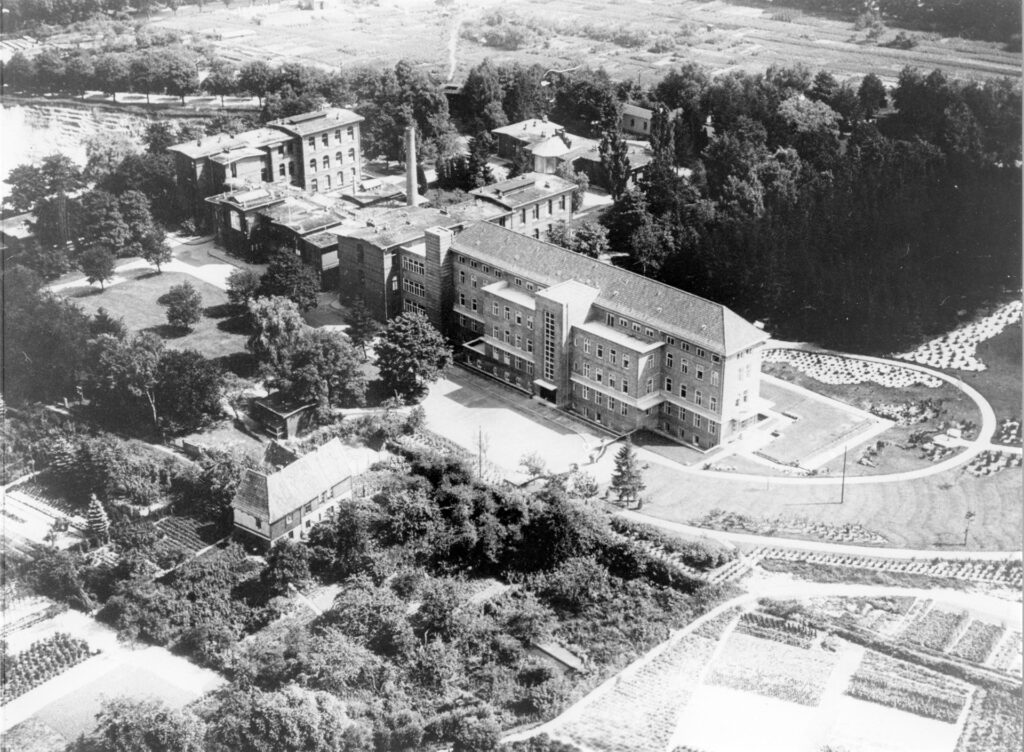
It is a black-and-white aerial photograph. It shows the Lüneburg hospital with its main building, which opened in 1900, the extension on the right and the outbuildings. In a small wood behind the main building and the boiler house, recognisable by a large chimney rising into the sky, there is a long building. This is the barracks. Behind it runs Oedemer Weg, a tree-lined avenue.

Aerial photo of Lüneburg Hospital, c. 1950.

Municipal Hospital Lüneburg.
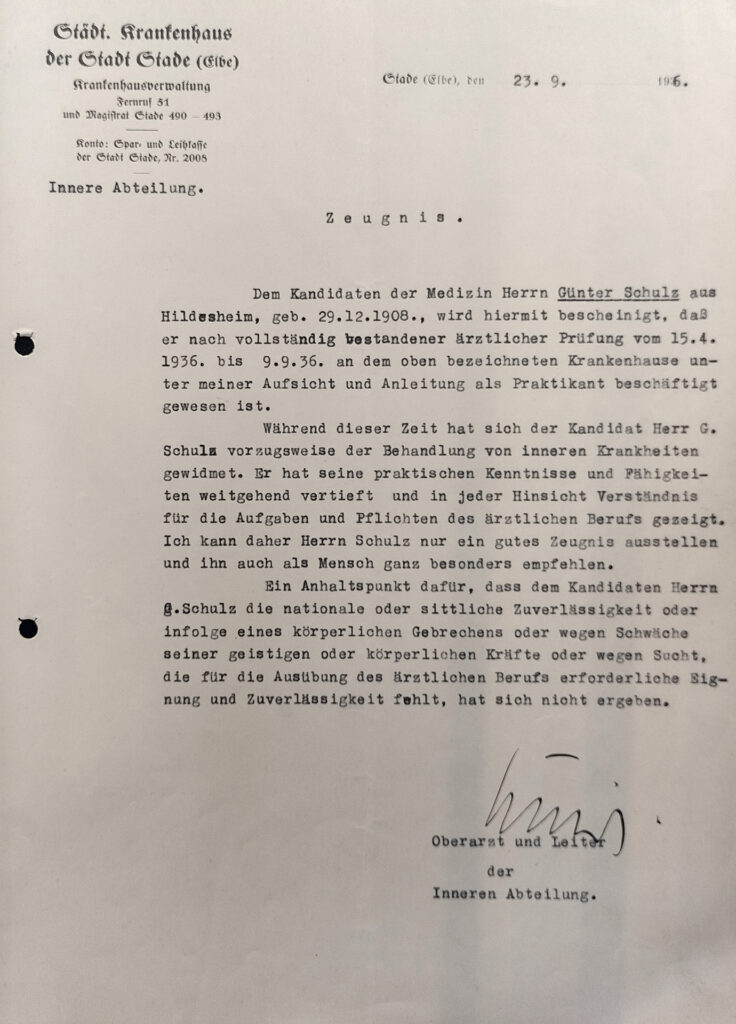
It is a yellowed piece of paper with typewritten text and the original signature of the senior physician of the internal medicine department at Stade Hospital.

Certificate from the municipal Hospital of the city of Stade about Günter Schulz, 23 September 1936.

StadtALg PA 471.

GÜNTER SCHULZ (1906– 1946)

Günter Schulz came from Herford. He graduated from high school in Hildesheim in 1929 and then studied medicine in Jena, Graz, Innsbruck, Leipzig and Rostock. He passed his state examination in 1935. He worked at Jena University Hospital, in Hildesheim and in Stade before joining Lüneburg Municipal Hospital in 1937. He married during this time and became the father of two children. In Lüneburg, he instructed the nurse Margarete Dethlefsen to administer lethal doses to forced labourers. They were supposed to alleviate and relieve pain. Schulz was called up to the army in March 1944. After the war, he confessed to his crimes. He was sentenced to death and executed at the end of 1946.

»To the Lord Mayor of the City of Lüneburg, I have been informed that the post of Head of the Internal Medicine Department has become vacant. I would hereby like to apply for this position. I qualified in 1936, from 1936 to 1937 I was a scheduled assistant doctor at the Städt. Hospital Stade from 1936 to 1937, and since 1937 I have been a scheduled assistant doctor at the Municipal Hospital Lüneburg. In March 1944 I was called up for military service and from July 1944 I was a departmental doctor at various field hospitals in the East. I am currently employed as an internist at a local hospital. I have been recognised as a specialist by the Lower Saxony Medical Association since June 1940. An assessment of my professional performance in the army can be requested from my current staff physician, the consultant internist Colonel Dr med. habil. Berg can be requested. I have applied for discharge today […].«
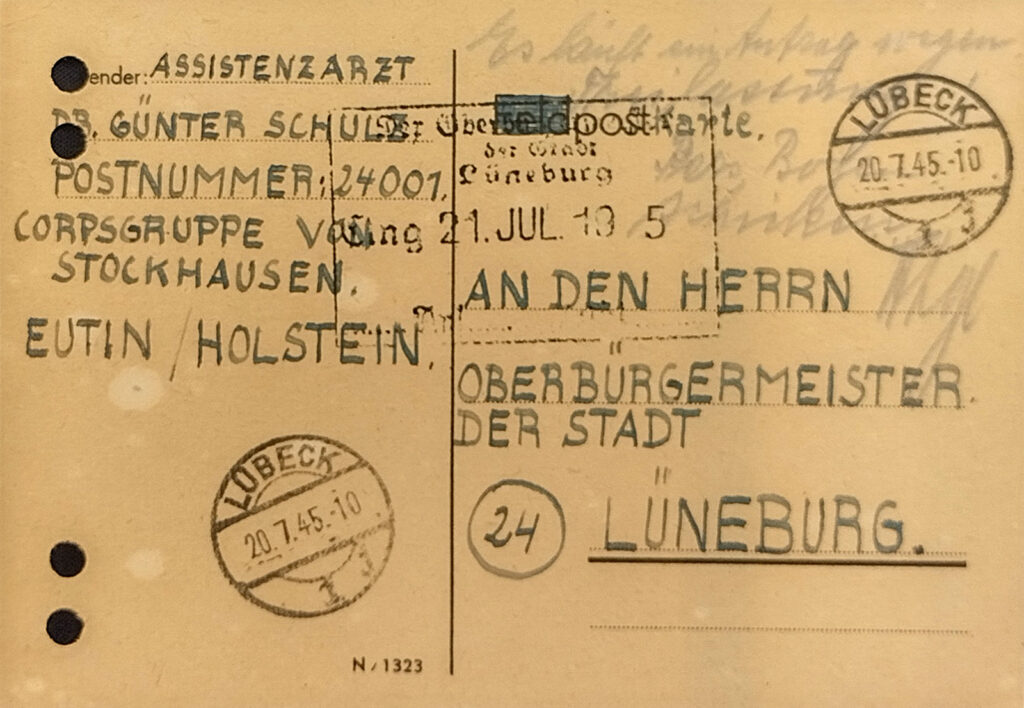
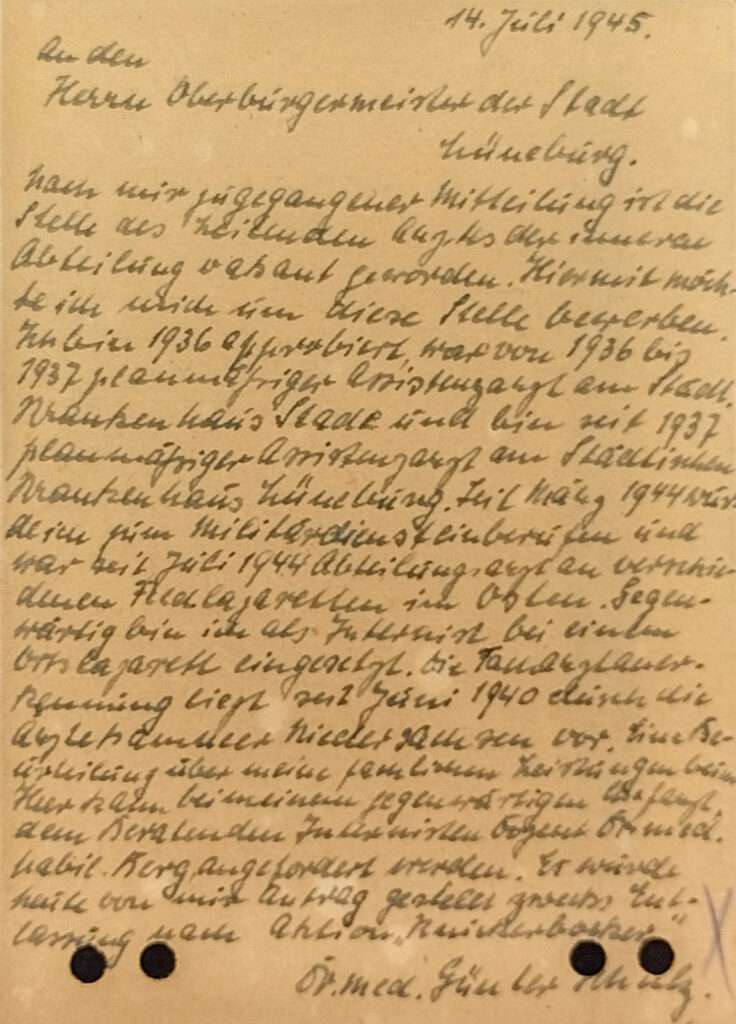
It is a postcard with writing on both sides. Both sides are printed. The address is written in block letters. There are two postmarks from Lübeck dated 20 July 1945. On the back is the handwritten application. The card is perforated.

Application from Günter Schulz to the Lord Mayor of the City of Lüneburg, 14 July 1945.

StadtALg PA 471.
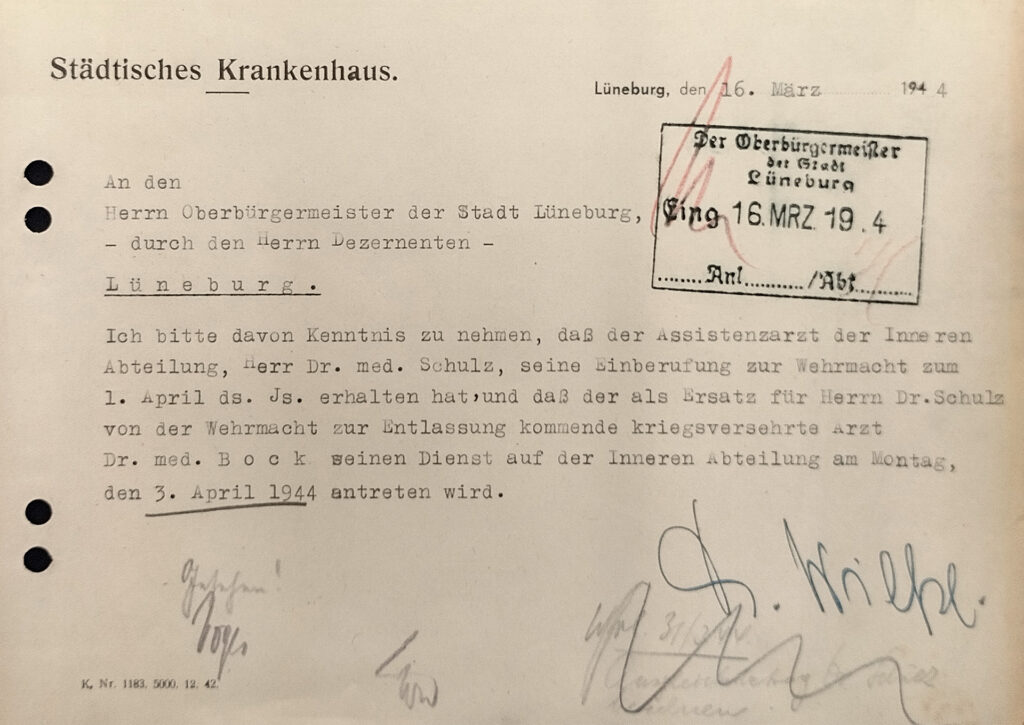
It is an A5 sheet of paper in landscape format. The paper is light brown and has been typed on a typewriter. It states that Dr Helmut Bock is taking up his post as a replacement for Günther Schulz, who has been drafted into the Wehrmacht. There is a stamp from the mayor. The notice is signed by Adolf Wilke.

Letter from Adolf Wilke to the Lord Mayor of Lüneburg, 16 March 1944.

StadtALg PA 128.
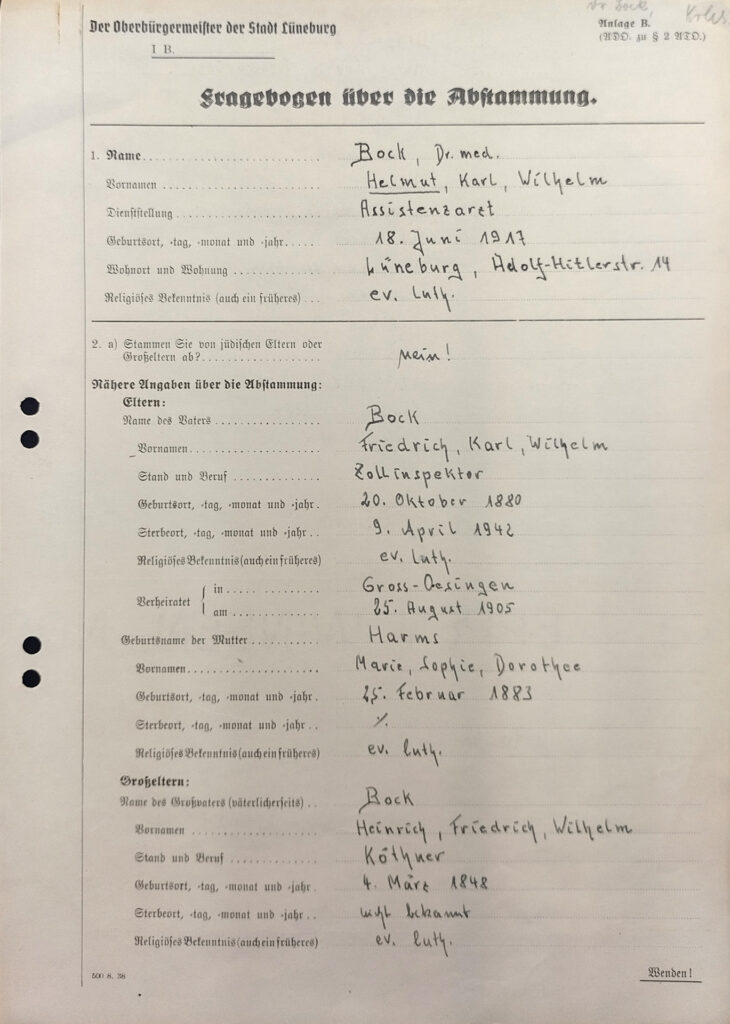
It is a form requesting personal information about family ancestry. The form is filled out by hand in block letters by Helmut Bock. The first question is: Are you descended from Jewish parents or grandparents? Bock answered this with: No! This is followed by information about his parents and grandparents.

Questionnaire on ancestry, completed by Helmut Bock, front page, 10 December 1944.

StadtALg PA 128.

HELMUT BOCK (1917 – 1946)

Helmut Bock came from Emden. He studied medicine and passed his exams in Hamburg. From 1943, he worked in a reserve hospital in Hamburg-Wandsbek. In 1944 he became the father of a daughter. In the same year, he lost a leg. He then applied for a position as a doctor in Lüneburg. He started work as an assistant doctor in April 1944 and was Günter Schulz’s successor. In November 1944, he became the father of twins, and a month later he married the mother of his children. Between April 1944 and January 1945, he took part in the murder of forced labourers.

As a result of taking painkillers for months, he underwent withdrawal treatment at the Lüneburg sanatorium and nursing home from January to April 1945. In the summer of 1945, he was interned in the Neuengamme camp. In May 1946, he was extradited to Yugoslavia. There he was sentenced to death and executed at the end of 1946 for the murder of forced labourers in Lüneburg hospital. At the time, his wife was living with their children in the district of Lüneburg.

MARGRET DEHLINGER, GEB. GIESCHEN (1913 – 1990)
Margret Dehlinger came from Bremen and was a doctor. In 1940, she married her colleague Freimut Dehlinger from Lötzen, and a year later her first daughter was born. Margret Dehlinger worked as an emergency doctor in the internal medicine department of Lüneburg Hospital until September 1945. There she was involved in the murder of forced labourers. In January 1945, she was awarded the War Cross of Merit 2nd Class. Her second daughter was born in 1946. From 1949 to 1950, she returned to work and became a senior physician. In 1951, the Dehlingers left Lüneburg and moved to Leer. She died on 21 October 1990 in Bad Zwischenahn.

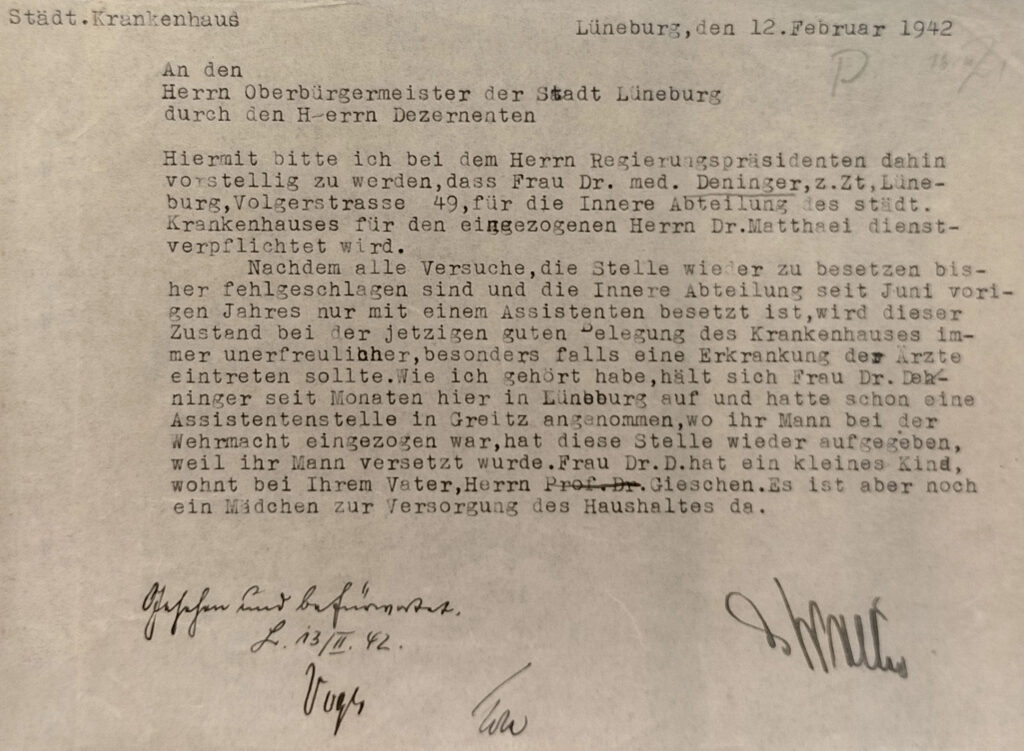
It is a DIN A5 paper in landscape format. The paper is light brown, wafer-thin and was typed on a typewriter. It is handwritten and signed by Adolf Wilke. It states that Margret Dehlinger is to be conscripted to replace the doctor Matthaei, who has been called up to the Wehrmacht. She was living with her father in Lüneburg and had a small child. She was able to work thanks to a domestic help.

Letter from Adolf Wilke to the Lord Mayor of the City of Lüneburg, 12 February 1942.

StadtALg PA 154.
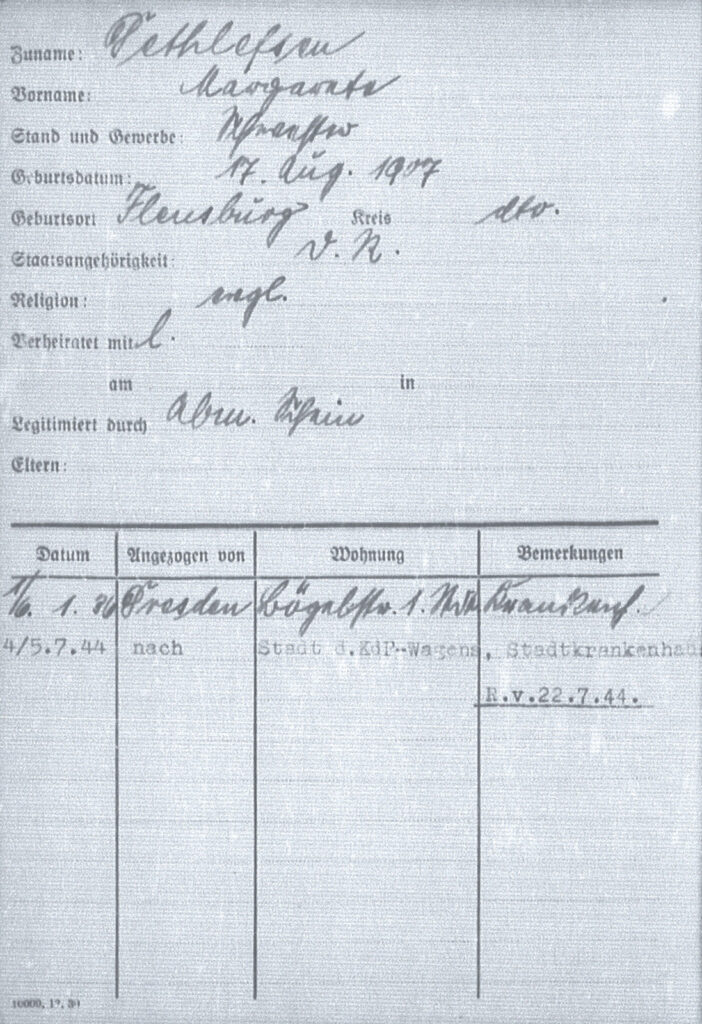
This is a black and white copy from the population register. It is a blurred photo print. The register is handwritten and some entries are also typed. It shows that in July 1944 she moved from Lüneburg to the city of the K.d.F.-Wagen (now Wolfsburg) to work at the municipal hospital there.

Extract from the civil register of Margarete Dethlefsen, 1944.

StadtALg, EMA-EK, Dethlefsen-Margarete.

MARGARETE DETHLEFSEN (1917 – 1946)

Margarete Dethlefsen came from Flensburg and had been working as a head nurse at Lüneburg Hospital since 1936. When she was instructed to administer an overdose of morphine to sick forced labourers, she followed the order. She murdered over 50 people in this way without questioning or doubting it. At the end of 1946, she was convicted of murder and executed.

RICHARD HÖLSCHER (1868 – 1949)

Richard Hölscher was born on 22 August 1868 in Bad Pyrmont. After studying medicine, he became a senior physician in Kiel. There he married Rita Christensen on 1 September 1900. Two and a half weeks after the wedding, the newlyweds moved to Lüneburg, as Hölscher took up the post of medical director at the newly built hospital. His three sons and one daughter were born in 1902, 1903, 1907 and 1911.

In 1925, on the occasion of his 25th anniversary of service, the nurses put together an album for him. It is the only collection of historical photos of Lüneburg Hospital in existence. It is an expression of the high esteem in which Hölscher’s work is held. He retired in 1936 due to his age. After his departure, medical care at Lüneburg Hospital was reorganised. Whilst Hölscher, as Medical Director, still united surgery and internal medicine, two departments were now created. Adolf Wilke became Head of Internal Medicine and Werner Kalliske became Head of Surgery.

Between 1934 and 1936, Richard Hölscher was involved in forced sterilisations. As his successor Werner Kalliske lost his wife after the birth of their fourth child, he had to reorganise his life as a single father of four children and was initially unable to continue working. Hölscher stood in for him and returned from retirement for nine months.

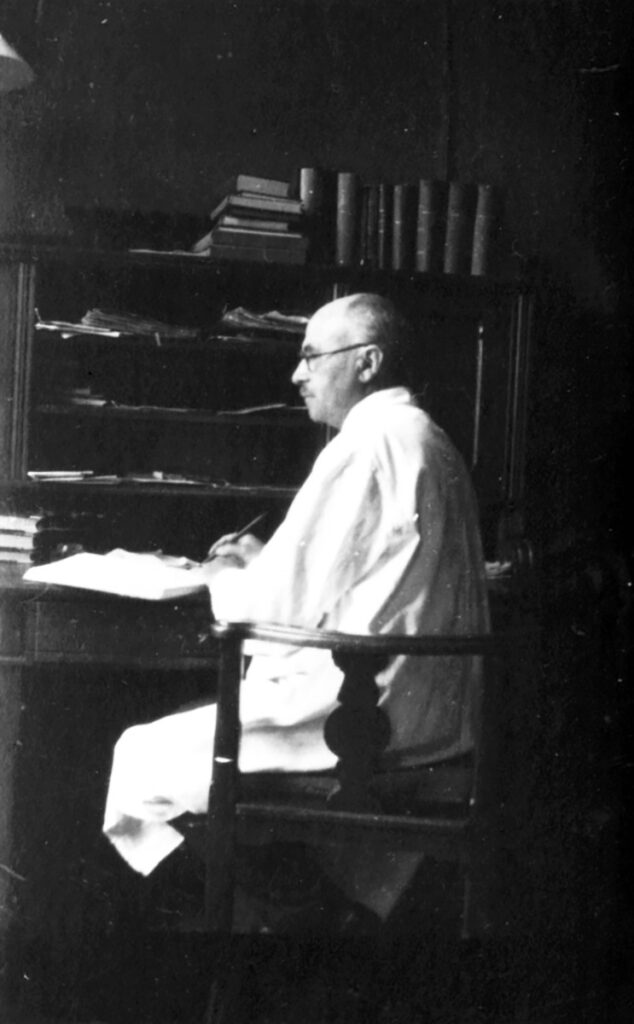
It is a black and white photo of Richard Hölscher shortly before his retirement. He is sitting in his study at his desk on a wooden chair with an armrest. He is wearing nickel glasses, a trimmed moustache and his doctor's coat. He simulates writing with a fountain pen. It is a side view, he is looking straight ahead and not at the camera. In the background is a shelf filled with files. The scene looks staged.

Richard Hölscher died on 17 August 1949 in Lüneburg.

Medical officer Richard Hölscher, around 1925. Album commemorating the 25th anniversary.
Lüneburg Municipal Hospital.

StadtALg PA 42.

From January 1943 to August 1945, Hölscher once again took over the management of the surgical department due to the war. Werner Kalliske had been drafted. It was not until 6 August 1945 that Richard Hölscher was decommissioned for good.

Throughout this time, Richard Hölscher was involved in forced sterilisations. He must also have been aware of the murder of forced labourers in the »foreigners‘ barracks« at his hospital, as he enjoyed the highest level of trust among the staff as the former medical director and head of surgery.
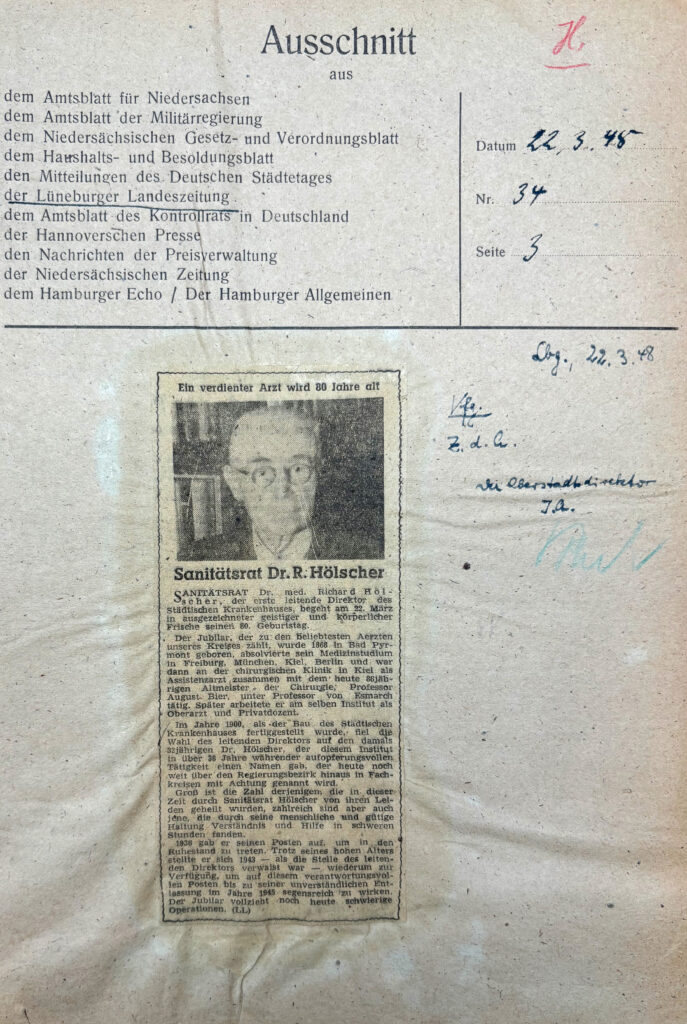
It is a newspaper article with a portrait photo of the elderly Richard Hölscher. The article is typed and printed on newsprint. It is single-column. Above the photo is written: »A distinguished doctor turns 80.«

Newspaper report from the Lüneburger Landeszeitung of 22 March 1948, Vol. 3, No. 34, p. 3.

StALg PA 42.
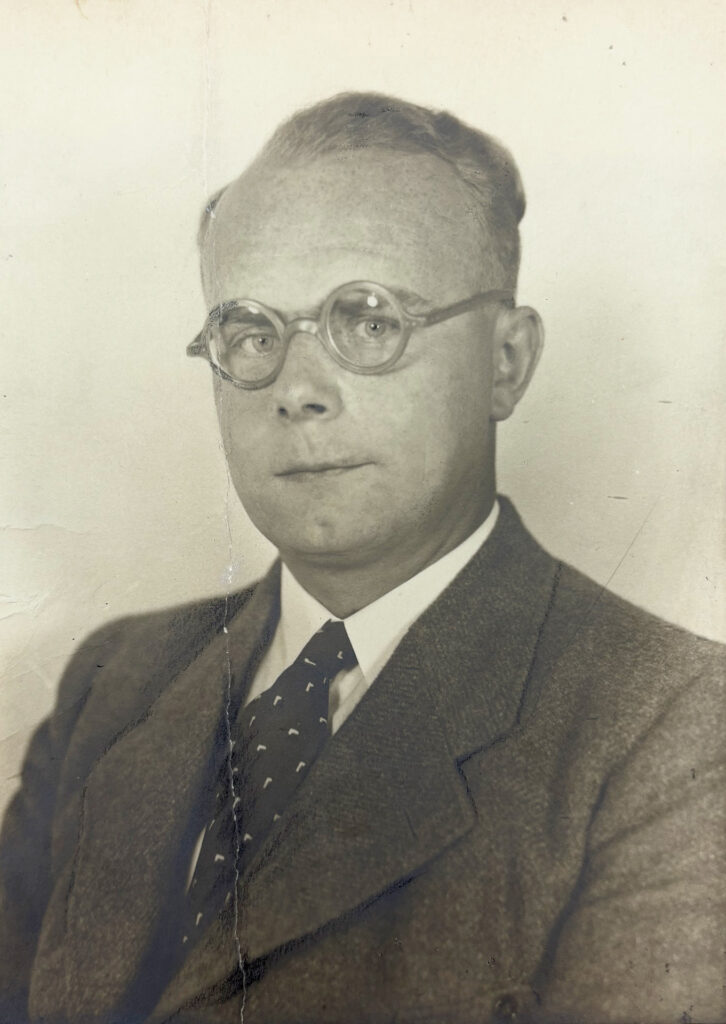
It is a black-and-white portrait of Werner Kalliske. He is wearing a dark suit with a waistcoat, a light-coloured shirt and a patterned tie. He is wearing horn-rimmed glasses. He has a very high forehead and a distinctive dimple on his chin. His short hair is combed back. He does not have a beard.

Werner Kalliske, 1936.

StALg PA 286.

WERNER KALLISKE (1901 – 1949)

Werner Kalliske came from Bornstedt near Potsdam. He was born on 21 May 1901. He studied medicine in Berlin. He then worked there at the Westend and Charité hospitals. He applied to Lüneburg without a certificate. His application was only successful because he was a member of the SS medical squadron. He also stated that Reichsgesundheitsführer Leonardo Conti could provide information about him personally. He had very good contacts in the top echelons of the National Socialists.

In 1936, he moved from Berlin to Lüneburg with his wife and two small children to take up the post of senior physician. He initially stayed with Richard Hölscher for three months. He then found a new home in Wilschenbrucher Weg. He took up the post of Head of Surgery at Lüneburg Hospital. From then on, he carried out hundreds of forced sterilisations.

Kalliske became a father again in 1937 and 1939. His wife died one day after the birth of their fourth child. From then on, he had to look after the children alone. Richard Hölscher took over his duties for nine months so that Werner Kalliske could organise everything.

In 1942, Werner Kalliske married a second time, Armgard Boll (née Freiin von der Goltz). In the meantime, he was a senior physician at a reserve hospital. Due to his military service, he was not involved in the murders of forced labourers.

After the end of the war, he was taken prisoner of war. In August 1945, he fell ill and fell out of a window in the hospital area of the Brno camp. He died as a result.

MAX BRÄUNER (1882 – 1966)

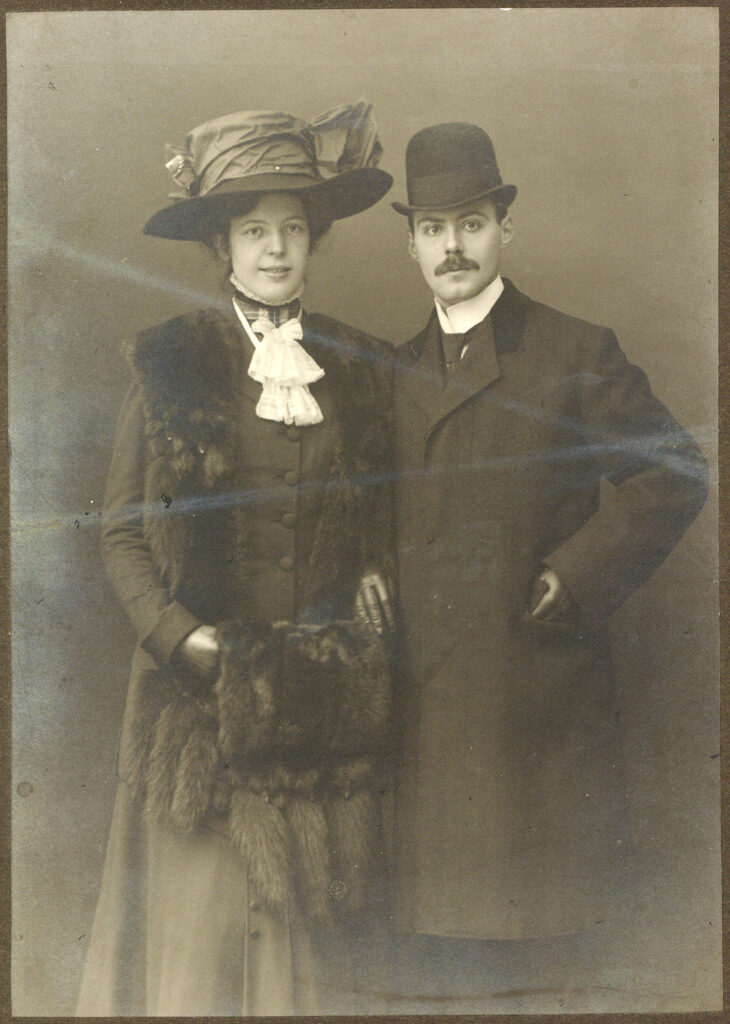
It is a black-and-white photograph of Max Bräuner and his fiancée Helene Feddersen. Helene Feddersen is wearing a white shawl over her dark dress with a button placket and stand-up collar, and an open coat with fur trim on the lapels. She is wearing leather gloves and a fur muff. Her hair is pinned up and she wears a hat with a large bow and brim. She is smiling. To her right stands her fiancé Max Bräuner in a dark, buttoned-up coat with a contrasting collar and bowler hat. He has a moustache and looks seriously into the camera. His left hand is in his coat pocket.
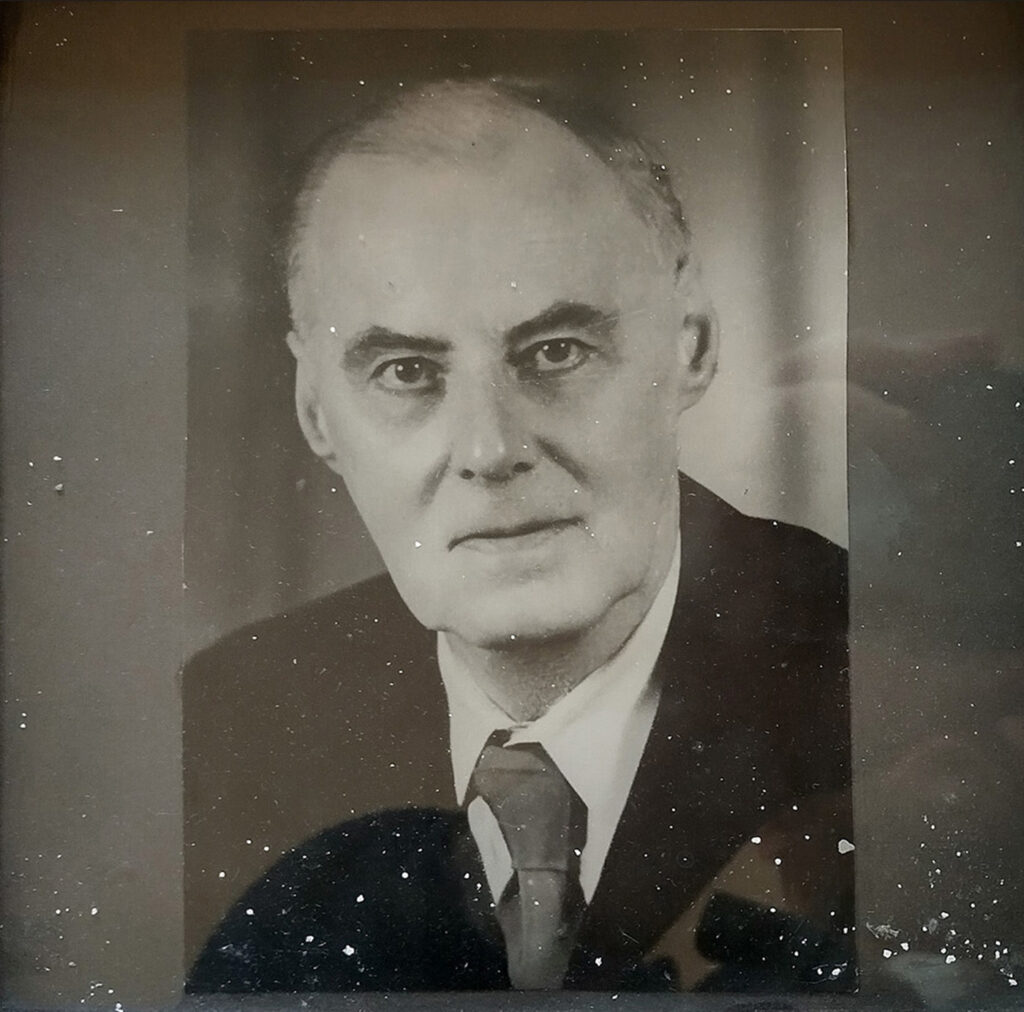
It is a square wooden picture frame with several black and white photos. One framed portrait shows Max Bräuner. He is wearing a dark suit, a light-coloured shirt and a tie. He has no moustache. He is smiling at the camera. 
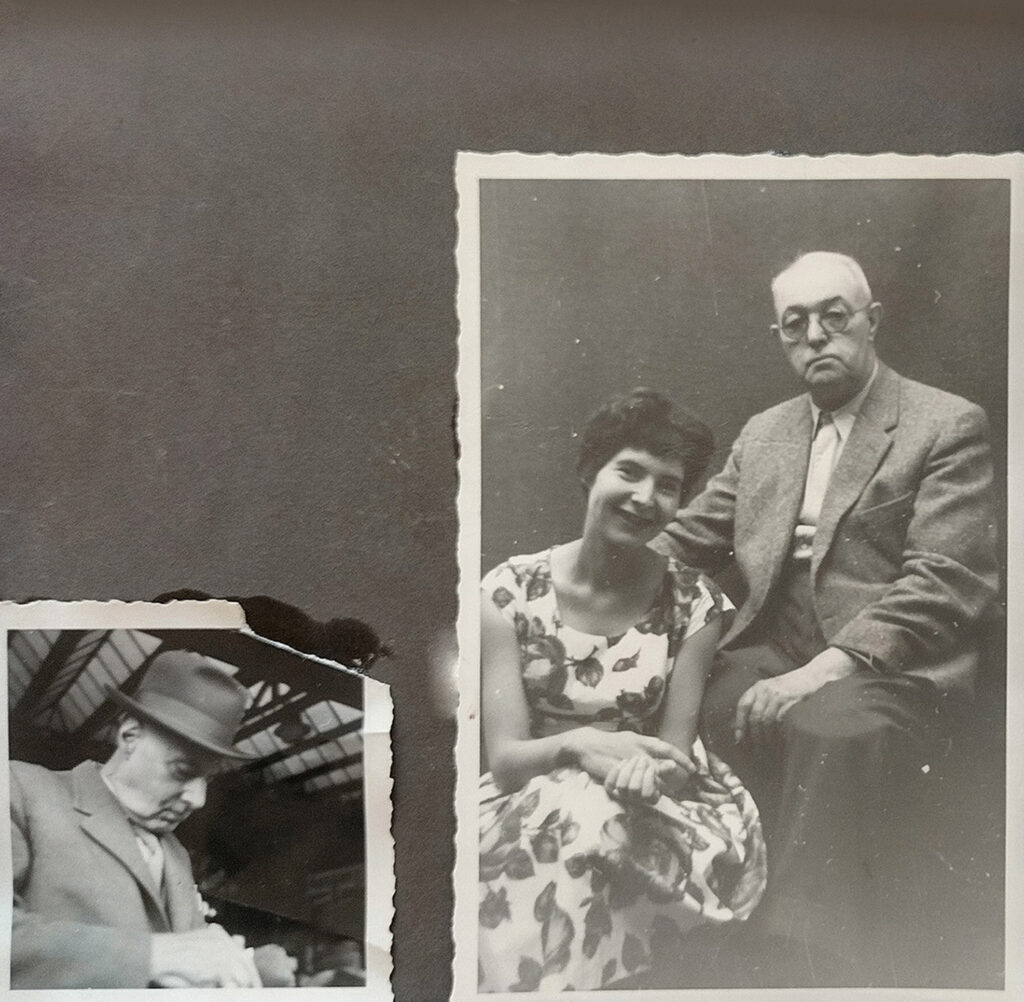
Two photographs are attached to the back of the picture frame. They have a white border. The smaller one is square and shows Max Bräuner wearing a hat. He is leaning forward and appears to have something in his hand that is capturing his attention. The second picture shows a seated woman in a flowered summer dress and short dark hair. She is squatting in front of an older, serious-looking man with glasses and a suit.

back