WHO TOOK PART?
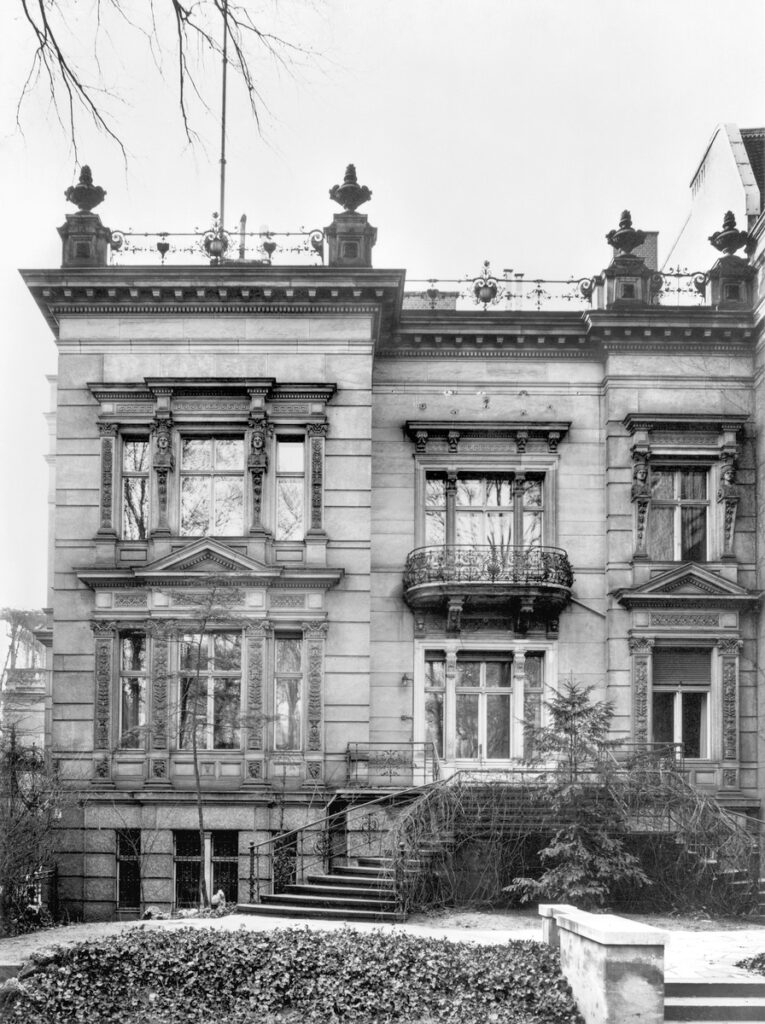
»T4-Zentrale« »Central Administration« in the villa at Tiergartenstraße 4, around 1935.
Landesarchiv Berlin, F Rep. 290 (01) No. 0152461 | Photographer Walter Köster.
An office (»Zentraldienststelle« or »Reichsarbeitsgemeinschaft Heil- und Pflegeanstalten«) was set up in Berlin to administer the murder of the sick. It was based at Tiergartenstraße 4, where all registration forms were received and forwarded to 40 experts. They used these documents alone to decide whether a person should be murdered with gas or not. If yes, they put a red plus sign, if no, they put a blue minus sign on the sheet.
The chief experts were Werner Heyde, Paul Nitsche and Herbert Linden. As a result of their decisions, a total of around 100,000 people were murdered. The gas murder of the sick was labelled »Aktion T4« after the address of the »T4-Zentrale« (»Central Administration«). The gas murder of concentration camp prisoners in three killing centres was called »Special Treatment 14f13«.
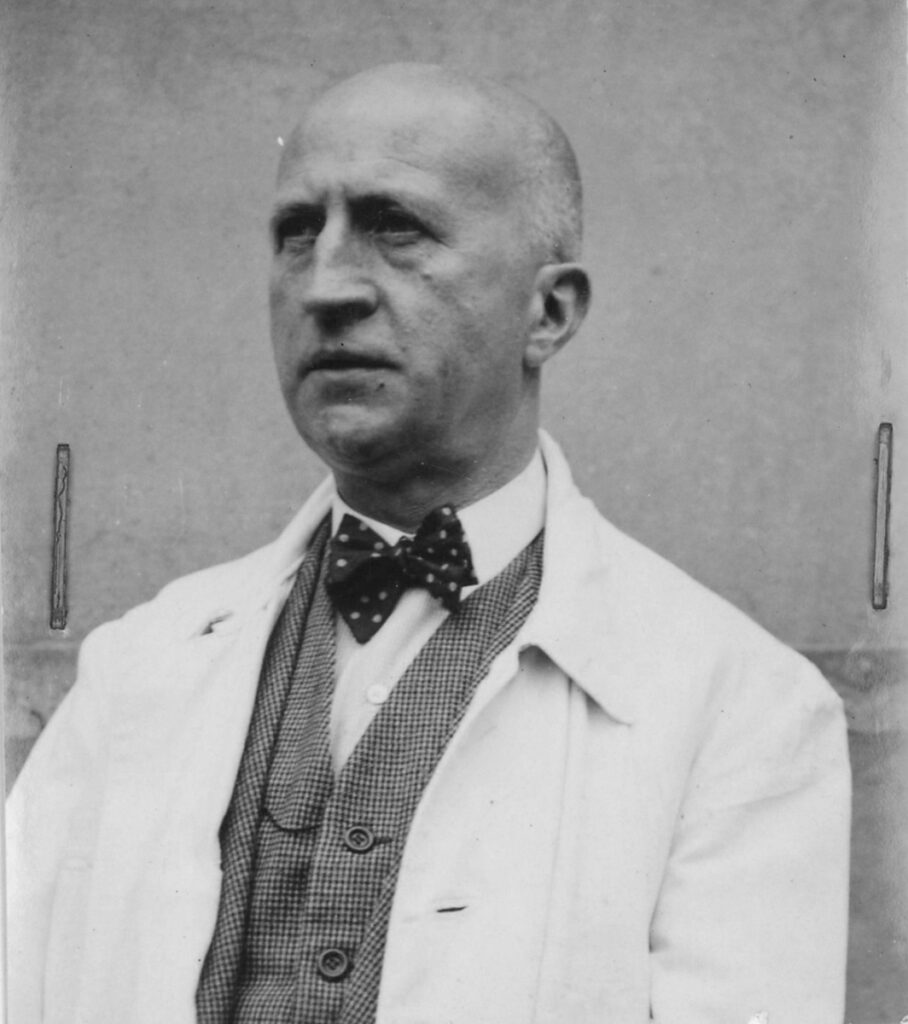
Paul Nitsche, around 1930.
Saxon State Archives, 13859 State Chancellery, 6081.
»It’s wonderful when we can get rid of the ballast in the institutions and do some real therapy.«
Paul Nitsche quoted from Georg Andreae, 8 August 1961.
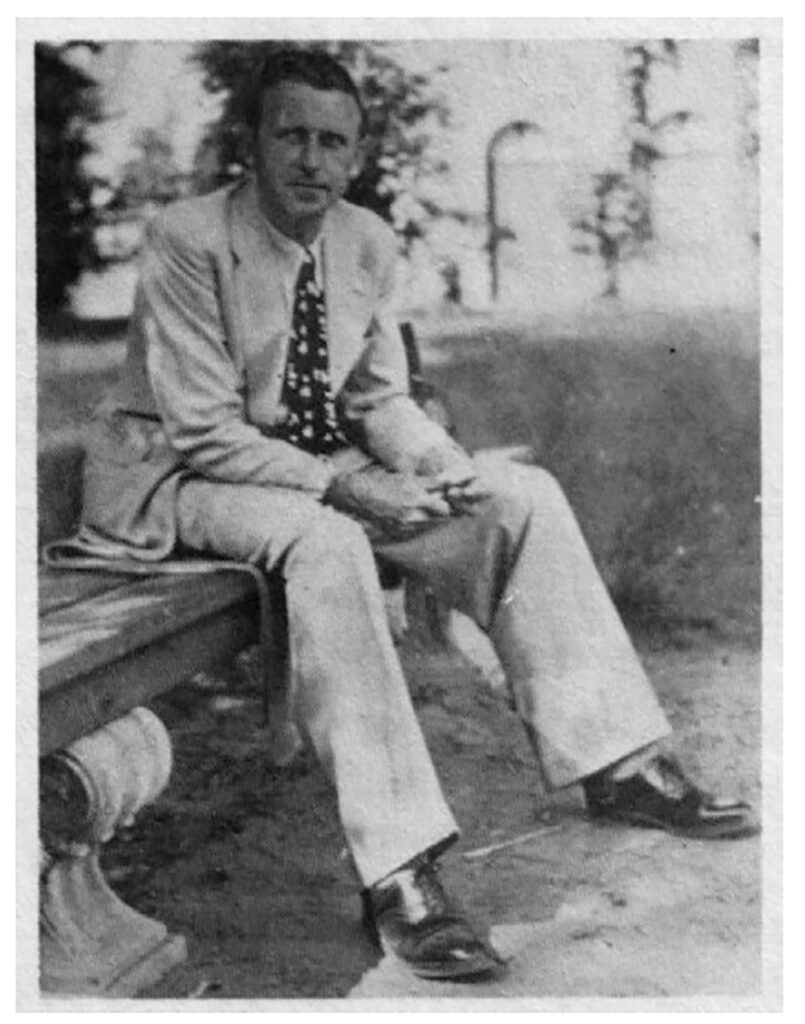
Hans Hefelmann, around 1954.
From: Andreas Kinast: »The child is not capable of being straightened«. »Euthanasia« in the Waldniel paediatric ward 1941 – 1943, Cologne/Weimar/Vienna 2014, p. 52.
In May 1939, a »Reichsausschuss zur wissenschaftlichen Erfassung von erb- und anlagebedingten schweren Leiden« (»Reichsausschuss«) was planned for the implementation of ‘child euthanasia«. It was a front organisation. The planning group included Karl Brandt, Philipp Bouhler and Werner Catel. They had already been involved in the murder of the child Gerhard Kretschmar. Herbert Linden, Hans Hefelmann and three consultant doctors (Hellmuth Unger, Hans Heinze and Ernst Wentzler) were also part of the organisation.
Hans Heinze, Werner Catel and Ernst Wentzler agreed to be experts on the »Reichsausschuss«. They assessed the children and adolescents to determine whether they were eligible for »children euthanasia«. Their decisions resulted in forced hospitalisation in »Children’s special wards« and killings, depending on an allegedly determined »Educational and developmental incapacity«. The »Reich Committee« was subordinate to the Chancellery of the Führer.
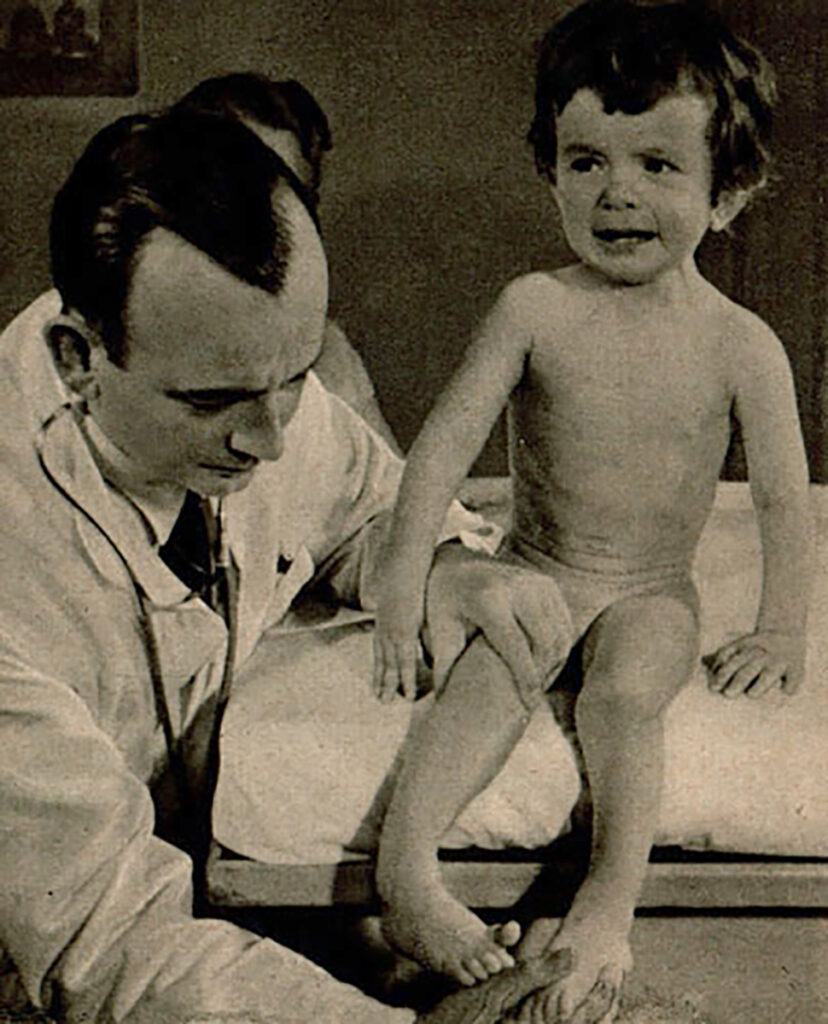
Ernst Wentzler, after 1945.
Kopie ArEGL. | World War II Museum New Orleans.

Lüneburg district and local court and seat of the Lüneburg health authority, 1943/1944.
StadtALg BS-45027.
Each proceeding was conducted by a judge and two medical assessors. These were a district judge (Stölting, Börner, Jahn, Severin or van Leesen), a registered doctor (Dressler, Vosgerau, Bergmann or Cropp) and a civil servant doctor (Bräuner, Rohlfing or Sander). The expert and assessor could not be the same person. The decisions were made in court or in the institution. They followed the recommendations of the health department. Because the health department moved into the annex in 1943, where the hereditary health court was already located, the distances were short.
HANS ROHLFING (1890 – 1977)
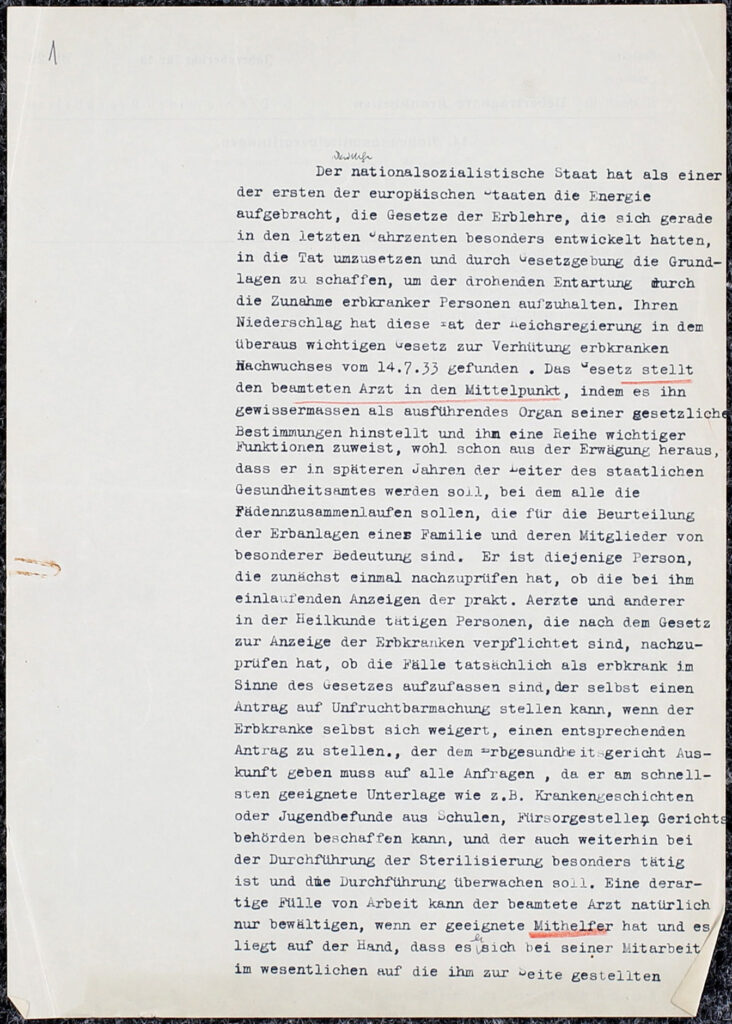
Lecture text [excerpt] for the course on the implementation of the »Law for the Prevention of Hereditarily Diseased Offspring« from 1 to 15 June 1934.
NLA Hannover Hann. 138 Lüneburg Acc. 101/88 Nr. 275.
His main task was the hereditary biological registration and assessment of »Hereditarily ill« people. In 1938, Hans Rohlfing reported to the Office for Public Health that 80 per cent of all »Hereditarily ill and hereditarily ill families« were registered by him. He decided on suitability for marriage and child benefit, determined the so-called »racial affiliation« of prisoners on behalf of the Gestapo and trained welfare workers and community nurses to apply the racial laws.
»The National Socialist state was one of the first of the European states to muster the energy […] to lay the foundations through legislation to stop the impending degeneration caused by the increase in the number of people with hereditary diseases.«
Hans Rohlfing, Juni 1934.
NLA Hannover Hann. 138 Lüneburg Acc. 101/88 Nr. 275.

Copy of the certificate of appointment as Oberregierungs- und Medizinalrat dated 2 November 1944.
NLA Hannover Nds. 120 Lüneburg Acc. 131/88 No. 222.
Hans Rohlfing ruled on over 3,700 reports of forced sterilisation. Until 1 October 1944, Rohlfing was involved in every court case concerning sterilisation, either as an expert witness or as a judge. For his diligence, he was personally promoted by Adolf Hitler a month later. His career continued after the war. He died on 26 February 1977 at the age of 86, leaving no children.
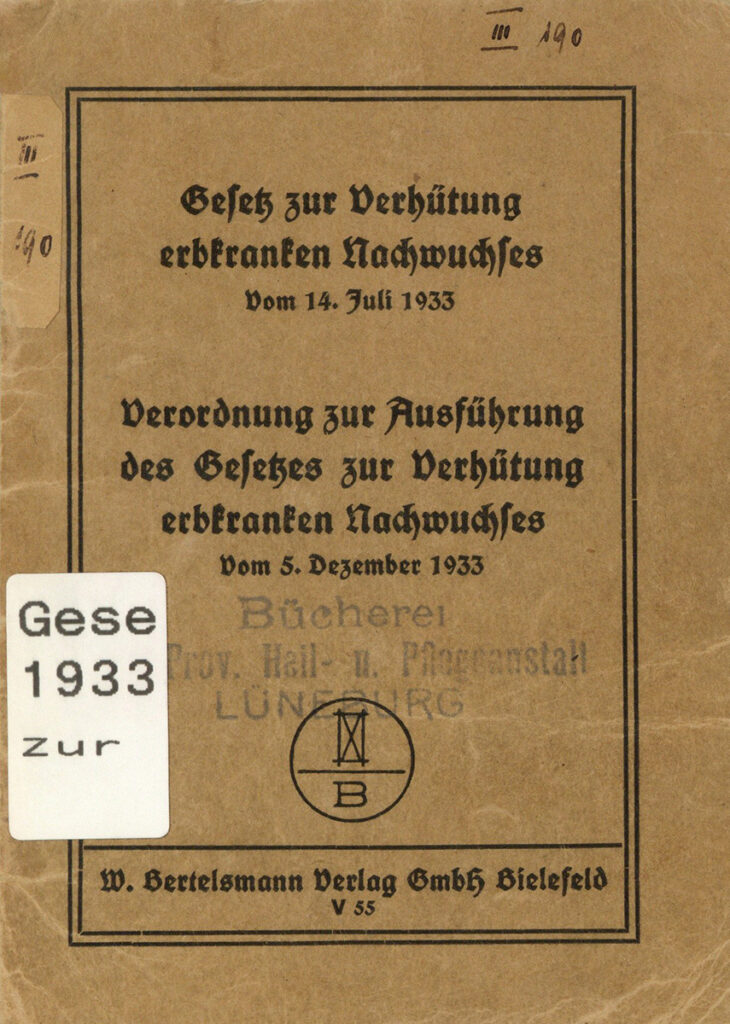
Law for the Prevention of Hereditary Diseases in Offspring, 1933.
ArEGL 166.
The »Law for the Prevention of Hereditary Diseases« was passed on 14 July 1933 and came into force on 1 January 1934. It regulated compulsory sterilisation.
This edition was found in the library of what is now the Lüneburg Psychiatric Clinic. Handwritten notes prove that it was used by the medical director, Max Bräuner. He was obliged to report cases of illness. In addition, he was an assessor at the Lüneburg Hereditary Health Court and decided on compulsory sterilisation and compulsory abortions. The document shows how deeply he immersed himself in this task.
EDZARD STÖLTING (1885 – 1960)
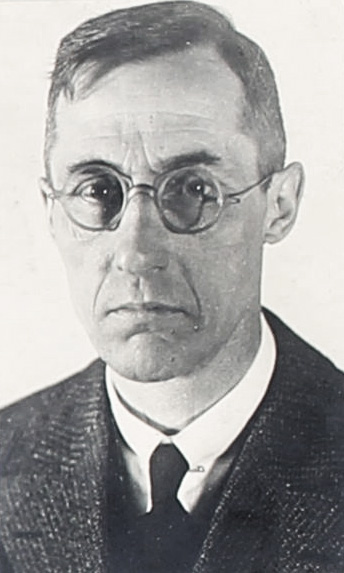
Edzard Stölting, 1934.
NLA Hannover Hann. 173 Acc. 57/98 No. 361/2.
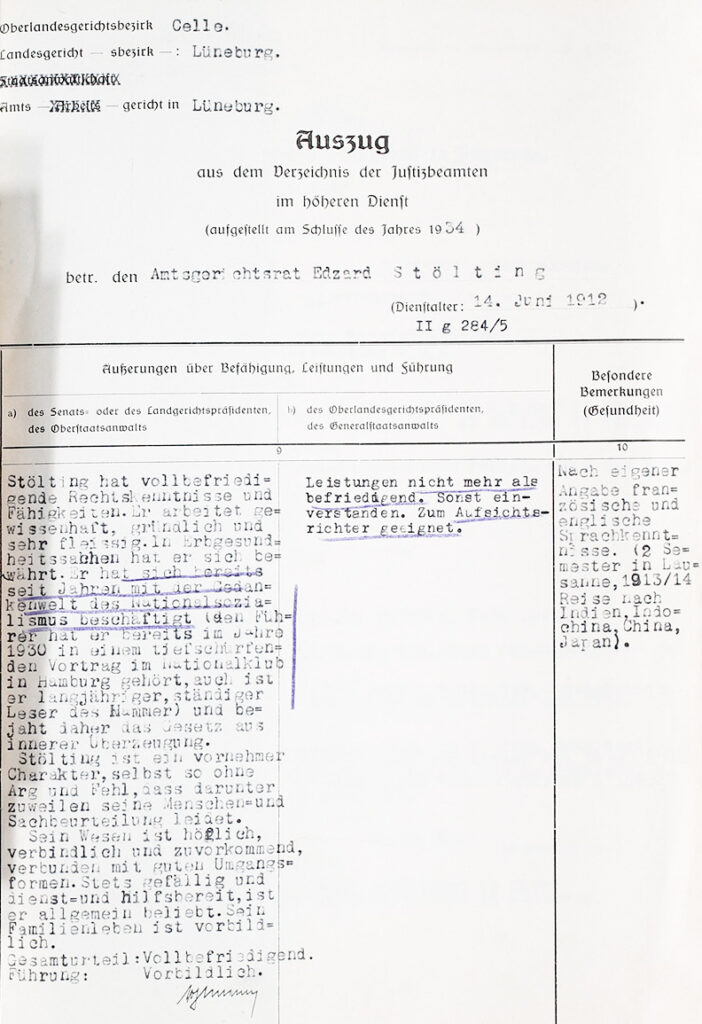
Extract from a judgement, 1934.
NLA Hanover Hann. 173 Acc. 57/98 No. 361/2.
In 1930, Edzard Stölting took up the post of district court judge at Lüneburg District Court. He and his wife had long been convinced National Socialists. After the »Law for the Prevention of Hereditarily Diseased Offspring« came into force, he became the head judge of the Lüneburg Hereditary Health Court. By 1 January 1940, he had ruled on over 500 forced sterilisations. He only rejected around 60 applications.
»Stölting[…] works conscientiously, thoroughly and very diligently. He has proven himself in matters of hereditary health. He has been studying the ideology of National Socialism for many years […].«
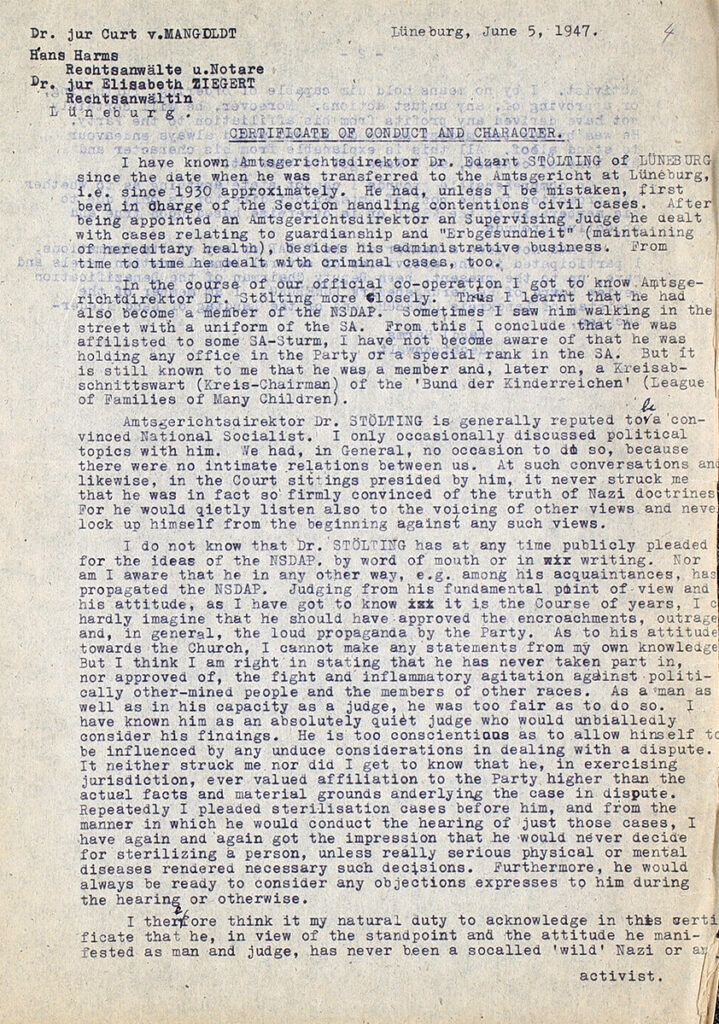
Certificate of good character [extract] from Curt Mangoldt/Certification dated 5 June 1947.
NLA Hanover Hann. 173 Acc. 57/98, No. 361/2.
Stölting was drafted into military service on 8 January 1940. In April 1945, he was taken prisoner of war. In May 1946, his private home at Egersdorffstraße 4 was confiscated. He then returned to Eimbeckhausen. Stölting retired in 1950 without any losses. A letter describing him as a man of »Fatherly kindness« whose decisions were for the good of those affected helped. He died in Hamelin in 1960.
Auxiliary schools, schools, church-run and privately run homes and children’s hospitals reported children and young people for admission to an institution or directly to the Lüneburg »Children’s special wards«. They therefore shared responsibility for the crimes that followed their selection and registration of their charges. The heads of the institutions characterised the treatment of people with disabilities until well into the post-war period, particularly in the field of special and curative education.
The assessment of Helmut Quast by the auxiliary school led to his forced hospitalisation in the Rotenburg institutions of the Inner Mission. Three years later, he was murdered in the »Specialised children’s ward« in Lüneburg.
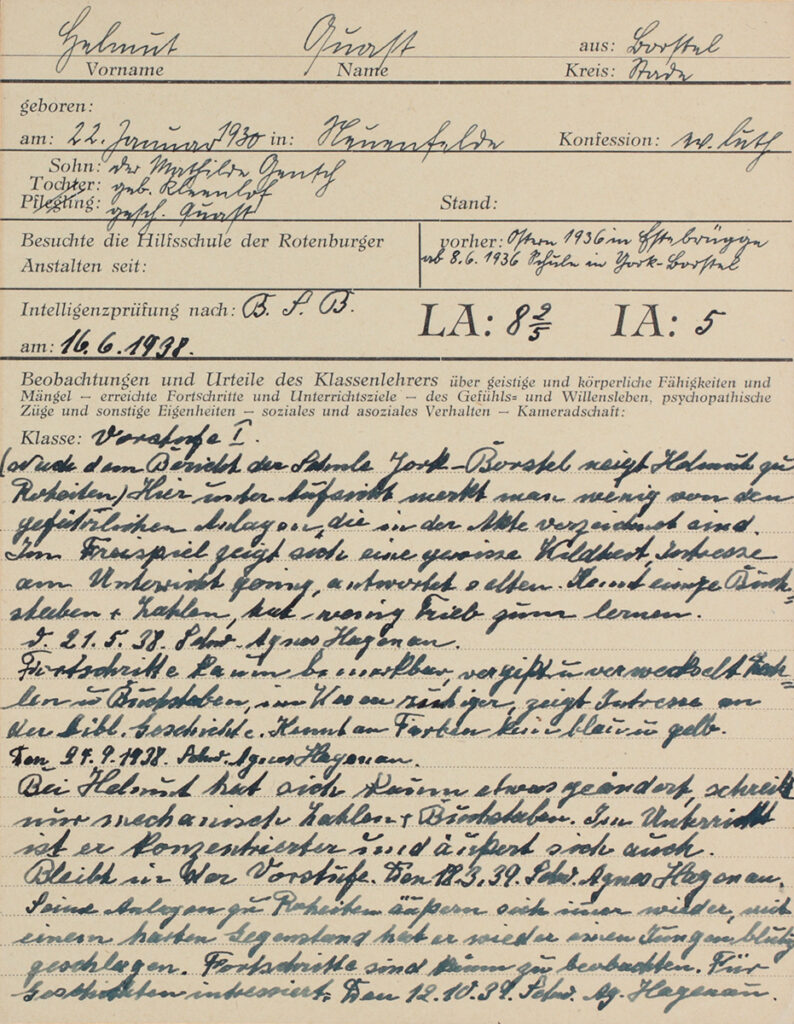
Assessments by Helmut Quast, 1938/1939.
NLA Hanover Hann. 155 Lüneburg Acc. 56/83 No. 355.

Adolf Wilke, around 1930.
StadtALg BS 44318.
GUSTAV MARX (1909 – 1973)
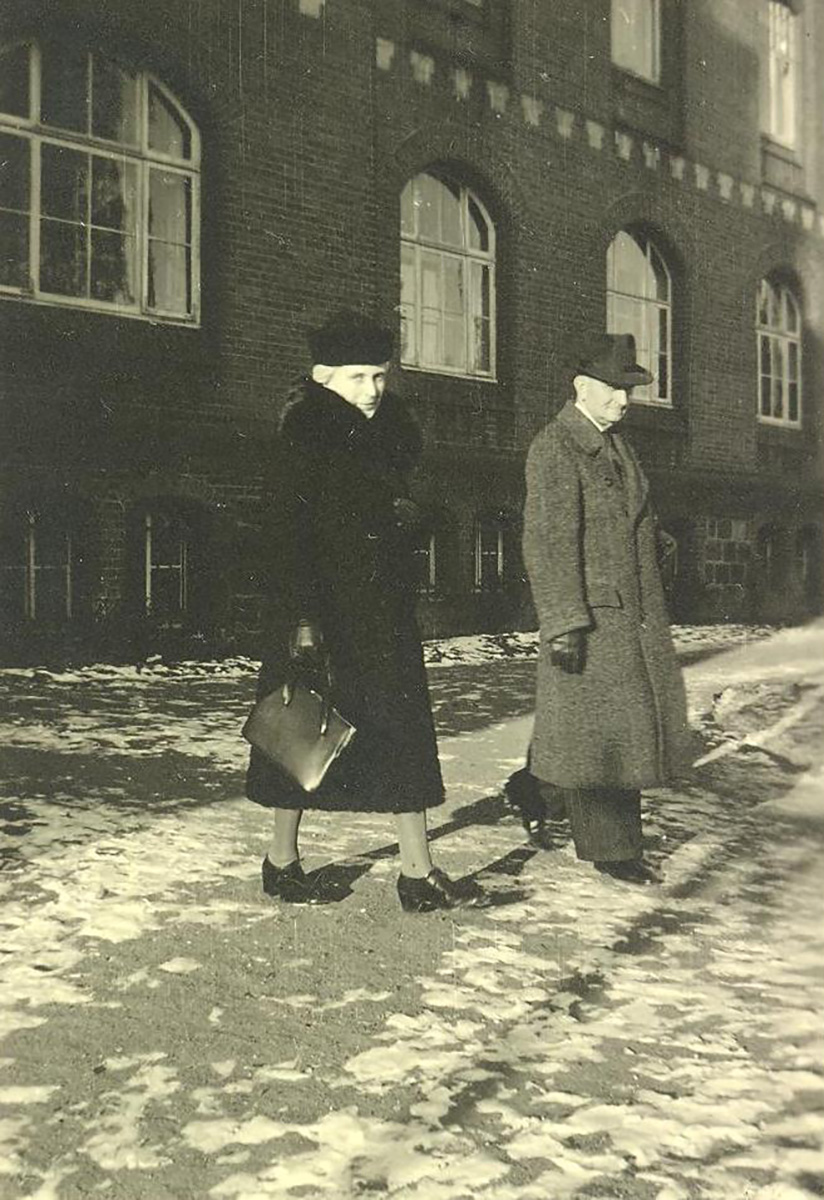
Emilie and Gustav Marx in front of Building 29 of the Niedersächsisches Landeskrankenhaus Lüneburg (psychiatrical hospital), winter 1950.
Copy ArEGL | Private property Volker Marx.
Marx came from Essen. His father worked for the industrialist Krupp family. Marx completed his medical studies in 1914 and worked as a field doctor during the First World War. In 1916, he married Emilie Boeckling, a merchant’s daughter. After the end of the war, he worked as a doctor in private practice and as a district municipal doctor in Wengern and in Herford in the public health department. On 1 January 1936, he began working at the Lüneburg sanatorium and nursing home. In 1933, he became a member of the NSDAP and joined ten different party organisations. He was released from military service in June 1940. He behaved loyally towards his murdering colleagues.
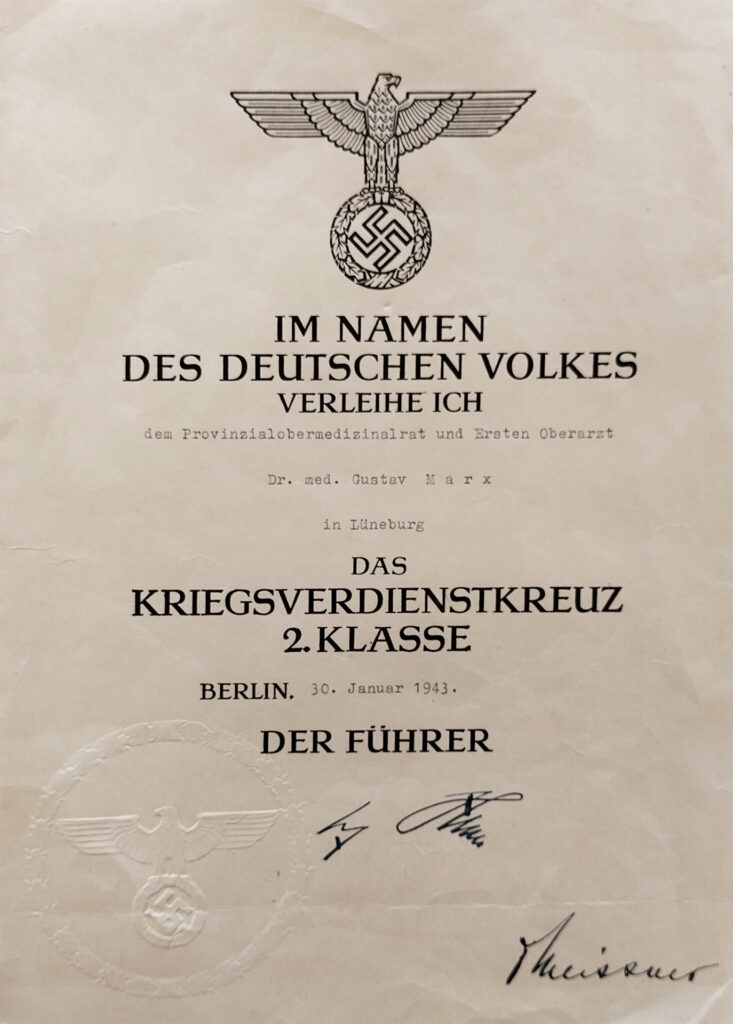
Certificate of the award of the War Merit Cross 2nd Class to Gustav Marx dated 30 January 1943.
ArEGL 47 | Private property Volker Marx.
This certificate bears the original signature of Adolf Hitler and Otto Meissner, State Secretary in the Presidential Chancellery. On the occasion of the 10th anniversary of the assumption of power on 30 January 1943, soldiers who had rendered outstanding service in the First World War were awarded the War Merit Cross 2nd Class. Senior physician Gustav Marx was also honoured with this certificate.
