TO WORRY
Families who were unable to visit were no less concerned. They wrote to their children and teenagers, even if they couldn’t read. The medical files are filled with letters and postcards from parents and grandparents to their children. Parcels were also sent with food and clothing.
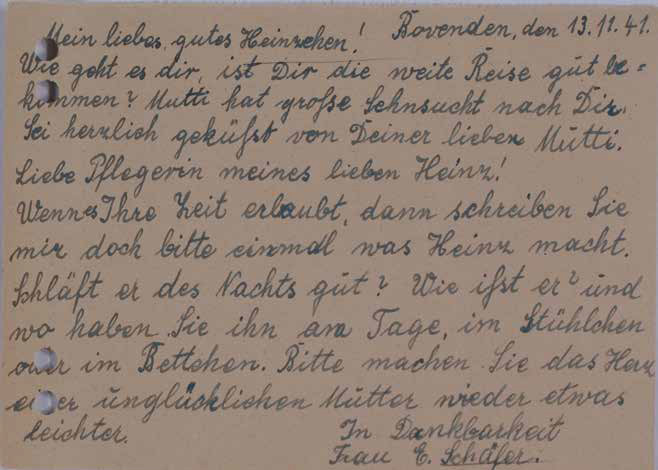
Heinz Schäfer’s mother (1937 – 1942) found it very difficult to be separated from her child. She longed for him and wrote him and his carers a postcard shortly after he was admitted. The family hoped that he would learn to walk in Lüneburg and get better.
Postcard from the mother Ella Schäfer to her son Heinz dated 13 November 1941.
NLA Hannover Hann. 155 Lüneburg Acc. 56/83 No. 373.
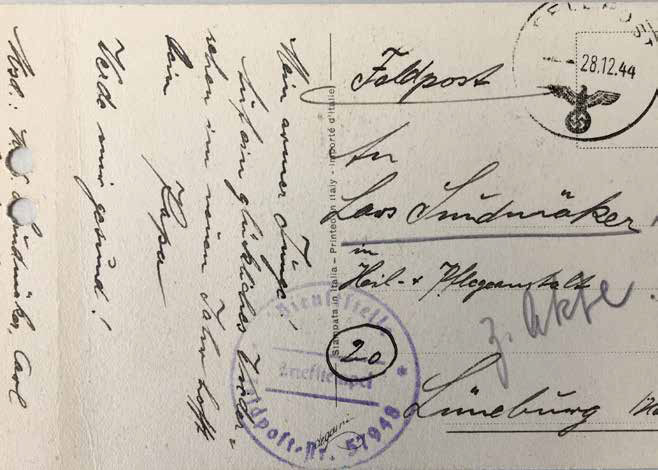
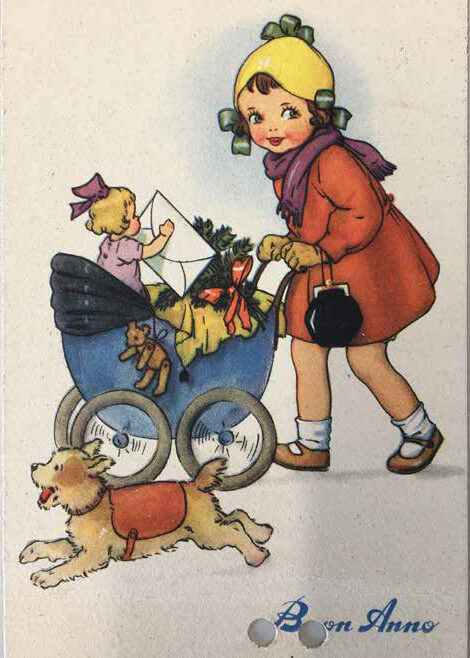
His father had spared no effort to organise a child-friendly postcard during his time at the front. When his New Year’s greetings arrived at the Lüneburg sanatorium and nursing home for his son Lars Sundmäker (1937 – 1945), he was no longer alive. He had been murdered on 3 January.
Field post from Carl Sundmäker (No. 57948) to his son Lars Sundmäker dated 28 December 1944, front and back. NLA Hannover Hann. 155 Lüneburg Acc. 56/83. no. 405.
From 1944 onwards, many parents refused to place their children in the „specialised children’s ward“. As a result, the children were forcibly committed against their parents‘ will in accordance with Sections 14, 15, 40 and 55 of the Police Administration Act of 1 June 1931 and ordered to be placed immediately in the Lüneburg sanatorium and nursing home. An appeal against the order could be lodged with the district president of Hanover within two weeks. However, it was ineffective, as it applied:
»Die Durchführung meiner Anordnung wird durch die Beschwerde nicht aufgehoben, da die sofortige Ausführung aus überwiegenden Gründen des öffentlichen Interesses verlangt werden muss.«
Police order to Fritz Wehde dated 26 August 1944.
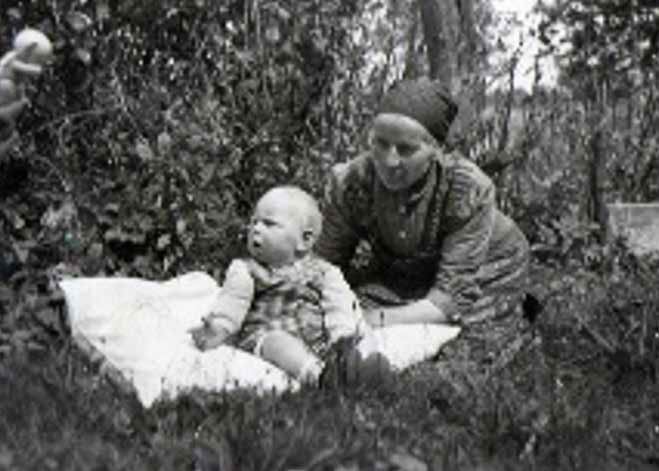
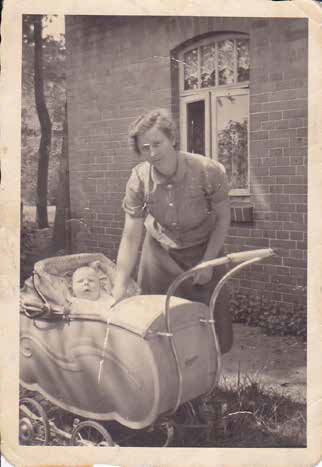
The „Wehdes“ were workers and had been associated with the SPD for many years until the party was banned by the NSDAP in 1933. They remained opposed to the Nazis even after they seized power. Fritzchen Wehde (1939 – 1944) lived with his family until August 1944. He was lovingly cared for. There are photos showing him with his grandmother and his aunt Wilma. His cousin Helga gave him her teddy bear. Because his parents refused to commit him, he was forcibly committed by police order. Fritzchen Wehde in Aunt Wilma’s pram, around 1940.
Fritzchen with his grandmother and the teddy bear, ca. 1941.
Privately owned by Uta Wehde.
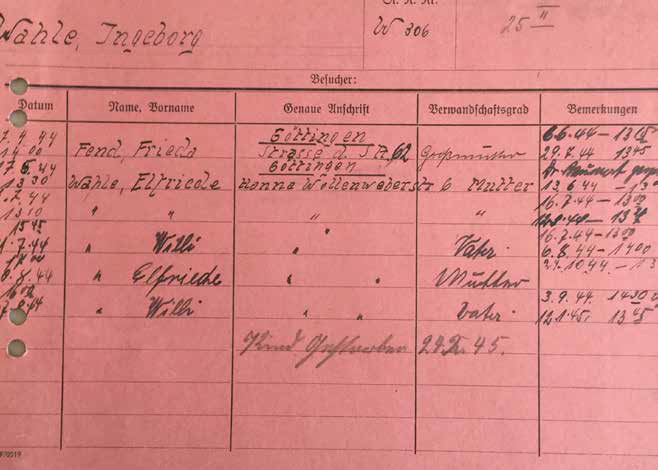
Compared to other children, Ingeborg Wahle was visited often. Her parents took turns. When Willi Wahle was stationed in the Theodor Körner barracks, he took advantage of every opportunity. Ingeborg’s mother Elfriede and her grandmother Frieda were also able to come to Lüneburg so often because Ingeborg’s grandfather got free tickets as a train conductor. Many, almost weekly visits were also entered in pencil in the medical records. Ingeborg Wahle was murdered in February 1945 when Willi Wahle had to go to the front and the free trips were no longer authorised due to the war.
Incomplete visitor’s card by Ingeborg Wahle.
NLA Hannover Hann. 155 Lüneburg Acc. 56/83 No. 443.
Parents
The parents were often left in the dark, only a few had any idea. Only in exceptional cases did they accept death. Most of them were in fact sceptical or even hostile towards admission to a „children’s ward“, expecting that compulsory treatment would at least lead to an improvement.
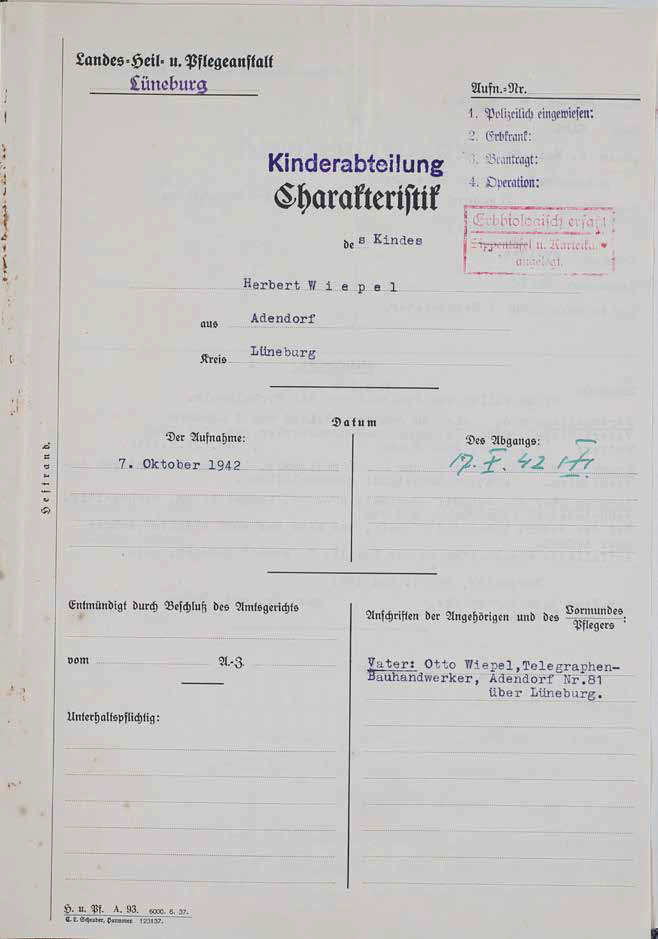
The family of Herbert Wiepel is an exception. The parents of the newborn Herbert Wiepel (1942 – 1942) from Adendorf were among the few who indicated to the doctor Willi Baumert that they agreed to their son being „redeemed“ in the Lüneburg „paediatric ward“. He was registered by the midwife eleven days after birth. Five months later, the „Reich Committee“ ordered his hospitalisation. On 7 October 1942, Herbert was admitted to the „children’s ward“. He was murdered ten days later. Herbert Wiepel’s medical history.
NLA Hannover Hann. 155 Lüneburg Acc. 56/83 Nr. 428.
»Wird heute von den Eltern zur Aufnahme in die Anstalt gebracht. Die Eltern hatten die beiden älteren gesunden Kinder mitgebracht. Haus 25 II. Vater meinte, wenn dem Kind doch nicht zu helfen sei, wäre es doch am besten, wenn es nicht lange leben würde.«
Entry in the medical history of Herbert Wiepel.
EVERYDAY LIFE AND LIVING WITH DISABILITIES
Then as now, everyday life with a child or young person with a disability is characterised by the special situation, challenges and a high degree of responsibility. The siblings of the child with a disability have to quickly become independent, subordinate their wishes and needs and, as „caring children“, take on tasks that are not appropriate to their age and role. There was hardly any support and help for the families at the time. On the contrary. They experienced marginalisation, injustice and violence. The situation worsened during the war. Fathers were often at the front and mothers were left to fend for themselves.
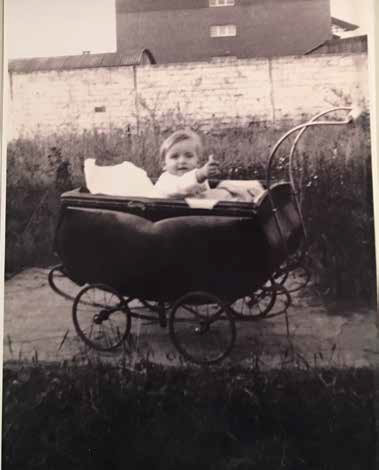
Ingeborg Wahle (1939 – 1945) came from Göttingen. She was the second child of Elfriede, née Fendt, and Willi Wahle. Her sister Renate was born two years later. Ingeborg had a difficult start in life, her development was delayed. Ingeborg Wahle in a pram, around 1940.
Private property Renate Beier, born Wahle
»Plötzlich standen die vor der Tür und haben Ingeborg mitgenommen, die haben sie einfach geschnappt und meine Mutter hat nur geschrien.«
Interview with Renate Beier, 12.10.2018.
[03-16-02 Biography element]
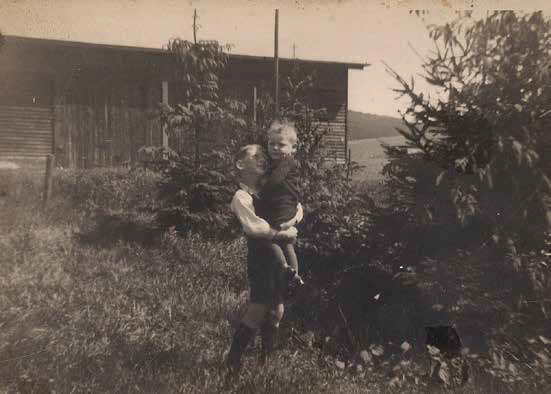
Friedrich, Rolf and Heinz Schäfer (1937 – 1942) shared a nursery in their parents‘ house in Bovenden near Göttingen. In the afternoons, they carried Heinz everywhere or drove him in a pram. „He was always there,“ say the brothers and their cousin. There was a garden where the children often spent time. There was also a garden shed where they sometimes ate cake. Heinz was pushed back and forth in the garden in a little trolley so that he could get some fresh air.
Rolf with his brother Heinz Schäfer on his arm. His brother Friedrich is not in the picture, because he took the photo in the summer of 1941.
Privately owned by Rolf Schäfer.
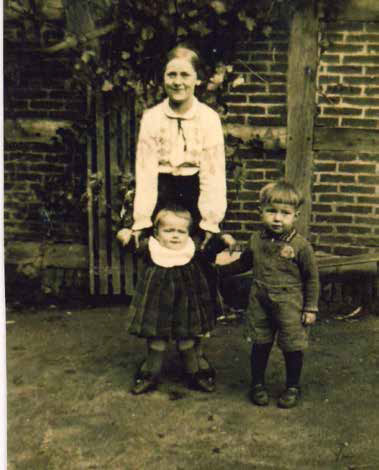
Helga’s Volkmer (1933 – 1941) parents had to work hard on the farm in order to work off the rent in addition to running their own farm. Her mother had to rely on her siblings, neighbours‘ children and occasionally a kindergarten teacher to look after Helga. She was pushed out into the yard in a cart and watched the other children play. Sometimes she also sat on a stool.
Helga Volkmer with her brother Helmut and the kindergarten teacher Ilse, around 1935.
Privately owned by Marlene Volkmer.

back